Pearson BTEC • Forensic and Criminal Investigation
Latest uploads for Forensic and Criminal Investigation at Pearson BTEC. Looking for Forensic and Criminal Investigation notes at Pearson BTEC? We have lots of notes, study guides and revision notes available for Forensic and Criminal Investigation at Pearson BTEC.
-
267
- 0
-
51
Modules Forensic and Criminal Investigation at Pearson BTEC
Notes available for the following courses of Forensic and Criminal Investigation at Pearson BTEC
- Unit 1 - Principles and Applications of Science
- Unit 2 - Practical Scientific Procedures and Techniques
- Unit 3 - Science Investigation Skills
- Unit 4 - Forensic Investigation Procedures in Practice
- Unit 5 - Applications of Criminology
- Unit 6 - Criminal Investigation Procedures in Practice
- Unit 7 - Applications of Criminal and Forensic Psychology
- Unit 8 - Physiology of Human Body Systems
- Unit 9 - Environmental Forensics
- Unit 10 - Forensic Fire Investigation
- Unit 11 - Forensic Traffic Collision Investigation
- Unit 12 - Forensic Photography
- Unit 13 - Forensic Genetics
- Unit 14 - Forensic Anthropology and Archaeology
- Unit 15 - Practical Chemical Analysis
- Unit 16 - Microbiology and Microbiological Techniques
Latest content Pearson BTEC • Forensic and Criminal Investigation
Task 2 Poster for Nutritional diseases, do not copy word for word!
Distinction standard expert witness statement to use for simulated court cross-referencing. Easy canvas to reword for your case study and achieve a Distinction without all the hard work.
Distinction Standard unit 6B with evaluation of techniques for interviewing and recourses available in a criminal investigation. Interview plan example with evaluation of question types and assessment of effectiveness in the real world. Fully Harvard referenced and graded as outstanding detail.
Distinction Standard full analysis of three legislations (highly detailed for PACE act 1984 with code breakdowns and cases before to prove why PACE is necessary). Breakdown of court systems, Case studies post PACE, Mens Rea and Actus Reus Examples and many other legislations. Followed by in depth evaluations and comparisons and Harvard referencing.
Unit 13BC of Level 3 BTEC Forensic and Criminal Investigation, got a Distinction for this unit and a D*D*D overall. Highly in depth explanation of the methods behind DNA extraction such as solid phase and alcohol precipitation as well as Amplification via PCR machines and analysis via Electrophoresis. Also comparisons and evaluations of the methods on different bodily samples such as blood, hair and bone. All the details and references you need to achieve a Distinction.
Gained a distinction grade for my high quality coursework, covering all aspects of the cell cycle, issues with deregulation and causes of variation. Extremely in depth explanations with diagrams.
Lecture notes from unit 3 chemistry in BTEC forensics and criminal investigation. 
These notes contain information on: fuels and the hazards associated, crude oil and it’s uses, hydrocarbons, alkanes, fractional distillation, flammability, viscosity, volatility, intermolecular forces, the fire triangle, complete combustion, incomplete combustion, acid rain and renewable/ non-renewable fuels.
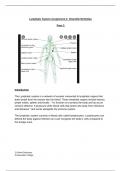
The Lymphatic system is a network of vessels connected to lymphatic organs that drain lymph from the tissues into the blood. These lymphatic organs include thymus, lymph nodes, spleen and tonsils. It’s function is to protect the body and act as an immune defence. It produces white blood cells that protect the body from infections and diseases and works alongside the immune system. 
 
The lymphatic system consists of blood cells called lymphocytes. Lymphocytes can defend the body against inf...
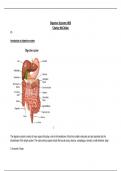
The digestive system consists of many organs that play a role in the breakdown of food into smaller molecules and are absorbed into the bloodstream of the lymph system. The main primary organs include the buccal cavity, pharynx, oesophagus, stomach, small intestines, large intestines, colon and rectum. These are the order in which food passes through. In addition, there are also some accessory organs - the pancreas,liver and gallbladder in which food does not pass through but these organs secret...
This assignment is about the overall reflection of the experiments in PSPT.