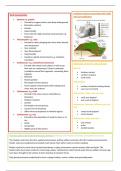
Landform features associated with chalk
Rock characteristics
and clay landscapes
Igneous e.g. granite
o Formed by magma slowly cools deep underground
o Extremely resistant
o Jointed
o Impermeable
o Forms the UK’s high mountain environments e.g.
Dartmoor
Metamorphic e.g. slate
o Formed by shale changing their form when heated
and compressed
o Very resistant
o Very thinly layered
o Impermeable
o Usually in upland environments e.g. Cambrian
mountains
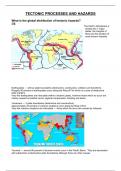
Sedimentary e.g. carboniferous limestone Distribution of the UK’s main rock types
o Formed when dead coral collects on the ocean
floor and are compressed. Calcium carbonate Igneous:
crystallises around the fragments, cementing them Northern Ireland
together northern Scotland
o Resistant north wales
o Heavily jointed
o Permeable and non-porous Metamorphic:
o Forms upland environments with underground northern Scotland including islands
rivers and cave systems west coast of Ireland
Sedimentary e.g. chalk
o Formed in the same way as carboniferous Sedimentary: chalk, clays and sands
limestone south east England
o Medium resistant east coast of England
o Jointed
sedimentary: limestone, millstone, grit and
o Permeable and very porous
coal
o A pure form of limestone
o Often forms escarpments in lowland regions central north England
Sedimentary e.g. clay central ireland
o Formed by the deposition of muds by rivers or at
sedimentary: shales and slates
sea
o Weak east ireland
o Not jointed wales
o Slightly porous (fine pores) Scottish borders
o Forms lowland environments
How did upland and lowland landscapes develop? (Geology, past tectonic processes, past glacial processes)
The hardest rocks form the UK’s upland environments and the softest rocks form the UK’s lowland environments.
Harder rocks are weathered and eroded much slower than softer rocks so remain standing.
Britain used to be much closer to plate boundaries so plate movements caused massive folds and faults. The
faults/cracks have been eroded to create large valleys. Sedimentary rocks formed under the sea millions of years ago
have been brought to the surface to form land due to tectonic forces
Past glacial processes eroded land to form u-shaped valleys, corries, arêtes and pyramidal peaks
Rock characteristics
and clay landscapes
Igneous e.g. granite
o Formed by magma slowly cools deep underground
o Extremely resistant
o Jointed
o Impermeable
o Forms the UK’s high mountain environments e.g.
Dartmoor
Metamorphic e.g. slate
o Formed by shale changing their form when heated
and compressed
o Very resistant
o Very thinly layered
o Impermeable
o Usually in upland environments e.g. Cambrian
mountains
Sedimentary e.g. carboniferous limestone Distribution of the UK’s main rock types
o Formed when dead coral collects on the ocean
floor and are compressed. Calcium carbonate Igneous:
crystallises around the fragments, cementing them Northern Ireland
together northern Scotland
o Resistant north wales
o Heavily jointed
o Permeable and non-porous Metamorphic:
o Forms upland environments with underground northern Scotland including islands
rivers and cave systems west coast of Ireland
Sedimentary e.g. chalk
o Formed in the same way as carboniferous Sedimentary: chalk, clays and sands
limestone south east England
o Medium resistant east coast of England
o Jointed
sedimentary: limestone, millstone, grit and
o Permeable and very porous
coal
o A pure form of limestone
o Often forms escarpments in lowland regions central north England
Sedimentary e.g. clay central ireland
o Formed by the deposition of muds by rivers or at
sedimentary: shales and slates
sea
o Weak east ireland
o Not jointed wales
o Slightly porous (fine pores) Scottish borders
o Forms lowland environments
How did upland and lowland landscapes develop? (Geology, past tectonic processes, past glacial processes)
The hardest rocks form the UK’s upland environments and the softest rocks form the UK’s lowland environments.
Harder rocks are weathered and eroded much slower than softer rocks so remain standing.
Britain used to be much closer to plate boundaries so plate movements caused massive folds and faults. The
faults/cracks have been eroded to create large valleys. Sedimentary rocks formed under the sea millions of years ago
have been brought to the surface to form land due to tectonic forces
Past glacial processes eroded land to form u-shaped valleys, corries, arêtes and pyramidal peaks