The Economics of European Integration-
Summary
1. History, facts and institutions
1.1 Early post-war period
➢ In numbers:
➢ The prime question in 1945:
“How can Europe avoid another war?”
3 different solutions, based on 3 different answers to the question ‘What caused the war’:
• Blame Germany
• Blame capitalism
• Blame nationalism
3 different solutions:
• Neutralize Germany (Morgenthau Plan of 1944)
• Adopt communism;
• Pursue European integration (which ultimately prevailed, even though this was far
from clear in the late 1940’s)
➢ Emergence of a divided Europe
o Germany was divided into US, UK, French and Soviet zones
o The Soviet Union “spread” communism in East Europe
o America and Britain rejected the Soviet vision and this confrontation lead to the “Cold
War”:
▪ US, UK, and French zones merged in 1947/8
▪ “Berlin Blockade” and “Berlin air bridge” in 1948
▪ The Federal Republic of Germany established in 1949
o The merger of the French, US and UK zones was a defining moment in Europe and a
precursor of European integration
➢ First steps:
1
, o The USA offered financial assistance if countries agreed on a joint programme for
economic reconstruction (the Marshall Plan, 1948)
▪ The OEEC administered this aid and prompted trade liberalization
▪ The EPU facilitated payments and fostered trade liberalization
o New view: trade liberalization could be pro-growth and pro-industrialization
➢ Need for deeper European integration
o As Cold War got more war-like, West German rearmament became necessary
o But strong and independent Germany was a scary thought for many, including many
Germans
o Widespread feeling: best to embed an economically and militarily strong West Germany
into a supranational Europe
➢ 2 strands of European integration: federalism vs intergovernmentalism (the disagreement
about depth of European integration)
o Intergovernmentalism: nations retain all sovereignty
▪ OEEC (1948), Council of Europe (1949), Court of Human Rights (1950), and EFTA
(1960)
o Federalism: supranational institutions
▪ ECSC (1951): Belgium, France, Germany, Italy, Netherlands and Luxembourg (the
‘Six’) place their coal and steel sectors under the control of a supranational
authority
▪ EEC (1957): riding on the success of the ECSC, the Six committed to form a
customs union, promise free labour mobility, capital market integration, free
trade in services and a range of common policies
Situation by the late ‘60s: 2 non-overlapping circles
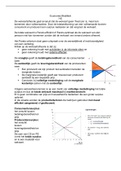
➢ Evolution to 2 concentric circles: the domino effect
o Falling trade barriers within the EEC and within EFTA lead to discrimination
o The GDP (i.e., potential market size) of the EEC much larger than that of EFTA (and EEC
incomes were growing twice as fast)
o Thus, the EEC club was far more attractive to exporters and this leads to new political
pressure for EFTA nations to join the EEC
2
, o The UK applied for membership in 1961 and
Denmark, Ireland, and Norway also followed
since they would otherwise face stronger
discrimination (other EFTA nations did not
apply because of political reasons)
▪ De Gaule stopped UK membership
twice. Denmark, Ireland, and UK join
in 1973 while Norwegians said no in a
referendum
➢ Euro-pessimism: 1973-1986
o Political shocks
▪ ‘Luxembourg Compromise’+
enlargement = decision-making jam
▪ Plans for extensive economic integration promised postponed
o Economic shocks:
▪ Bretton Woods falls apart, 1971-1973
▪ Failed EEC monetary union
▪ 1973 and 1979 oil price shocks with stagflation
▪ Introduction of ‘technical barriers to trade’ as substitute for tariffs
o Bright spots:
▪ Democracy in Spain, Portugal and Greece lead to their accession
▪ EMS set up in 1978 works well
▪ Merger Treaty (1965) and direct election of EU Parliament (1979)
➢ Deeper circles: Single Market Programme
o Jacques Delors launches completion of the internal market
o The Single European Act (SEA, 1987) aims to create "an area without internal frontiers in
which the free movement of goods, persons, services and capital is ensured”(i.e., the
four freedoms promised by the Treaty of Rome)
o It also implemented important institutional changes: majority voting instead on
unanimity on issues related to the Single Market
➢ Basic elements of the Single Market Programme:
o Goods trade liberalization
▪ Streamlining or elimination of border formalities
▪ Harmonization of VAT rates within wide bands
▪ Liberalization of government procurement
▪ Harmonization and mutual recognition of technical standards in production,
packaging and marketing
o Factor trade liberalization
▪ Removal of all capital controls
▪ Liberalization of cross-border market-entry policies, including mutual
recognition of approval by national regulatory agencies
➢ Further domino effect:
o Deeper integration in EC12 strengthened the ‘force for inclusion’ in remaining EFTA
nations
o New ‘forces for inclusion’ lead to a domino effect:
▪ EEA initiative (1989) to extend single market to EFTA nations
▪ Membership applications by all EFTA nations except Iceland and Liechtenstein
• Norwegian rejected (again) membership in a referendum
3
, • Switzerland only adopted a EEA-like bilateral deal with Eu
▪ The fourth enlargement (1995) adds Austria, Finland, Sweden and leads to the
EC15
➢ Communism’s spectacular collapse:
o Division of Europe was cemented by the Berlin Wall (1961)
o By the 1980s, West’s economic system provided a far better way of life
o Up to 1980s, Soviets thwarted reform efforts but inadequacy of Soviet system forced
changes in USSR:
▪ Timid pro-market reforms (perestroika)
▪ Openness (glasnost).
➢ Velvet revolutions in CEECs
o Pro-democracy forces in the central and eastern European countries (CEECs) had been
repeatedly put down by military force hereto but found little resistance from Moscow in
the late 1980s
o June 1989: Polish labour movement ‘Solidarity’ forced free parliamentary elections and
communists lost. Moscow accepted new Polish government
o Moscow’s hands-off approach to the Polish election triggered a chain of events:
▪ Hungary opened its border with Austria and many East Germans moved to West
Germany via Hungary and Austria
▪ Mass protests in East Germany; Wall falls 9th November 1989
▪ End of 1989: democracy in Poland, Hungary, Czechoslovakia
▪ End of 1990: German re-unification
➢ USSR collapse:
o End of 1990: independence of Estonia, Latvia and Lithuania
o End of 1991, the USSR itself breaks up
o The Cold War ends without a shot and with it, the military division of Europe ends
➢ The Maastricht Treaty
o On the success of the Single Market, Delors proposes 2nd radical increase in European
economic integration: monetary union
o Maastricht Treaty signed 1992 committed EU countries to achieve monetary union by
1999, and a single currency to put into circulation by 2002
▪ Ratification difficulties:
• Britain opted out of common currency
• Danish voters rejected the Treaty and reversed their choice only once
Denmark opted out of common currency
➢ Reuniting East and West Europe
o At first, no promise of eventual membership but ‘Europe Agreements’: free trade
agreements with promises of deeper integration and some aid
o In 1993, the EU sets the Copenhagen criteria for accession of CEECs:
▪ political stability of institutions that guarantee democracy, the rule of law,
human rights and respect for and protection of minorities
▪ a functioning market economy capable of dealing with the competitive pressure
and market forces within the Union
▪ acceptance of the Community ‘acquis’(EU law in its entirety) and the ability to
take on the obligations of membership
o Copenhagen summit (2002) says CEEC nations plus Cyprus and Malta join in 2004 (5th
enlargement)
➢ Preparing for eastern enlargement
4
Summary
1. History, facts and institutions
1.1 Early post-war period
➢ In numbers:
➢ The prime question in 1945:
“How can Europe avoid another war?”
3 different solutions, based on 3 different answers to the question ‘What caused the war’:
• Blame Germany
• Blame capitalism
• Blame nationalism
3 different solutions:
• Neutralize Germany (Morgenthau Plan of 1944)
• Adopt communism;
• Pursue European integration (which ultimately prevailed, even though this was far
from clear in the late 1940’s)
➢ Emergence of a divided Europe
o Germany was divided into US, UK, French and Soviet zones
o The Soviet Union “spread” communism in East Europe
o America and Britain rejected the Soviet vision and this confrontation lead to the “Cold
War”:
▪ US, UK, and French zones merged in 1947/8
▪ “Berlin Blockade” and “Berlin air bridge” in 1948
▪ The Federal Republic of Germany established in 1949
o The merger of the French, US and UK zones was a defining moment in Europe and a
precursor of European integration
➢ First steps:
1
, o The USA offered financial assistance if countries agreed on a joint programme for
economic reconstruction (the Marshall Plan, 1948)
▪ The OEEC administered this aid and prompted trade liberalization
▪ The EPU facilitated payments and fostered trade liberalization
o New view: trade liberalization could be pro-growth and pro-industrialization
➢ Need for deeper European integration
o As Cold War got more war-like, West German rearmament became necessary
o But strong and independent Germany was a scary thought for many, including many
Germans
o Widespread feeling: best to embed an economically and militarily strong West Germany
into a supranational Europe
➢ 2 strands of European integration: federalism vs intergovernmentalism (the disagreement
about depth of European integration)
o Intergovernmentalism: nations retain all sovereignty
▪ OEEC (1948), Council of Europe (1949), Court of Human Rights (1950), and EFTA
(1960)
o Federalism: supranational institutions
▪ ECSC (1951): Belgium, France, Germany, Italy, Netherlands and Luxembourg (the
‘Six’) place their coal and steel sectors under the control of a supranational
authority
▪ EEC (1957): riding on the success of the ECSC, the Six committed to form a
customs union, promise free labour mobility, capital market integration, free
trade in services and a range of common policies
Situation by the late ‘60s: 2 non-overlapping circles
➢ Evolution to 2 concentric circles: the domino effect
o Falling trade barriers within the EEC and within EFTA lead to discrimination
o The GDP (i.e., potential market size) of the EEC much larger than that of EFTA (and EEC
incomes were growing twice as fast)
o Thus, the EEC club was far more attractive to exporters and this leads to new political
pressure for EFTA nations to join the EEC
2
, o The UK applied for membership in 1961 and
Denmark, Ireland, and Norway also followed
since they would otherwise face stronger
discrimination (other EFTA nations did not
apply because of political reasons)
▪ De Gaule stopped UK membership
twice. Denmark, Ireland, and UK join
in 1973 while Norwegians said no in a
referendum
➢ Euro-pessimism: 1973-1986
o Political shocks
▪ ‘Luxembourg Compromise’+
enlargement = decision-making jam
▪ Plans for extensive economic integration promised postponed
o Economic shocks:
▪ Bretton Woods falls apart, 1971-1973
▪ Failed EEC monetary union
▪ 1973 and 1979 oil price shocks with stagflation
▪ Introduction of ‘technical barriers to trade’ as substitute for tariffs
o Bright spots:
▪ Democracy in Spain, Portugal and Greece lead to their accession
▪ EMS set up in 1978 works well
▪ Merger Treaty (1965) and direct election of EU Parliament (1979)
➢ Deeper circles: Single Market Programme
o Jacques Delors launches completion of the internal market
o The Single European Act (SEA, 1987) aims to create "an area without internal frontiers in
which the free movement of goods, persons, services and capital is ensured”(i.e., the
four freedoms promised by the Treaty of Rome)
o It also implemented important institutional changes: majority voting instead on
unanimity on issues related to the Single Market
➢ Basic elements of the Single Market Programme:
o Goods trade liberalization
▪ Streamlining or elimination of border formalities
▪ Harmonization of VAT rates within wide bands
▪ Liberalization of government procurement
▪ Harmonization and mutual recognition of technical standards in production,
packaging and marketing
o Factor trade liberalization
▪ Removal of all capital controls
▪ Liberalization of cross-border market-entry policies, including mutual
recognition of approval by national regulatory agencies
➢ Further domino effect:
o Deeper integration in EC12 strengthened the ‘force for inclusion’ in remaining EFTA
nations
o New ‘forces for inclusion’ lead to a domino effect:
▪ EEA initiative (1989) to extend single market to EFTA nations
▪ Membership applications by all EFTA nations except Iceland and Liechtenstein
• Norwegian rejected (again) membership in a referendum
3
, • Switzerland only adopted a EEA-like bilateral deal with Eu
▪ The fourth enlargement (1995) adds Austria, Finland, Sweden and leads to the
EC15
➢ Communism’s spectacular collapse:
o Division of Europe was cemented by the Berlin Wall (1961)
o By the 1980s, West’s economic system provided a far better way of life
o Up to 1980s, Soviets thwarted reform efforts but inadequacy of Soviet system forced
changes in USSR:
▪ Timid pro-market reforms (perestroika)
▪ Openness (glasnost).
➢ Velvet revolutions in CEECs
o Pro-democracy forces in the central and eastern European countries (CEECs) had been
repeatedly put down by military force hereto but found little resistance from Moscow in
the late 1980s
o June 1989: Polish labour movement ‘Solidarity’ forced free parliamentary elections and
communists lost. Moscow accepted new Polish government
o Moscow’s hands-off approach to the Polish election triggered a chain of events:
▪ Hungary opened its border with Austria and many East Germans moved to West
Germany via Hungary and Austria
▪ Mass protests in East Germany; Wall falls 9th November 1989
▪ End of 1989: democracy in Poland, Hungary, Czechoslovakia
▪ End of 1990: German re-unification
➢ USSR collapse:
o End of 1990: independence of Estonia, Latvia and Lithuania
o End of 1991, the USSR itself breaks up
o The Cold War ends without a shot and with it, the military division of Europe ends
➢ The Maastricht Treaty
o On the success of the Single Market, Delors proposes 2nd radical increase in European
economic integration: monetary union
o Maastricht Treaty signed 1992 committed EU countries to achieve monetary union by
1999, and a single currency to put into circulation by 2002
▪ Ratification difficulties:
• Britain opted out of common currency
• Danish voters rejected the Treaty and reversed their choice only once
Denmark opted out of common currency
➢ Reuniting East and West Europe
o At first, no promise of eventual membership but ‘Europe Agreements’: free trade
agreements with promises of deeper integration and some aid
o In 1993, the EU sets the Copenhagen criteria for accession of CEECs:
▪ political stability of institutions that guarantee democracy, the rule of law,
human rights and respect for and protection of minorities
▪ a functioning market economy capable of dealing with the competitive pressure
and market forces within the Union
▪ acceptance of the Community ‘acquis’(EU law in its entirety) and the ability to
take on the obligations of membership
o Copenhagen summit (2002) says CEEC nations plus Cyprus and Malta join in 2004 (5th
enlargement)
➢ Preparing for eastern enlargement
4