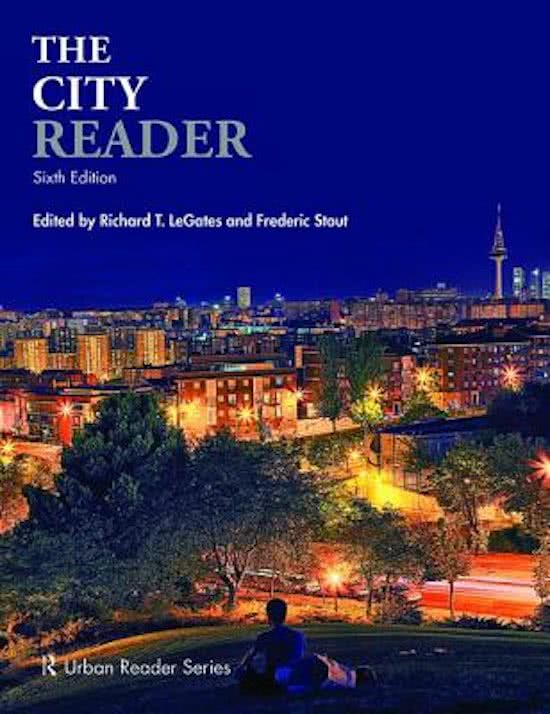
As with the emergence of the modern industrial city and the twentieth-century metropolis, the
rise of a new kind of urban reality in the age of globalism has spawned an enormous body of
descriptive, analytical, and theoretical literature that has led - and continues to lead - to a
fuller understanding of the still-emerging urban future. No scholars have studied that
literature more carefully and persuasively than Neil Brenner and Roger Keil.
They begin by stating that currently “all major indicators suggest that urbanization rates
across the world economy are now higher and more rapid than ever before in human
history”. Today, they note, urbanization has “come to condition all major aspects of planetary
social existence and … the fate of human social life.”
Brenner and Keil argue that world cities are not just major corporate headquarters locations
nor even global command and control centres. Rather, the new global cities raise questions
about “restructuring urban governance and the new contexts for urban social struggles.”
Increasingly, the process of studying these cities must engage “a broad range of globalized
or globalizing vectors” that include not just “economic flows” but “the crystallization of new
social, cultural, political, ecological, media and diasporic networks as well.”
rise of a new kind of urban reality in the age of globalism has spawned an enormous body of
descriptive, analytical, and theoretical literature that has led - and continues to lead - to a
fuller understanding of the still-emerging urban future. No scholars have studied that
literature more carefully and persuasively than Neil Brenner and Roger Keil.
They begin by stating that currently “all major indicators suggest that urbanization rates
across the world economy are now higher and more rapid than ever before in human
history”. Today, they note, urbanization has “come to condition all major aspects of planetary
social existence and … the fate of human social life.”
Brenner and Keil argue that world cities are not just major corporate headquarters locations
nor even global command and control centres. Rather, the new global cities raise questions
about “restructuring urban governance and the new contexts for urban social struggles.”
Increasingly, the process of studying these cities must engage “a broad range of globalized
or globalizing vectors” that include not just “economic flows” but “the crystallization of new
social, cultural, political, ecological, media and diasporic networks as well.”