6. Critical paradigm
1) Context
→ european breeding ground, but also representation in US
→ very different view than mainstream paradigm; liberal-capitalist model is avoidable,
they reject rational and utilitarian model and discuss the pluralist and conservative
functionalist ideology
2) Marxist origins
→ point of departure is the labour process, relevant to media and communication
because it will have an impact on the media messages
→ materialist vision
a. Labour process:
- means of production: natural resources, capital and means of labor
(eg. machines)
- human labor: mental and physical capabilities to produce use value
→ means of production are converted by human labor into forces of
production
→ lead to the formation of two antagonistic classes: capitalists and proletariat
→ this mode is structurally/inherently antagonistic: exploitative relationship
→ dynamic, ambivalent and usually conflictual system
b. Substructure and superstructure
→ base is the most important element in society, the economic base where
we find relations of reduction which reflects on the superstructure of society;
political-legal level, ideological level, media, etc.
→ so whoever has power in substructure, will often have power in
superstructure. eg; if you have money and are part of substructure, you can
‘omkopen’ a judge when in problems
c. Role of culture, media and communication
→fundamentally linked to labor, the capitalists have control over production
and distribution of ideas, in this way they can legitimise their capitalist actions;
make it feel normal → dominant ideology is reproduced and maintains
structural inequality
→ media content is oriented towards status quo
→ so not only inequality in substructure, also in superstructure
1
, d. critiques?
- Almost exclusive power to social class, economic reductionism and
determinism
- Far more complex interplay between structures, possibility for
resistance
3) Frankfurter Schule/critical theory
→ origins in Frankfurt, 1920s, rise of nazism and fascism, influences from Marxism
→ multidisciplinary, great breadth of research; cultural and political
- research programme; general theory of prevailing contemporary social trends,
with attention to specific historical circumstances
→ explicitly normative; study basic and societal values (very general)
→ critique the social inequality, they want free and just society for all
→saw themselves as the heirs of enlightenment
Dialectic enlightenment: rational use of means, but irrational goals, enlightenment
fails to deliver on its promise → self-destruction
a. cultural dimension (Adorno&Horkheimer)
→ culture industry
- Mass culture has misleading connotation; this is not culture of the
masses, but culture used by power centres to dominate the masses
→ in film, newspapers, radio, music, advertising
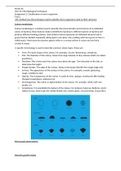
- They made a paradoxical link between industry and culture, meant to
create a shock effect about commodification of culture (=
transformation of culture/art into economic goods and services)
→ industry processes applied to culture, which will further expand the
commodification and which will lead to no difference between culture
industry and traditional goods industry → mass consumption and
production, nothing is spontaneously made, everything prepared →
standardised and predictable products, which will lead to the
consumer needs being false, evoked by the culture industry →
individual disappears in the collective → pseudo-individuality
- cultural pessimism
2
1) Context
→ european breeding ground, but also representation in US
→ very different view than mainstream paradigm; liberal-capitalist model is avoidable,
they reject rational and utilitarian model and discuss the pluralist and conservative
functionalist ideology
2) Marxist origins
→ point of departure is the labour process, relevant to media and communication
because it will have an impact on the media messages
→ materialist vision
a. Labour process:
- means of production: natural resources, capital and means of labor
(eg. machines)
- human labor: mental and physical capabilities to produce use value
→ means of production are converted by human labor into forces of
production
→ lead to the formation of two antagonistic classes: capitalists and proletariat
→ this mode is structurally/inherently antagonistic: exploitative relationship
→ dynamic, ambivalent and usually conflictual system
b. Substructure and superstructure
→ base is the most important element in society, the economic base where
we find relations of reduction which reflects on the superstructure of society;
political-legal level, ideological level, media, etc.
→ so whoever has power in substructure, will often have power in
superstructure. eg; if you have money and are part of substructure, you can
‘omkopen’ a judge when in problems
c. Role of culture, media and communication
→fundamentally linked to labor, the capitalists have control over production
and distribution of ideas, in this way they can legitimise their capitalist actions;
make it feel normal → dominant ideology is reproduced and maintains
structural inequality
→ media content is oriented towards status quo
→ so not only inequality in substructure, also in superstructure
1
, d. critiques?
- Almost exclusive power to social class, economic reductionism and
determinism
- Far more complex interplay between structures, possibility for
resistance
3) Frankfurter Schule/critical theory
→ origins in Frankfurt, 1920s, rise of nazism and fascism, influences from Marxism
→ multidisciplinary, great breadth of research; cultural and political
- research programme; general theory of prevailing contemporary social trends,
with attention to specific historical circumstances
→ explicitly normative; study basic and societal values (very general)
→ critique the social inequality, they want free and just society for all
→saw themselves as the heirs of enlightenment
Dialectic enlightenment: rational use of means, but irrational goals, enlightenment
fails to deliver on its promise → self-destruction
a. cultural dimension (Adorno&Horkheimer)
→ culture industry
- Mass culture has misleading connotation; this is not culture of the
masses, but culture used by power centres to dominate the masses
→ in film, newspapers, radio, music, advertising
- They made a paradoxical link between industry and culture, meant to
create a shock effect about commodification of culture (=
transformation of culture/art into economic goods and services)
→ industry processes applied to culture, which will further expand the
commodification and which will lead to no difference between culture
industry and traditional goods industry → mass consumption and
production, nothing is spontaneously made, everything prepared →
standardised and predictable products, which will lead to the
consumer needs being false, evoked by the culture industry →
individual disappears in the collective → pseudo-individuality
- cultural pessimism
2