‘If-’
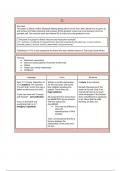
Overview:
This poem is about a father (Rudyard Kipling) giving advice to his son (John) about how to grow up
and achieve his fullest potential and possess all the greatest virtues one must possess to be his
greatest self. One must be stoic and endure life in order to be the greatest he can.
“The poem is a paean to British stoicism and masculine rectitude”.
"If-" contains a multitude of characteristics deemed essential to the ideal man. A man must be
humble, patient, rational, truthful, dependable, and persevering.”
Published in 1910, it was inspired by his friend who led a failed invasion in Transvaal, South Africa.
Themes:
● Manhood, masculinity
● Stoicism (philosophical movement at the time)
● Defeat
● Father-son, family relationship
● Childhood
Language Form Structure
Uses ‘if’ 13 times. Repetition of Written in iambic pentameter 4 octets, 8 line stanzas.
‘If’ is anaphora. The constant for the most part, with some
‘if’s and ‘and’s mimic the way a last syllables breaking this Reveals the purpose of the
father would lecture his child. pattern. Some lines are poem at the end. Only if we
hypercatalectic. read all 32 lines do we learn
‘If you can meet with Triumph what will happen if the listener
and Disaster’ - p
ersonification. All except the first stanza have does everything he's supposed
an ABABCDCD rhyme scheme. to do. Much like the child
‘Yours is the Earth and The first stanza has learning, we learn too.
everything that’s in it,” - AAAABCBC.
metaphor, hyperbole. ● This may be different to
show the
relentlessness of life’s
troubles.
Tone: conversational but like a
lecture, displays the
relationship of the writer and
his son.
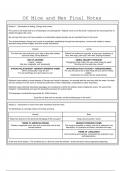
, ‘Prayer Before Birth’
Overview:
The poem is a plea from an unborn child to a divine power. It suggests all the horrors that the world
may inflict on him, in contrast with the wonders of nature. The poem highlights the horrors of war by
juxtaposing them with the innocence of an unborn child. The use of an unborn child narrating might
make this poem more emotional to the reader and more horrific. The d ehumanising effect of war.
“Louis Macneice, born in Belfast Ireland, lived from 1907 until 1963. Therefore, he would have
experienced World War I in his very early years, and World War II in his later years. This particular
poem was written during the second world war. It is easy to see the author’s point of view in this
poem. He writes from his own perspective, as a newborn baby. Of course the readers, being fully
aware that no such prayer can come from an infant, realize that the author himself if speaking his
own thoughts through the infant child. Therefore, the author’s beliefs about evil, war, and the world
are revealed.”
Language Form Structure
Long sentences. Each stanza is only 1 or 2 Dramatic monologue in 8 stanzas although they
sentences long but accounts for entire first person. all differ in lengths;
sentences, as if to prolong the suffering of the generally getting longer
reader much like the child. It is a p
rayer as signified and more intense. The
by the religious length of the stanzas
‘Bloodsucking bat’ - alliteration. references and use of ‘O’. may mimic the growth
of the child as well as a
Imperatives such as ‘O hear me’ and It can be considered a build in intensity.
‘otherwise kill me’ convey the desperation of ritualistic chant due to
the plea. its repetition. The i ndents in the text
create a c rescendo
Assonance is used in for example ‘wise lies The child symbolises the effect to build the
lure me’. writers and his hatred intensity further.
and hopelessness in the
‘Console’, ‘dope’, ‘wall’, ‘lure’, ‘rack’, ‘roll’, world. The finality of the final
‘provide’ are all examples of verbs that are statement ‘otherwise kill
used to convey the horrific world the child will Enjambment is used to me’ breaks the rhythm
be born into, or the dependence of the child. further convey the of the poem and is
endless suffering of the sudden and dramatic.
A lexical field or e
xtended metaphor is used world. ‘Or the… or the’
in stanza 5 with ‘rehearse me… In the parts I also does this, whilst Free verse.
must play’ and ‘cues’ show how the child has also creating a sense of
no control over the world he is a part of. desperation.
‘Man who is beast’ is a metaphor that Says ‘me’ 35 times to
personifies all evil in the world. May emphasise that this is all
symbolise one of the leaders of the war. to protect itself from the
, horrors. The importance
‘Lethal automaton’ suggests that all of a singular child.
individuality will be robbed from the child
when he is born. This along with many, many
other words show the h opelessness of the
child.
‘Blessing’
Overview:
Describes the event of water bursting from a pipe in a slum in Bombay. It is a poem with four
stanzas that highlights the “blessing” of water in people’s lives. Throughout his poem the writer
focuses on the importance of the blessing, even though for many it is a basic commodity.
Language Form Structure
‘The skin’ is a definite article which unifies everyone Free verse with Three stanzas that
in the slum collectively. some inconsistent get longer
and occasional corresponding with
Onomatopoeia - ‘cracks’ rhymes. May mimic the water that flows
the chaos of the from the pipe.
Simile - ‘cracks like a pod’ event.
Short sentences - dramatic impact. Simplicity and Enjambment to
finality. A fact. mimic water.
‘Sometimes, the sudden rush… silver crashes to the
ground’ - S
ibilance (alliteration) which may mimic
the sound of the water.
Sensory imagery - ‘ Imagine the drip of it.’
Alliteration - ‘polished to perfection’.
Unconventional syntax - ‘There never is enough
water’. Draws attention to ‘never’.
Enjambment - to mimic the flow of water.
Long sentences and listing - emphasises the chaos
and behaviour of the water.
Personification - ‘the blessing sings’ and ‘the voice
of a kindly god’ shows the religious, god-like and
angelic nature of the water to the people.
Caesura - ‘A roar of tongues.’
Overview:
This poem is about a father (Rudyard Kipling) giving advice to his son (John) about how to grow up
and achieve his fullest potential and possess all the greatest virtues one must possess to be his
greatest self. One must be stoic and endure life in order to be the greatest he can.
“The poem is a paean to British stoicism and masculine rectitude”.
"If-" contains a multitude of characteristics deemed essential to the ideal man. A man must be
humble, patient, rational, truthful, dependable, and persevering.”
Published in 1910, it was inspired by his friend who led a failed invasion in Transvaal, South Africa.
Themes:
● Manhood, masculinity
● Stoicism (philosophical movement at the time)
● Defeat
● Father-son, family relationship
● Childhood
Language Form Structure
Uses ‘if’ 13 times. Repetition of Written in iambic pentameter 4 octets, 8 line stanzas.
‘If’ is anaphora. The constant for the most part, with some
‘if’s and ‘and’s mimic the way a last syllables breaking this Reveals the purpose of the
father would lecture his child. pattern. Some lines are poem at the end. Only if we
hypercatalectic. read all 32 lines do we learn
‘If you can meet with Triumph what will happen if the listener
and Disaster’ - p
ersonification. All except the first stanza have does everything he's supposed
an ABABCDCD rhyme scheme. to do. Much like the child
‘Yours is the Earth and The first stanza has learning, we learn too.
everything that’s in it,” - AAAABCBC.
metaphor, hyperbole. ● This may be different to
show the
relentlessness of life’s
troubles.
Tone: conversational but like a
lecture, displays the
relationship of the writer and
his son.
, ‘Prayer Before Birth’
Overview:
The poem is a plea from an unborn child to a divine power. It suggests all the horrors that the world
may inflict on him, in contrast with the wonders of nature. The poem highlights the horrors of war by
juxtaposing them with the innocence of an unborn child. The use of an unborn child narrating might
make this poem more emotional to the reader and more horrific. The d ehumanising effect of war.
“Louis Macneice, born in Belfast Ireland, lived from 1907 until 1963. Therefore, he would have
experienced World War I in his very early years, and World War II in his later years. This particular
poem was written during the second world war. It is easy to see the author’s point of view in this
poem. He writes from his own perspective, as a newborn baby. Of course the readers, being fully
aware that no such prayer can come from an infant, realize that the author himself if speaking his
own thoughts through the infant child. Therefore, the author’s beliefs about evil, war, and the world
are revealed.”
Language Form Structure
Long sentences. Each stanza is only 1 or 2 Dramatic monologue in 8 stanzas although they
sentences long but accounts for entire first person. all differ in lengths;
sentences, as if to prolong the suffering of the generally getting longer
reader much like the child. It is a p
rayer as signified and more intense. The
by the religious length of the stanzas
‘Bloodsucking bat’ - alliteration. references and use of ‘O’. may mimic the growth
of the child as well as a
Imperatives such as ‘O hear me’ and It can be considered a build in intensity.
‘otherwise kill me’ convey the desperation of ritualistic chant due to
the plea. its repetition. The i ndents in the text
create a c rescendo
Assonance is used in for example ‘wise lies The child symbolises the effect to build the
lure me’. writers and his hatred intensity further.
and hopelessness in the
‘Console’, ‘dope’, ‘wall’, ‘lure’, ‘rack’, ‘roll’, world. The finality of the final
‘provide’ are all examples of verbs that are statement ‘otherwise kill
used to convey the horrific world the child will Enjambment is used to me’ breaks the rhythm
be born into, or the dependence of the child. further convey the of the poem and is
endless suffering of the sudden and dramatic.
A lexical field or e
xtended metaphor is used world. ‘Or the… or the’
in stanza 5 with ‘rehearse me… In the parts I also does this, whilst Free verse.
must play’ and ‘cues’ show how the child has also creating a sense of
no control over the world he is a part of. desperation.
‘Man who is beast’ is a metaphor that Says ‘me’ 35 times to
personifies all evil in the world. May emphasise that this is all
symbolise one of the leaders of the war. to protect itself from the
, horrors. The importance
‘Lethal automaton’ suggests that all of a singular child.
individuality will be robbed from the child
when he is born. This along with many, many
other words show the h opelessness of the
child.
‘Blessing’
Overview:
Describes the event of water bursting from a pipe in a slum in Bombay. It is a poem with four
stanzas that highlights the “blessing” of water in people’s lives. Throughout his poem the writer
focuses on the importance of the blessing, even though for many it is a basic commodity.
Language Form Structure
‘The skin’ is a definite article which unifies everyone Free verse with Three stanzas that
in the slum collectively. some inconsistent get longer
and occasional corresponding with
Onomatopoeia - ‘cracks’ rhymes. May mimic the water that flows
the chaos of the from the pipe.
Simile - ‘cracks like a pod’ event.
Short sentences - dramatic impact. Simplicity and Enjambment to
finality. A fact. mimic water.
‘Sometimes, the sudden rush… silver crashes to the
ground’ - S
ibilance (alliteration) which may mimic
the sound of the water.
Sensory imagery - ‘ Imagine the drip of it.’
Alliteration - ‘polished to perfection’.
Unconventional syntax - ‘There never is enough
water’. Draws attention to ‘never’.
Enjambment - to mimic the flow of water.
Long sentences and listing - emphasises the chaos
and behaviour of the water.
Personification - ‘the blessing sings’ and ‘the voice
of a kindly god’ shows the religious, god-like and
angelic nature of the water to the people.
Caesura - ‘A roar of tongues.’