NUR 3125 (NUR3125)

University of Central Florida

Here are the best resources to pass NUR 3125 (NUR3125). Find NUR 3125 (NUR3125) study guides, notes, assignments, and much more.

All 22 results

Sort by:

NUR 3125 University Of Central Florida -Cardio Patho Objectives UCF NUR 3125 Exam 2 Questions With Complete Solutions.
  • Exam (elaborations)

    NUR 3125 University Of Central Florida -Cardio Patho Objectives UCF NUR 3125 Exam 2 Questions With Complete Solutions.

  • NUR 3125 University Of Central Florida -Cardio Patho Objectives UCF NUR 3125 Exam 2 Questions With Complete Solutions.
  • Classroom
    $10.99 More Info
Florida Pulmonary Patho Objectives UCF NUR 3125 Exam 2 Questions With Complete Solutions.
  • Exam (elaborations)

    Florida Pulmonary Patho Objectives UCF NUR 3125 Exam 2 Questions With Complete Solutions.

  • Florida Pulmonary Patho Objectives UCF NUR 3125 Exam 2 Questions With Complete Solutions.
  • Classroom
    $13.49 More Info
Hematology Patho Objectives UCF NUR 3125 Exam 2 Questions With Complete Solutions
  • Exam (elaborations)

    Hematology Patho Objectives UCF NUR 3125 Exam 2 Questions With Complete Solutions

  • Hematology Patho Objectives UCF NUR 3125 Exam 2 Questions With Complete Solutions
  • Classroom
    $13.49 More Info
Telemetry Nurse Exam
  • Exam (elaborations)

    Telemetry Nurse Exam

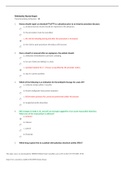
  • Telemetry Nurse Exam Time Remaining (Minutes): 30 1. Nurses should report an elevated PT/aPTT to a physician prior to an invasive procedure because: a. all abnormal lab results should be reported to the physician. b. the procedure must be cancelled. c. the risk for bleeding during and after the procedure is increased. d. the risk for post-procedure thrombus will increase. 2. Once a sheath is removed after an angiogram, the patient should: a. ambulate immediately to prevent cramping. b. ...
  • Studygreatsolutions
    $10.99 More Info
Telemetry Nurse Exam
  • Exam (elaborations)

    Telemetry Nurse Exam

  • Telemetry Nurse Exam Time Remaining (Minutes): 30 1. Nurses should report an elevated PT/aPTT to a physician prior to an invasive procedure because: a. all abnormal lab results should be reported to the physician. b. the procedure must be cancelled. c. the risk for bleeding during and after the procedure is increased. d. the risk for post-procedure thrombus will increase. 2. Once a sheath is removed after an angiogram, the patient should: a. ambulate immediately to prevent cramping. b. ...
  • greatsolutions
    $9.99 More Info
NUR 3125  MS EXAM - QUESTIONS
  • Exam (elaborations)

    NUR 3125 MS EXAM - QUESTIONS

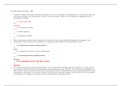
  • 1. A patient’s blood transfusion has been hanging for 2 hours. The patient is complaining of a raised itchy rash and shortness of breath; she is wheezing, anxious, and very restless. Which of the following is suggested by the assessment findings? a. Acute transfusion reaction b. Circulatory overload c. Febrile reaction d. Hemolytic reaction 2. When evaluating a patient with symptoms of shock, the nurse must differentiate between neurogenic and hypovolemic shock. How do the symptoms of...
  • greatsolutions
    $10.99 More Info
Telemetry Exam / complete Q&A_2022.
  • Exam (elaborations)

    Telemetry Exam / complete Q&A_2022.

  • Telemetry Nurse Exam Time Remaining (Minutes): 30 1. Nurses should report an elevated PT/aPTT to a physician prior to an invasive procedure because: a. all abnormal lab results should be reported to the physician. b. the procedure must be cancelled. c. the risk for bleeding during and after the procedure is increased. d. the risk for post-procedure thrombus will increase. 2. Once a sheath is removed after an angiogram, the patient should: a. ambulate immediately to prevent cramping. b. ...
  • greatsolutions
    $8.99 More Info
 NUR 3125 Telemetry Nurse Exam
  • Exam (elaborations)

    NUR 3125 Telemetry Nurse Exam

  • 1. Nurses should report an elevated PT/aPTT to a physician prior to an invasive procedure because: a. all abnormal lab results should be reported to the physician. b. the procedure must be cancelled. c. the risk for bleeding during and after the procedure is increased. d. the risk for post-procedure thrombus will increase. 2. Once a sheath is removed after an angiogram, the patient should: a. ambulate immediately to prevent cramping. b. be out of bed and sitting in a chair. c. maintain b...
  • Studygreatsolutions
    $9.99 More Info
 NUR 3125 MS EXAM - QUESTIONS
  • Exam (elaborations)

    NUR 3125 MS EXAM - QUESTIONS

  • 1. A patient’s blood transfusion has been hanging for 2 hours. The patient is complaining of a raised itchy rash and shortness of breath; she is wheezing, anxious, and very restless. Which of the following is suggested by the assessment findings? a. Acute transfusion reaction b. Circulatory overload c. Febrile reaction d. Hemolytic reaction 2. When evaluating a patient with symptoms of shock, the nurse must differentiate between neurogenic and hypovolemic shock. How do the symptoms of...
  • Studygreatsolutions
    $9.99 More Info
nclex study guide.
  • Exam (elaborations)

    nclex study guide.

  • NCLEX RN STUDY GUIDE. Don’t delegate Unstable patients Initial Assessment, Teaching, IV drips, Evaluations only RN AIRBORNE TRANSMISSION-BASED PRECAUTIONS:
  • Toppnurse
    $15.99 More Info
And that's how you make extra money
Did you know that on average a seller on Stuvia earns $82 per month selling study resources? Hmm, hint, hint.