

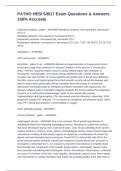
PATHO HESI 5/8/17 Exam Questions & Answers 100% Accurate
acid base analysis - patho - ANSWER-Metabolic acidosis: Decreased pH, decreased HCO 3 - Metabolic alkalosis: Increased pH, increased HCO 3 - Respiratory acidosis: Decreased pH, increased CO 2 Respiratory alkalosis: Increased pH, decreased CO 2 pH: 7.35-7.45 HCO3: 22-29 CO2: 35-45 amputation - ANSWER- APN neuro exam - ANSWER- bronchitis - patho r/t dx - ANSWER-defined as hypersecretion of mucus and chronic productive cough that continues for at least 3 months of the year for 2 consecutive years. PATHO: inspired irritants result in airway inflammation with infiltration of neutrophils, macrophages, and injures airway epithelial cells. causes edema and increase size and number of mucous glands and goblet cells in the airway epithelium. the thick mucus and hypertrophied bronchial smooth muscle narrow the airways and lead to obstruction, particularly during expiration when the airway in constricted. obstruction eventually leads to ventilation perfusion mismatch with hypoxemia. the airways collapse early in expiration trapping expands the thorax putting the respiratory muscles at a mechanical disadvantage. leads to decreased tidal volume, hypoventilation and hypercapnia. CM: decreased exercise tolerance, wheezing, SOB, productive cough,FVC reduced. TX: dx based on symptoms and physical exam, chest xray, PFT, blood gas analyses. bronchodilators, oxygen burns pathophysiology - ANSWER- chronic infection - patho - ANSWER- esophageal varices - ANSWER-The most common CM of portal hypertension is vomiting of blood from bleeding esophageal varices. bleeding is usually from varices that have developed slowly over a period of years. slow chronic bleeding from varices causes anemia or melena. acute rupture of esophageal varices causes hemorrhage and voluminous vomiting of dark blood. rupture is caused by a combination of erosion by gastric acid and elevated venous pressure. Portal HTN is abnormally high BP in the portal venous system primarily caused by resistance to portal blood flow, pressure is increased to 10mmhg from 3. it is caused by disorders that obstruct or impede blood flow through any component of the hepatic portal system. intrahepatic causes reslts from vascular remodeling with intrahepatic shunts, thrombosis, inflammation, or fibrosis as occurs in cirrhosis of the liver, viral hepatitis. posthepatic causes occur from hepatic
Document information
- Uploaded on
- June 11, 2024
- Number of pages
- 35
- Written in
- 2023/2024
- Type
- Exam (elaborations)
- Contains
- Questions & answers


