

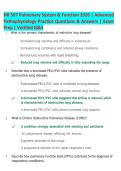
NR 507 Pulmonary System & Function 2026 | Advanced
Pathophysiology Practice Questions & Answers | Exam
Prep | Verified Q&A
1. What is the primary characteristic of restrictive lung diseases?
Increased lung volumes and difficulty in exhaling air.
Increased lung compliance and reduced airway resistance.
Normal lung volumes with rapid breathing.
Reduced lung volumes and difficulty in fully expanding the lungs.
2. Describe how a decreased FEV1/FVC ratio indicates the presence of
obstructive lung disease.
A decreased FEV1/FVC ratio is unrelated to lung diseases.
A decreased FEV1/FVC ratio indicates normal lung function.
A decreased FEV1/FVC ratio suggests that airflow is reduced, which
is characteristic of obstructive lung disease.
A decreased FEV1/FVC ratio shows increased lung capacity.
3. What is Chronic Obstructive Pulmonary Disease (COPD)?
A condition strongly associated with smoking and pollutants
An autoimmune disease affecting the bronchi
A genetic disorder of the lungs
A progressive disorder of the upper respiratory tract
4. Describe how pulmonary function tests (PFTs) contribute to the diagnosis of
respiratory conditions.
, PFTs measure the effectiveness of medications for diabetes.
PFTs are used to evaluate mental health disorders.
PFTs are primarily used to assess cardiovascular health.
PFTs provide measurements of lung function that help identify and
differentiate respiratory conditions.
5. What is the definition of Forced Vital Capacity (FVC) in the context of
pulmonary function tests?
The volume of air exhaled in the first second of a forced exhalation.
The amount of air remaining in the lungs after a normal exhalation.
The maximum volume of air that can be inhaled after a normal
exhalation.
The total amount of air that can be forcibly exhaled after taking the
deepest breath possible.
6. What factors influence the movement of air in and out of the lungs?
Muscle contractions and nerve impulses
Blood flow and heart rate
Oxygen levels and carbon dioxide levels
Lung volumes, pressures, and airway resistance
7. Chronic bronchitis is a(n):
Abnormal distention of airspaces resulting in impaired oxygen and
carbon dioxide exchange from destruction of walls of over distended
alveoli
Inflammation of the bronchi resulting in increased mucus
production
8. What is the primary function of bronchodilators in treating obstructive lung
, diseases?
Relax airway muscles and improve airflow
Increase lung capacity
Enhance gas exchange
Reduce inflammation in the lungs
9. If a patient exhibits a significantly reduced tidal volume during a spirometry
test, what might this indicate about their respiratory health?
Effective gas exchange
Potential respiratory impairment
Normal lung function
Increased lung capacity
10. How do bronchodilators primarily work in COPD management?
They constrict the airways
They stimulate mucus production
They suppress the immune system
They relax the airway muscles
11. Describe how chronic bronchitis impacts lung function and airflow.
Chronic bronchitis has no effect on airflow or lung function.
Chronic bronchitis causes the lungs to expand more efficiently.
Chronic bronchitis improves lung function by increasing lung capacity.
Chronic bronchitis leads to obstructed airflow due to inflammation
and mucus production in the airways.
, 12. Which of the following is an obstructive lung disease?
Asthma
Sarcoidosis
Obesity
Pregnancy
13. Describe the role of FEV1 in the evaluation of lung function and its
importance in diagnosing respiratory conditions.
FEV1 measures the total lung capacity and is used to assess lung size.
FEV1 indicates the strength of respiratory muscles.
FEV1 is crucial for evaluating lung function as it indicates the
volume of air exhaled in the first second, helping to identify
obstructive and restrictive lung diseases.
FEV1 is used to measure oxygen levels in the blood.
14. Describe the significance of measuring Forced Vital Capacity (FVC) in
diagnosing respiratory conditions.
Measuring FVC helps assess lung function and can indicate the
presence of restrictive lung diseases.
FVC is primarily used to evaluate heart function.
FVC provides information about the efficiency of gas exchange in the
alveoli.
FVC is used to measure blood oxygen levels in the lungs.
15. What does a reduced FEV1/FVC ratio indicate in terms of lung disease
classification?
Infection
Restrictive lung disease
Pathophysiology Practice Questions & Answers | Exam
Prep | Verified Q&A
1. What is the primary characteristic of restrictive lung diseases?
Increased lung volumes and difficulty in exhaling air.
Increased lung compliance and reduced airway resistance.
Normal lung volumes with rapid breathing.
Reduced lung volumes and difficulty in fully expanding the lungs.
2. Describe how a decreased FEV1/FVC ratio indicates the presence of
obstructive lung disease.
A decreased FEV1/FVC ratio is unrelated to lung diseases.
A decreased FEV1/FVC ratio indicates normal lung function.
A decreased FEV1/FVC ratio suggests that airflow is reduced, which
is characteristic of obstructive lung disease.
A decreased FEV1/FVC ratio shows increased lung capacity.
3. What is Chronic Obstructive Pulmonary Disease (COPD)?
A condition strongly associated with smoking and pollutants
An autoimmune disease affecting the bronchi
A genetic disorder of the lungs
A progressive disorder of the upper respiratory tract
4. Describe how pulmonary function tests (PFTs) contribute to the diagnosis of
respiratory conditions.
, PFTs measure the effectiveness of medications for diabetes.
PFTs are used to evaluate mental health disorders.
PFTs are primarily used to assess cardiovascular health.
PFTs provide measurements of lung function that help identify and
differentiate respiratory conditions.
5. What is the definition of Forced Vital Capacity (FVC) in the context of
pulmonary function tests?
The volume of air exhaled in the first second of a forced exhalation.
The amount of air remaining in the lungs after a normal exhalation.
The maximum volume of air that can be inhaled after a normal
exhalation.
The total amount of air that can be forcibly exhaled after taking the
deepest breath possible.
6. What factors influence the movement of air in and out of the lungs?
Muscle contractions and nerve impulses
Blood flow and heart rate
Oxygen levels and carbon dioxide levels
Lung volumes, pressures, and airway resistance
7. Chronic bronchitis is a(n):
Abnormal distention of airspaces resulting in impaired oxygen and
carbon dioxide exchange from destruction of walls of over distended
alveoli
Inflammation of the bronchi resulting in increased mucus
production
8. What is the primary function of bronchodilators in treating obstructive lung
, diseases?
Relax airway muscles and improve airflow
Increase lung capacity
Enhance gas exchange
Reduce inflammation in the lungs
9. If a patient exhibits a significantly reduced tidal volume during a spirometry
test, what might this indicate about their respiratory health?
Effective gas exchange
Potential respiratory impairment
Normal lung function
Increased lung capacity
10. How do bronchodilators primarily work in COPD management?
They constrict the airways
They stimulate mucus production
They suppress the immune system
They relax the airway muscles
11. Describe how chronic bronchitis impacts lung function and airflow.
Chronic bronchitis has no effect on airflow or lung function.
Chronic bronchitis causes the lungs to expand more efficiently.
Chronic bronchitis improves lung function by increasing lung capacity.
Chronic bronchitis leads to obstructed airflow due to inflammation
and mucus production in the airways.
, 12. Which of the following is an obstructive lung disease?
Asthma
Sarcoidosis
Obesity
Pregnancy
13. Describe the role of FEV1 in the evaluation of lung function and its
importance in diagnosing respiratory conditions.
FEV1 measures the total lung capacity and is used to assess lung size.
FEV1 indicates the strength of respiratory muscles.
FEV1 is crucial for evaluating lung function as it indicates the
volume of air exhaled in the first second, helping to identify
obstructive and restrictive lung diseases.
FEV1 is used to measure oxygen levels in the blood.
14. Describe the significance of measuring Forced Vital Capacity (FVC) in
diagnosing respiratory conditions.
Measuring FVC helps assess lung function and can indicate the
presence of restrictive lung diseases.
FVC is primarily used to evaluate heart function.
FVC provides information about the efficiency of gas exchange in the
alveoli.
FVC is used to measure blood oxygen levels in the lungs.
15. What does a reduced FEV1/FVC ratio indicate in terms of lung disease
classification?
Infection
Restrictive lung disease


