
2026/2027
,2026/2027
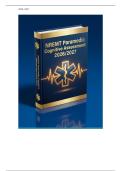
NREMT Paramedic Cognitive
Assessment 2026/2027 Ultimate
Review and Study Guide Complete
Exam Preparation, In-Depth
Practice Tests, and Final Assessment
Manual
Question 16
Question 1
A patient does not respond to speech but withdraws an arm when an appropriate
painful stimulus is applied. How should this response be documented using AVPU?
A. Alert
B. Responsive to verbal stimuli
C. Responsive to painful stimuli
D. Unresponsive
Correct Answer: C. Responsive to painful stimuli
Rationale: Withdrawal or another purposeful reaction occurring only after painful
stimulation is classified as “P” on the AVPU scale. The patient is not alert and does
not respond to verbal commands. “Unresponsive” would be used only when no
reaction occurs after verbal and appropriate painful stimulation. Pain should be
assessed using an accepted technique and should never be applied excessively or
repeatedly.
Question 2
Which situation is best classified as a nature-of-illness presentation rather than a
mechanism-of-injury presentation?
A. A construction worker struck by falling equipment
B. A driver injured in a rollover collision
C. An older adult with sudden chest pressure and diaphoresis
D. A child who fell from playground equipment
Correct Answer: C. An older adult with sudden chest pressure and diaphoresis
,2026/2027
A.
B.
C.
D.
Rationale: Nature of illness describes the medical condition or disease process
responsible for a patient’s symptoms, such as myocardial infarction, seizure,
poisoning, or diabetic emergency. The other scenarios involve external physical
forces and are therefore mechanisms of injury. Distinguishing illness from trauma
helps the clinician anticipate likely complications, select appropriate assessment
techniques, and determine necessary resources.
Question 3
Before stepping out of the ambulance at a scene involving visible blood, which action
best demonstrates appropriate standard precautions?
A. Put on gloves and any additional PPE indicated by the situation
B. Ask the patient whether they have an infectious disease
C. Wait until direct patient contact before applying gloves
D. Avoid touching the patient unless bleeding is severe
Correct Answer: A. Put on gloves and any additional PPE indicated by the
situation
Rationale: Personal protective equipment should be applied before anticipated
exposure to blood, body fluids, respiratory droplets, or other hazards. Gloves are the
minimum protection when blood is present, while masks, gowns, and eye protection
may also be necessary. Asking about infection does not eliminate risk because
patients may be unaware of their status. PPE should not be delayed until after
exposure occurs.
Question 4
A conscious patient reports severe shortness of breath and says, “I feel as though I
cannot get enough air.” This statement most directly identifies the patient’s:
A. Chief complaint
B. Pertinent negative
C. Mechanism of injury
D. Past medical history
Correct Answer: A. Chief complaint
, 2026/2027
Rationale: The chief complaint is the primary symptom, problem, or concern that
caused the patient to seek emergency care. It is ideally recorded in the patient’s own
words. A pertinent negative is an important symptom the patient denies. Mechanism
of injury applies to traumatic forces, while past medical history describes previous
diseases, surgeries, or health conditions rather than the present concern.
Question 5
An EMS crew arrives at a residence after receiving a report of an unconscious person.
Before approaching the patient, what should the team do first?
A. Obtain the patient’s medical history
B. Begin the primary assessment
C. Perform a scene size-up
D. Check the patient’s blood glucose
Correct Answer: C. Perform a scene size-up
Rationale: Scene size-up is the first phase of patient assessment because rescuers
must identify hazards, determine the number of patients, consider the mechanism of
injury or nature of illness, and decide whether additional resources are needed. The
primary assessment and diagnostic procedures occur only after the scene is
reasonably safe. Medical history cannot be obtained reliably before immediate threats
are addressed.
Question 6
A patient’s eyes remain closed, but the patient opens them and answers briefly when
the EMT says their name loudly. Which AVPU category applies?
A. Alert
B. Verbal
C. Painful
D. Unresponsive
Correct Answer: B. Verbal
Rationale: The “V” category indicates that the patient responds to verbal stimulation
but is not spontaneously alert. Opening the eyes or speaking only when addressed
meets this criterion. A patient responding solely to painful stimulation would be
classified as “P,” while no response would be “U.” An alert patient would already be
awake and interacting before the EMT spoke.
,2026/2027
NREMT Paramedic Cognitive
Assessment 2026/2027 Ultimate
Review and Study Guide Complete
Exam Preparation, In-Depth
Practice Tests, and Final Assessment
Manual
Question 16
Question 1
A patient does not respond to speech but withdraws an arm when an appropriate
painful stimulus is applied. How should this response be documented using AVPU?
A. Alert
B. Responsive to verbal stimuli
C. Responsive to painful stimuli
D. Unresponsive
Correct Answer: C. Responsive to painful stimuli
Rationale: Withdrawal or another purposeful reaction occurring only after painful
stimulation is classified as “P” on the AVPU scale. The patient is not alert and does
not respond to verbal commands. “Unresponsive” would be used only when no
reaction occurs after verbal and appropriate painful stimulation. Pain should be
assessed using an accepted technique and should never be applied excessively or
repeatedly.
Question 2
Which situation is best classified as a nature-of-illness presentation rather than a
mechanism-of-injury presentation?
A. A construction worker struck by falling equipment
B. A driver injured in a rollover collision
C. An older adult with sudden chest pressure and diaphoresis
D. A child who fell from playground equipment
Correct Answer: C. An older adult with sudden chest pressure and diaphoresis
,2026/2027
A.
B.
C.
D.
Rationale: Nature of illness describes the medical condition or disease process
responsible for a patient’s symptoms, such as myocardial infarction, seizure,
poisoning, or diabetic emergency. The other scenarios involve external physical
forces and are therefore mechanisms of injury. Distinguishing illness from trauma
helps the clinician anticipate likely complications, select appropriate assessment
techniques, and determine necessary resources.
Question 3
Before stepping out of the ambulance at a scene involving visible blood, which action
best demonstrates appropriate standard precautions?
A. Put on gloves and any additional PPE indicated by the situation
B. Ask the patient whether they have an infectious disease
C. Wait until direct patient contact before applying gloves
D. Avoid touching the patient unless bleeding is severe
Correct Answer: A. Put on gloves and any additional PPE indicated by the
situation
Rationale: Personal protective equipment should be applied before anticipated
exposure to blood, body fluids, respiratory droplets, or other hazards. Gloves are the
minimum protection when blood is present, while masks, gowns, and eye protection
may also be necessary. Asking about infection does not eliminate risk because
patients may be unaware of their status. PPE should not be delayed until after
exposure occurs.
Question 4
A conscious patient reports severe shortness of breath and says, “I feel as though I
cannot get enough air.” This statement most directly identifies the patient’s:
A. Chief complaint
B. Pertinent negative
C. Mechanism of injury
D. Past medical history
Correct Answer: A. Chief complaint
, 2026/2027
Rationale: The chief complaint is the primary symptom, problem, or concern that
caused the patient to seek emergency care. It is ideally recorded in the patient’s own
words. A pertinent negative is an important symptom the patient denies. Mechanism
of injury applies to traumatic forces, while past medical history describes previous
diseases, surgeries, or health conditions rather than the present concern.
Question 5
An EMS crew arrives at a residence after receiving a report of an unconscious person.
Before approaching the patient, what should the team do first?
A. Obtain the patient’s medical history
B. Begin the primary assessment
C. Perform a scene size-up
D. Check the patient’s blood glucose
Correct Answer: C. Perform a scene size-up
Rationale: Scene size-up is the first phase of patient assessment because rescuers
must identify hazards, determine the number of patients, consider the mechanism of
injury or nature of illness, and decide whether additional resources are needed. The
primary assessment and diagnostic procedures occur only after the scene is
reasonably safe. Medical history cannot be obtained reliably before immediate threats
are addressed.
Question 6
A patient’s eyes remain closed, but the patient opens them and answers briefly when
the EMT says their name loudly. Which AVPU category applies?
A. Alert
B. Verbal
C. Painful
D. Unresponsive
Correct Answer: B. Verbal
Rationale: The “V” category indicates that the patient responds to verbal stimulation
but is not spontaneously alert. Opening the eyes or speaking only when addressed
meets this criterion. A patient responding solely to painful stimulation would be
classified as “P,” while no response would be “U.” An alert patient would already be
awake and interacting before the EMT spoke.


