

2026/2027
,2026/2027
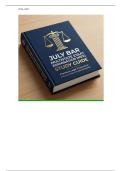
July Bar Multistate Essay
Examination (MEE) 2026/2027 All-
Inclusive Certification Study Guide:
Extensive Practice Questions,
Complete Test Bank Review,
Detailed Knowledge Assessment, and
Final Exam Prep Manual
Question 16
Question 1
A homeowner gives police permission to search her adult son’s bedroom. Although
the bedroom is unlocked, the son keeps a locked footlocker in the room that belongs
exclusively to him. The homeowner does not have a key to the footlocker. May the
police rely on the homeowner’s consent to open it?
A. Yes, because a parent automatically has authority over all property in the home
B. Yes, because consent to search a room includes every container located inside it
C. No, because the locked footlocker indicates the son’s exclusive control and the
homeowner lacks apparent authority
D. No, because third-party consent is never constitutionally valid
Correct Answer: C. No, because the locked footlocker indicates the son’s
exclusive control and the homeowner lacks apparent authority
Rationale: A person may generally consent to a search of areas over which that
person has actual or apparent common authority. However, a locked container
exclusively controlled by another person indicates that the consenting party lacks
authority to permit its search. The parent-child relationship alone does not establish
authority over the son’s private container.
Question 2
A defendant plans to burglarize a jewelry store. At midnight, she arrives at the store
carrying lock-picking equipment, cuts the alarm wires, and begins forcing open the
rear door. Police arrest her before she enters the building. Under the Model Penal
Code, what is the most accurate conclusion?
,2026/2027
A. She is not guilty of attempt because she never entered the store
B. She is guilty only of possessing burglary tools
C. She is guilty of attempted burglary because she took a substantial step strongly
corroborating her criminal purpose
D. She is guilty of completed burglary because she damaged the alarm system
Correct Answer: C. She is guilty of attempted burglary because she took a
substantial step strongly corroborating her criminal purpose
Rationale: Attempt requires the specific intent to commit the target offense and
conduct beyond mere preparation. Under the Model Penal Code, cutting the alarm
wires and beginning to force open the door constitute substantial steps that strongly
corroborate the defendant’s criminal purpose. Actual entry is unnecessary for attempt
liability.
Question 3
Police unlawfully search a homeowner’s residence. A social guest who arrived only a
few minutes earlier seeks to suppress drugs discovered beneath the homeowner’s bed.
Does the guest have Fourth Amendment standing?
A. Yes, because anyone present during an unlawful search may challenge it
B. Yes, because the evidence could potentially be used against the guest
C. No, because a brief social guest ordinarily lacks a reasonable expectation of
privacy in the home
D. No, because only property owners possess Fourth Amendment rights
Correct Answer: C. No, because a brief social guest ordinarily lacks a reasonable
expectation of privacy in the home
Rationale: Fourth Amendment rights are personal and generally require the defendant
to have a reasonable expectation of privacy in the place searched. Homeowners and
overnight guests usually have such an expectation, but a short-term social guest
ordinarily does not. Ownership is not always required, but mere presence is
insufficient.
Question 4
A business owner offers an employee $20,000 to burn a competitor’s warehouse. The
employee immediately agrees and purchases gasoline but is arrested before reaching
the warehouse. Which statement most accurately describes the owner’s potential
liability?
A. The owner may be convicted separately of solicitation and conspiracy
B. Solicitation merges into conspiracy once the employee agrees to commit the crime
, 2026/2027
C. Solicitation merges only if the warehouse is successfully burned
D. The owner cannot be guilty of conspiracy until the arson is completed
Correct Answer: B. Solicitation merges into conspiracy once the employee agrees
to commit the crime
Rationale: Solicitation is complete when a person asks or encourages another to
commit a crime with the intent that the crime occur. Once the employee agrees, the
solicitation ordinarily merges into the conspiracy. The conspiracy may be complete
even though the planned arson never occurs. The employee’s purchase of gasoline
may also satisfy an applicable overt-act requirement.
Question 5
A police officer lawfully enters a home pursuant to a warrant authorizing a search for
a stolen television. While searching, the officer sees a small bag containing a
substance that is immediately recognizable as cocaine. May the officer seize the
substance?
A. No, because cocaine was not specifically identified in the warrant
B. Yes, because the officer is lawfully present and the item’s incriminating nature is
immediately apparent
C. No, unless the officer first manipulates or tests the substance
D. Yes, because every item discovered during a warrant search may automatically be
seized
Correct Answer: B. Yes, because the officer is lawfully present and the item’s
incriminating nature is immediately apparent
Rationale: Under the plain-view doctrine, police may seize an item when they are
lawfully present, have lawful access to the item, and its incriminating character is
immediately apparent. The officer does not need a warrant specifically identifying
every piece of contraband that may be encountered.
Question 6
A driver waits outside a store while his companion commits an armed robbery. The
driver knows about the plan, intends to assist, and drives the companion away
afterward. During the robbery, the companion unexpectedly shoots a security guard.
Which statement is most accurate?
A. The driver is liable only as an accessory after the fact
B. The driver is liable for the robbery but can never be liable for the shooting
C. The driver may be liable for the shooting if it was a foreseeable and probable
,2026/2027
July Bar Multistate Essay
Examination (MEE) 2026/2027 All-
Inclusive Certification Study Guide:
Extensive Practice Questions,
Complete Test Bank Review,
Detailed Knowledge Assessment, and
Final Exam Prep Manual
Question 16
Question 1
A homeowner gives police permission to search her adult son’s bedroom. Although
the bedroom is unlocked, the son keeps a locked footlocker in the room that belongs
exclusively to him. The homeowner does not have a key to the footlocker. May the
police rely on the homeowner’s consent to open it?
A. Yes, because a parent automatically has authority over all property in the home
B. Yes, because consent to search a room includes every container located inside it
C. No, because the locked footlocker indicates the son’s exclusive control and the
homeowner lacks apparent authority
D. No, because third-party consent is never constitutionally valid
Correct Answer: C. No, because the locked footlocker indicates the son’s
exclusive control and the homeowner lacks apparent authority
Rationale: A person may generally consent to a search of areas over which that
person has actual or apparent common authority. However, a locked container
exclusively controlled by another person indicates that the consenting party lacks
authority to permit its search. The parent-child relationship alone does not establish
authority over the son’s private container.
Question 2
A defendant plans to burglarize a jewelry store. At midnight, she arrives at the store
carrying lock-picking equipment, cuts the alarm wires, and begins forcing open the
rear door. Police arrest her before she enters the building. Under the Model Penal
Code, what is the most accurate conclusion?
,2026/2027
A. She is not guilty of attempt because she never entered the store
B. She is guilty only of possessing burglary tools
C. She is guilty of attempted burglary because she took a substantial step strongly
corroborating her criminal purpose
D. She is guilty of completed burglary because she damaged the alarm system
Correct Answer: C. She is guilty of attempted burglary because she took a
substantial step strongly corroborating her criminal purpose
Rationale: Attempt requires the specific intent to commit the target offense and
conduct beyond mere preparation. Under the Model Penal Code, cutting the alarm
wires and beginning to force open the door constitute substantial steps that strongly
corroborate the defendant’s criminal purpose. Actual entry is unnecessary for attempt
liability.
Question 3
Police unlawfully search a homeowner’s residence. A social guest who arrived only a
few minutes earlier seeks to suppress drugs discovered beneath the homeowner’s bed.
Does the guest have Fourth Amendment standing?
A. Yes, because anyone present during an unlawful search may challenge it
B. Yes, because the evidence could potentially be used against the guest
C. No, because a brief social guest ordinarily lacks a reasonable expectation of
privacy in the home
D. No, because only property owners possess Fourth Amendment rights
Correct Answer: C. No, because a brief social guest ordinarily lacks a reasonable
expectation of privacy in the home
Rationale: Fourth Amendment rights are personal and generally require the defendant
to have a reasonable expectation of privacy in the place searched. Homeowners and
overnight guests usually have such an expectation, but a short-term social guest
ordinarily does not. Ownership is not always required, but mere presence is
insufficient.
Question 4
A business owner offers an employee $20,000 to burn a competitor’s warehouse. The
employee immediately agrees and purchases gasoline but is arrested before reaching
the warehouse. Which statement most accurately describes the owner’s potential
liability?
A. The owner may be convicted separately of solicitation and conspiracy
B. Solicitation merges into conspiracy once the employee agrees to commit the crime
, 2026/2027
C. Solicitation merges only if the warehouse is successfully burned
D. The owner cannot be guilty of conspiracy until the arson is completed
Correct Answer: B. Solicitation merges into conspiracy once the employee agrees
to commit the crime
Rationale: Solicitation is complete when a person asks or encourages another to
commit a crime with the intent that the crime occur. Once the employee agrees, the
solicitation ordinarily merges into the conspiracy. The conspiracy may be complete
even though the planned arson never occurs. The employee’s purchase of gasoline
may also satisfy an applicable overt-act requirement.
Question 5
A police officer lawfully enters a home pursuant to a warrant authorizing a search for
a stolen television. While searching, the officer sees a small bag containing a
substance that is immediately recognizable as cocaine. May the officer seize the
substance?
A. No, because cocaine was not specifically identified in the warrant
B. Yes, because the officer is lawfully present and the item’s incriminating nature is
immediately apparent
C. No, unless the officer first manipulates or tests the substance
D. Yes, because every item discovered during a warrant search may automatically be
seized
Correct Answer: B. Yes, because the officer is lawfully present and the item’s
incriminating nature is immediately apparent
Rationale: Under the plain-view doctrine, police may seize an item when they are
lawfully present, have lawful access to the item, and its incriminating character is
immediately apparent. The officer does not need a warrant specifically identifying
every piece of contraband that may be encountered.
Question 6
A driver waits outside a store while his companion commits an armed robbery. The
driver knows about the plan, intends to assist, and drives the companion away
afterward. During the robbery, the companion unexpectedly shoots a security guard.
Which statement is most accurate?
A. The driver is liable only as an accessory after the fact
B. The driver is liable for the robbery but can never be liable for the shooting
C. The driver may be liable for the shooting if it was a foreseeable and probable


