NBDE Part II – Endodontics
31 QUESTIONS
,CLINICAL DIAGNOSIS, CASE SELECTION, TREATMENT PLANNING, AND PATIENT
MANAGEMENT (19 questions)
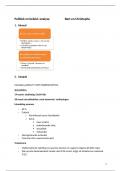
PULP BIOLOGY
Contains loose fibrous connective tissue with nerves, blood vessels, and
lymphatics
Contains fibroblasts that secrete fibrous connective tissue
Contains odontoblasts that secrete primary dentin before root formation is
complete and secondary dentin after root formation is complete
Contains undifferentiated mesenchymal cells that can differentiate into
secondary odontoblasts to form tertiary dentin to protect the pulp from
injury
Surrounded by hard dentin which limits its ability to expand
Lacks collateral circulation which limits its ability to cope with infection
DENTIN AND PULP DEFENSE
Sclerotic dentin= calcification of tubules in response to slowly advancing caries or aging
Reactionary dentin= secondary dentin, reaction to minor damage
Reparative dentin= tertiary dentin, repair for major damage
Pulpal necrosis= response to rapidly advancing caries or other severe damage
Bacteria (0.5-1µm) from dental caries are the main cause of serious pulpal injury, and can
penetrate beyond the obvious caries through dentinal tubules (diameter of 1-2.5µm).
HISTOLOGIC ZONES OF PULP
From outside to inside:
Predentin
Odontoblastic layer
Cell-free zone of Weil= contains nerve bundles
Cell-rich zone
Pulp core
DENTINAL PAIN Aδ fibers
Large myelinated afferent nerve
Course coronally through pulp
Sharp transient “first pain”
Cold
Pulpodentinal complex refers to intimate association of A δ fibers with odontoblastic cell
layer and dentin, hence why it is called dentinal pain
PULPITIS PAIN C fibers
Small unmyelinated afferent nerve
Course centrally in the pulp stroma
, NOT associated with pulpodentinal complex and NOT as easily provoked
Dull throbbing “second pain”
Heat
Progression of pulpal inflammation can change pain response from first pain (A δ) to second pain (C).
PAIN SENSITIZATION
Hyperalgesia= heighted response to pain, inflammatory mediators in pulp can increase the
pain from a stimulus
Allodynia= reduced pain threshold, pain due to stimulus that does not normally provoke
pain sunburnt skin is an example of aloe-dynia
REFERRED PAIN
Preauricular pain often refers from mandibular molars since both share V3 innervation
CLINICAL CLASSIFICATION OF PULP
Normal Pulp
Asymptomatic
Mild to moderate transient (subsides when removed, momentary) response to thermal and
electrical stimuli
No pain on percussion or palpation
Reversible Pulpitis
Symptomatic
Thermal (usually cold) stimulus causes quick, sharp, hypersensitive, transient response
No complaints of spontaneous pain
Caused by an irritant that affects the pulp—caries, SRP, deep restorations without a base
Symptom, not a disease—if irritant is removed, the pulp reverts to uninflamed state; if
irritant remains, the symptoms may lead to irreversible pulpitis
Frank penetration of bacteria into the pulp frequently is the crossover point to irreversible
pulpitis
Symptomatic Irreversible Pulpitis
Pulp has been irreversibly damaged beyond repair; even with removal of the irritant it will
not fully heal
Microscopic findings include microabscesses, tiny zones of necrosis within dense acute
inflammatory cells and intact nerves in areas with dense inflammation and cellular
degeneration
Characterized by spontaneous (unprovoked) intermittent or continuous pain
Thermal (often cold) stimulus causes lingering (prolonged pain even after stimulus is
removed) pain
Postural changes like bending over or lying down increases blood pressure to the head and
may exacerbate dental pain
31 QUESTIONS
,CLINICAL DIAGNOSIS, CASE SELECTION, TREATMENT PLANNING, AND PATIENT
MANAGEMENT (19 questions)
PULP BIOLOGY
Contains loose fibrous connective tissue with nerves, blood vessels, and
lymphatics
Contains fibroblasts that secrete fibrous connective tissue
Contains odontoblasts that secrete primary dentin before root formation is
complete and secondary dentin after root formation is complete
Contains undifferentiated mesenchymal cells that can differentiate into
secondary odontoblasts to form tertiary dentin to protect the pulp from
injury
Surrounded by hard dentin which limits its ability to expand
Lacks collateral circulation which limits its ability to cope with infection
DENTIN AND PULP DEFENSE
Sclerotic dentin= calcification of tubules in response to slowly advancing caries or aging
Reactionary dentin= secondary dentin, reaction to minor damage
Reparative dentin= tertiary dentin, repair for major damage
Pulpal necrosis= response to rapidly advancing caries or other severe damage
Bacteria (0.5-1µm) from dental caries are the main cause of serious pulpal injury, and can
penetrate beyond the obvious caries through dentinal tubules (diameter of 1-2.5µm).
HISTOLOGIC ZONES OF PULP
From outside to inside:
Predentin
Odontoblastic layer
Cell-free zone of Weil= contains nerve bundles
Cell-rich zone
Pulp core
DENTINAL PAIN Aδ fibers
Large myelinated afferent nerve
Course coronally through pulp
Sharp transient “first pain”
Cold
Pulpodentinal complex refers to intimate association of A δ fibers with odontoblastic cell
layer and dentin, hence why it is called dentinal pain
PULPITIS PAIN C fibers
Small unmyelinated afferent nerve
Course centrally in the pulp stroma
, NOT associated with pulpodentinal complex and NOT as easily provoked
Dull throbbing “second pain”
Heat
Progression of pulpal inflammation can change pain response from first pain (A δ) to second pain (C).
PAIN SENSITIZATION
Hyperalgesia= heighted response to pain, inflammatory mediators in pulp can increase the
pain from a stimulus
Allodynia= reduced pain threshold, pain due to stimulus that does not normally provoke
pain sunburnt skin is an example of aloe-dynia
REFERRED PAIN
Preauricular pain often refers from mandibular molars since both share V3 innervation
CLINICAL CLASSIFICATION OF PULP
Normal Pulp
Asymptomatic
Mild to moderate transient (subsides when removed, momentary) response to thermal and
electrical stimuli
No pain on percussion or palpation
Reversible Pulpitis
Symptomatic
Thermal (usually cold) stimulus causes quick, sharp, hypersensitive, transient response
No complaints of spontaneous pain
Caused by an irritant that affects the pulp—caries, SRP, deep restorations without a base
Symptom, not a disease—if irritant is removed, the pulp reverts to uninflamed state; if
irritant remains, the symptoms may lead to irreversible pulpitis
Frank penetration of bacteria into the pulp frequently is the crossover point to irreversible
pulpitis
Symptomatic Irreversible Pulpitis
Pulp has been irreversibly damaged beyond repair; even with removal of the irritant it will
not fully heal
Microscopic findings include microabscesses, tiny zones of necrosis within dense acute
inflammatory cells and intact nerves in areas with dense inflammation and cellular
degeneration
Characterized by spontaneous (unprovoked) intermittent or continuous pain
Thermal (often cold) stimulus causes lingering (prolonged pain even after stimulus is
removed) pain
Postural changes like bending over or lying down increases blood pressure to the head and
may exacerbate dental pain