

NURSING BS C787 (NURSING BS C787)
Western Governors University
Here are the best resources to pass NURSING BS C787 (NURSING BS C787). Find NURSING BS C787 (NURSING BS C787) study guides, notes, assignments, and much more.
Exam (elaborations)
NUTRITION C787 - Nutrition Study Guide 2
NUTRITION C787 - Nutrition Study Guide 2 (100% correct).
 Toppnurse
Other
NURSING BS C787 C787 Module 3 Study Guide
PopularHow much of the total healthcare expenditures is spent on preventative approaches to preventable disease? 3% Define and provide examples of prevention strategies: Primary: encourage health-enhancing behaviors by giving individuals, families, and communities ways to reduce risk factors associated with disease and injury. Ex: nutrition and weight management classes in a community center for adults, environmental changes to provide nutritious choices in a school cafeteria vending machine, an...
 greatsolutions
Package deal
C787 Unit 2 Module to 7 Study Guide ; COMPLETE(Graded A+) LATEST UPDATE
C787 Unit 2 Module to 7 Study Guide ; COMPLETE(Graded A+) LATEST UPDATE
greatsolutions
Other
C787 Unit 2 Module Study Guide.Unit 2: Nutrition to Support Wellness
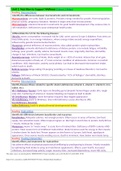
-Identify the differences between macronutrients and micronutrients Macro nutrients: are carbs, lipids & proteins. Provides energy needed for growth, thermoregulation, physical activity, pregnancy/lactation. Needed in larger amts than micronutrients Micro nutrients: vitamins/minerals in small amts for good health/development. Play various roles in cell metabolism. Deficiencies cause widespread health probs. -Differentiate the S/S for the following diseases: Obesity: excess consumption. I...
greatsolutions
Exam (elaborations)
C787 Module 4 Study Guide Unit 4: Nutrition and Physical Activity
Identify exercise recommendations for populations - children, adults, adults with weight loss goals. What recommendations would you give a patient who would like to increase their physical activity level? Preschool (3-5): physically active throughout day Children/adolescents (6-17): 60 mins + of moderately vigorous physical activity/day Adults: some is better than none. Any amount of mod vigorous activity has health benefits Older Adults: weekly phy activity- multicomponent activity that i...
greatsolutions
Other
C787 Module 5 Study Guide Unit 5: Nutrition Through the Lifecycle
Chapter 9: "Growing a Healthier Nation: Maternal, Infant, Child, and Adolescent Nutrition with an Emphasis on Childhood Overweight" What is the recommended weight gain - based on the BMI of the woman when she became pregnant - for underweight, normal weight, overweight and obese women? Underweight women (BMI < 18.5) should gain between 28 and 40 pounds BMI 18.5–24.9 should gain between 25 and 35 pounds during pregnancy Overweight women (BMI 25–29.9) should gain between 15 and 20 p...
greatsolutions
Other
NURSING BS C787 Module 6 Study Guide
Unit 6: Safety and Security of Food (Keeping Foods Safe/Eliminating Global Hunger) (Cohort 4 Video) Reading: Chapter 14: "Safeguarding and Securing the Food Supply" What are common routes of transmission and S/S for foodborne illnesses such as the bacterial contaminants Campylobacter, E. coli, Listeria, Shigella, Yersinia, Vibrio, Salmonella; the viral contaminants such as norovirus and hepatitis A and other microbial parasites such as Trichinella and Cryptosporidium. Campylobacter- und...
greatsolutions
Other
NURSING BS C787 C787 Module 7 Study Guide.
Unit 7: Nutrition and Global Health Environments Reading: Chapter 17: "Leveraging Nutrition Education Through the Public Health Team" Reading: Questions to Ask Before Taking Supplements Explain how you would help a patient decide whether they should or should not take a dietary supplement. They can provide overall dietary guidance for different diet-related disorders and refer the patient to the nutritionist for more detailed and specific information on the dietary modifications recomme...
greatsolutions
Other
C787 Module 7 Study Guide Unit 7: Nutrition and Global Health Environments (
Reading: Questions to Ask Before Taking Supplements Explain how you would help a patient decide whether they should or should not take a dietary supplement. They can provide overall dietary guidance for different diet-related disorders and refer the patient to the nutritionist for more detailed and specific information on the dietary modifications recommended. They can motivate and reinforce the dietary recommendations to their patients for an extended period of time and thus serve as valu...
 Studygreatsolutions
Other
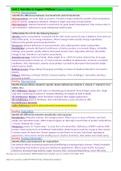
C787 Unit 2 Module Study Guide
Unit 2: Nutrition to Support Wellness Reading: Macronutrients -Identify the differences between macronutrients and micronutrients Macro nutrients: are carbs, lipids & proteins. Provides energy needed for growth, thermoregulation, physical activity, pregnancy/lactation. Needed in larger amts than micronutrients Micro nutrients: vitamins/minerals in small amts for good health/development. Play various roles in cell metabolism. Deficiencies cause widespread health probs. -Differentiate the...
Studygreatsolutions
Exam (elaborations)
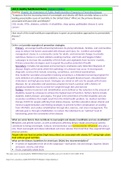
C787 Module 3 Study Guide
Unit 3: Healthy Nutritional Choices (Cohort 1 Video) Reading: Chapter 10: Importance of Public Health Nutrition Programs in Preventing Disease “It appears that the increasing trend of overweight and obesity will likely overtake tobacco as the leading preventable cause of mortality in the United States” What are the primary diseases associated with poor diet and lifestyle? CAD, stroke, HTNs, diabetes, arthritis r/t disabilities, sleep apnea, gallbladder disease & some cancers How much ...
Studygreatsolutions
Case
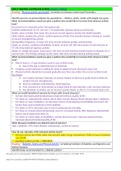
C787 Module 4 Study Guide
Unit 4: Nutrition and Physical Activity Reading: "Physical Activity and Health" at Centers for Disease Control and Prevention Identify exercise recommendations for populations - children, adults, adults with weight loss goals. What recommendations would you give a patient who would like to increase their physical activity level? Preschool (3-5): physically active throughout day Children/adolescents (6-17): 60 mins + of moderately vigorous physical activity/day Adults: some is better tha...
Studygreatsolutions
Exam (elaborations)
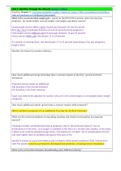
C787 Module 5 Study Guide./Unit 5: Nutrition Through the Lifecycle
Underweight women (BMI < 18.5) should gain between 28 and 40 pounds BMI 18.5–24.9 should gain between 25 and 35 pounds during pregnancy Overweight women (BMI 25–29.9) should gain between 15 and 20 pounds obese women (BMI ≥ 30) should gain 11 to 20 pounds If a woman is carrying twins, she should gain 37 to 42 pounds depending on her pre-pregnancy weight status Identify risk factors for preterm delivery. How much additional energy (kcal/day) does a woman require in the first, secon...
Studygreatsolutions
Exam (elaborations)
C787 Module 6 Study Guide /Unit 6: Safety and Security of Food (Keeping Foods Safe/Eliminating Global Hunger)
Reading: Chapter 14: "Safeguarding and Securing the Food Supply" What are common routes of transmission and S/S for foodborne illnesses such as the bacterial contaminants Campylobacter, E. coli, Listeria, Shigella, Yersinia, Vibrio, Salmonella; the viral contaminants such as norovirus and hepatitis A and other microbial parasites such as Trichinella and Cryptosporidium. Campylobacter- undercooked poultry; abdominal pain, diarrhea, headache, and fever Escherichia coli- indicative of fecal...
Studygreatsolutions
Exam (elaborations)
NUTRITION (C787) STUDY GUIDE Unit 7: Nutrition and Global Health Environments
Reading: Chapter 17: "Leveraging Nutrition Education Through the Public Health Team" Reading: Questions to Ask Before Taking Supplements Explain how you would help a patient decide whether they should or should not take a dietary supplement. They can provide overall dietary guidance for different diet-related disorders and refer the patient to the nutritionist for more detailed and specific information on the dietary modifications recommended. They can motivate and reinforce the dietary ...
Studygreatsolutions
Exam (elaborations)
C787 Nutrition Cohort questions and Answers Plus Side notes Health and Wellness course
C787 Nutrition Cohort questions and Answers Plus Side notes Health and Wellness course
 Madefamiliar
Exam (elaborations)
C787 NUTRITION STUDY GUIDE
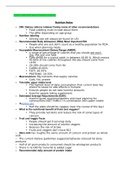
C787 NUTRITION STUDY GUIDE Nutrition Notes » DRI: Dietary refence intakes/ Family name of other recommendations • Food Labeling must include about them • The differ depending on age group » Nutrition labeling • Serving size will always be found (In US) » Recommended Daily Allowance (RDA) Most important RDI • People who are sick don’t count as a healthy population for RDA. • Use when planning meals » Acceptable Macronutrient Dietary Range (AMDR) • a range of percent...
Madefamiliar
Other
Western Governors University NURSING BS C787C787 nutrition study guide
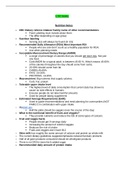
C787 Notes: Nutrition Notes » DRI: Dietary refence intakes/ Family name of other recommendations Food Labeling must include about them The differ depending on age group » Nutrition labeling Serving size will always be found (In US) » Recommended Daily Allowance (RDA) Most important RDI People who are sick don’t count as a healthy population for RDA. Use when planning meals » Acceptable Macronutrient Dietary Range (AMDR) a range of percentage of calories t...
greatsolutions
Package deal
NURSING BS C787C787 Unit 2 Module to module 7 Study Guide.Western Governors University question and answers
1NURSING BS C787C787 Unit 2 Module 2UniversityNURSING BS C787C787 Module 3 3NURSING BS C787C787 Module 4 Study Guide. 4NURSING BS C787C787 Module 5 Study Guide. 5NURSING BS C787C787 Module 6 6BS C787C787 Module 7 Study Guide.docx C787 Module 7
greatsolutions
Exam (elaborations)
Western Governors UniversityNURSING BS C787C787 Module 7 Study Guide.docx C787 Module 7 Study Guide.
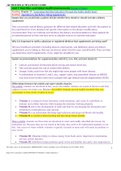
Unit 7: Nutrition and Global Health Environments (Cohort 4 Video) Reading: Chapter 17: "Leveraging Nutrition Education Through the Public Health Team" Reading: Questions to Ask Before Taking Supplements Explain how you would help a patient decide whether they should or should not take a dietary supplement. They can provide overall dietary guidance for different diet-related disorders and refer the patient to the nutritionist for more detailed and specific information on the dietary modif...
greatsolutions