

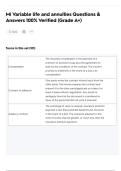
Mi Variable life and annuities Questions &
Answers 100% Verified (Grade A+)
Save
Terms in this set (101)
The insured's consideration is the payment of a
premium or promise to pay plus the agreement to
Consideration bide by the conditions of the contract. The insurer's
promise to indemnify in the event of a loss is its
consideration.
One party writes the contract without input from the
other party. The insurer prepares the contract and
present it to the other party/applicant on a take it or
Contract of adhesion
leave it basis without negotiation. Any doubt or
ambiguity found in the document is considered in
favor of the party that did not write it (insured)
The exchange of value is unequal. Insurance premium
payment is less than potential benefit to be received
Aleatory contract in the event of a loss. The insurance payment in the
event of a loss may be greater, or much less, then the
insurance premium payment.
, A contract between the insurance company and the
individual. Personal contracts are specific to the
person insured at the time the contract is formed. The
owner and the insured cannot be changed without
the consent of the insurance company. A property
Personal contract
and casualty insurance contract is personal since it
cannot be assigned. Life insurance is not a personal
contract. The policy can be assigned or a new owner
may be named as long as the insurer is notified of the
change.
Only one party is legally bound to the contractual
obligations after the premium is paid to the insurer.
Only the insurer makes a promise of future
performance, and only the insurer can be charged
Unilateral contract
with a breach of contract. The policy owner can
cancel the policy at any time and for any reason. The
policy owner is not required to continue paying future
premiums.
Both parties must perform certain duties and follow
rules of conduct to make the contract enforceable.
The insurer must pay claims if the insured has
Conditional contract complied with all the policy terms and conditions.
Without premiums being paid on time in full the
insurer is not obligated to pay the claim if the policy
lapses.
The insured is restored to the same financial or
economic condition that existed prior to the lots
Principle of indemnity depending on the amount and type of insurance
purchase. The insured should not profit from an
insurance transaction.
Both parties bargain in good faith when forming and
entering into a contract the two parties rely upon the
Utmost good faith
statements promises of the other and assume know
what time to conceal or deceive has been made.
, Statements made by the applicant on the application
are considered representations and not warranties.
Representations The representations on the statements are believed to
be true to the best of the knowledge and belief of the
applicant/insured at the time of the application.
Statements that impact the acceptance of an insurable
risk weather involving the rating of an acceptable risk,
Material versus immaterial or the decision as to whether to accept or decline a
representations risk are considered to be material. Immaterial
representations do not affect acceptance or reading
of the risk.
A false statement contained in the application usually
does not void coverage on the policy, if it is in
material. If material to the issuance of coverage,
meaning the insurer would not have issued a policy
Misrepresentations
have a misrepresentation misrepresentation not been
made, or premiums charged would've been higher, or
coverage limited, Cupboards does not apply. I'm
material misrepresentation may void the policy.
Statements in the application or stipulations in the
policy that are guaranteed to be true in all respects. If
Warranties
warranties are later discovered untrue or breached
coverage is voided.
Willful holding back or secretion of material facts
pertinent to the issuance of insurance in parentheses
Concealment
or a claim. And see him it may result in denial of
coverage and maybe the policy.
Answers 100% Verified (Grade A+)
Save
Terms in this set (101)
The insured's consideration is the payment of a
premium or promise to pay plus the agreement to
Consideration bide by the conditions of the contract. The insurer's
promise to indemnify in the event of a loss is its
consideration.
One party writes the contract without input from the
other party. The insurer prepares the contract and
present it to the other party/applicant on a take it or
Contract of adhesion
leave it basis without negotiation. Any doubt or
ambiguity found in the document is considered in
favor of the party that did not write it (insured)
The exchange of value is unequal. Insurance premium
payment is less than potential benefit to be received
Aleatory contract in the event of a loss. The insurance payment in the
event of a loss may be greater, or much less, then the
insurance premium payment.
, A contract between the insurance company and the
individual. Personal contracts are specific to the
person insured at the time the contract is formed. The
owner and the insured cannot be changed without
the consent of the insurance company. A property
Personal contract
and casualty insurance contract is personal since it
cannot be assigned. Life insurance is not a personal
contract. The policy can be assigned or a new owner
may be named as long as the insurer is notified of the
change.
Only one party is legally bound to the contractual
obligations after the premium is paid to the insurer.
Only the insurer makes a promise of future
performance, and only the insurer can be charged
Unilateral contract
with a breach of contract. The policy owner can
cancel the policy at any time and for any reason. The
policy owner is not required to continue paying future
premiums.
Both parties must perform certain duties and follow
rules of conduct to make the contract enforceable.
The insurer must pay claims if the insured has
Conditional contract complied with all the policy terms and conditions.
Without premiums being paid on time in full the
insurer is not obligated to pay the claim if the policy
lapses.
The insured is restored to the same financial or
economic condition that existed prior to the lots
Principle of indemnity depending on the amount and type of insurance
purchase. The insured should not profit from an
insurance transaction.
Both parties bargain in good faith when forming and
entering into a contract the two parties rely upon the
Utmost good faith
statements promises of the other and assume know
what time to conceal or deceive has been made.
, Statements made by the applicant on the application
are considered representations and not warranties.
Representations The representations on the statements are believed to
be true to the best of the knowledge and belief of the
applicant/insured at the time of the application.
Statements that impact the acceptance of an insurable
risk weather involving the rating of an acceptable risk,
Material versus immaterial or the decision as to whether to accept or decline a
representations risk are considered to be material. Immaterial
representations do not affect acceptance or reading
of the risk.
A false statement contained in the application usually
does not void coverage on the policy, if it is in
material. If material to the issuance of coverage,
meaning the insurer would not have issued a policy
Misrepresentations
have a misrepresentation misrepresentation not been
made, or premiums charged would've been higher, or
coverage limited, Cupboards does not apply. I'm
material misrepresentation may void the policy.
Statements in the application or stipulations in the
policy that are guaranteed to be true in all respects. If
Warranties
warranties are later discovered untrue or breached
coverage is voided.
Willful holding back or secretion of material facts
pertinent to the issuance of insurance in parentheses
Concealment
or a claim. And see him it may result in denial of
coverage and maybe the policy.


