
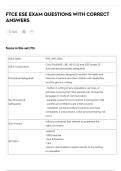
FTCE ESE EXAM QUESTIONS WITH CORRECT
ANSWERS
Save
Terms in this set (73)
IDEA Dates 1975, 1997, 2004
Child FindFAPE, LRE, IEP (3-21) and ISFP (under 3),
IDEA Components
due process/procedural safeguards
rules/procedures designed to protect the rights and
Procedural Safeguards interests of parents and their children with disabilities,
must be given in writing
- Notice in writing of any evaluations, services, or
activities involving the child; parents can choose the
language or mode of communication
Key Procedural - parental consent prior to actions involving the child
Safeguards - parents are entitled to see child's records
- mediation will be provided to parents who have
complaints; if unsuccessful, a due process hearing will
occur
refers to principles that attempt to guarantee the
Due Process
rights of citizens
-parents
-SPED teacher
-Gen Ed teacher
IEP Team
-LEA
-person responsible to explain results of any testing
or evaluation
, -summary of levels and educational performance
-annual goals
-short term objectives
-list of services
IEP Content
-timing for related services
-participation with non-disabled children
-standardized testing
-how will progress be measured
Individualized Family Service Plan - Like IEP, but for
IFSP children under 3 years old. Targets family and natural
environments.
students, environment, tasks, and tools - four areas
SETT Framework that guide teams seeking to identify supports and
services for students with disabilities
the process of obtaining feedback that informs
Formative assessment
instructional plans and modifications
the process of evaluating student achievement at the
Summative assessment
end of an instructional period
an educational process that works to identify students
Response to Intervention who are at risk for academic problems, whether or not
(RTI) they have disabilities, are identified, and their progress
and monitoring
Tier 1: students who have been identifies as at-risk
receive additional, target instruction for several weeks
Tier 2: students who have not responded sufficiently
to Tier 1 interventions receive more intensive, longer-
Tiers of RTI
lasting interventions
Tier 3: students who have not responded sufficiently
to Tier 2 interventions receive still more intensive,
individualized interventions
indicate what knowledge and skills students at
Content Standards particular grades are required to master in particular
subject areas


