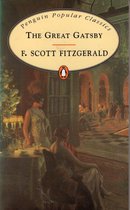
• The Great Gatsby
• The novel
• It is narrated largely chronologically (the summer of 1922), but with major flashbacks and digressions (especially to reveal
Gatsby's past) and with Nick's narration reflecting events after they have occurred. Behind Gatsby’s past there’s mystery and
tension, reflecting how Gatsby presents himself to the world. The reader, like Nick, is drawn to the illusion before discovering
the reality of his humble origin and wealth obtained through dubious means, increasing the impact of his story. The "scenic
method" (detailed and vivid description of scenes and dialogues, as in a theatrical performance) gives the novel immediacy,
drama and clarity. It allows Fitzgerald to show things rather than tell them, making the environment and characters more vivid.
Major themes of the Jazz Age are excess (sumptuous parties, alcohol and jazz music), materialism and superficiality, social
mobility, and corruption (Prohibition and Gatsby's illicit affairs). The novel dramatizes the decline of the ideals of the American
Dream, showing how the original ideal of honest success and self-determination (Franklin's plan/Gatsby's plan as a boy) was
corrupted into an obsessive search for material wealth and social status (Gatsby's fortune and obsession with Daisy), leading to
a tragic outcome. Elements of Gatsby's story can be associated with the American Dream like self-creation: going from a
humble James Gatz to a rich Jay Gatsby. Hope: His incessant faith in the future and in the possibility of achieving happiness
and love. Wealth: Material success as proof of its value.
• The "scenic method" (detailed and vivid description of scenes and dialogues, as in a theatrical performance) gives the novel
immediacy, drama and clarity. It allows Fitzgerald to show things rather than tell them, making the environment and characters
more vivid.
• Money mean to the various characters:
• To Gatsby: A means to get Daisy and recreate the past.
• To Tom and Daisy: A shield that guarantees security, status and immunity from consequences (the "careless people").
• To Myrtle and George: A source of aspiration and struggle (Myrtle wants the goods and status that money can buy).
• Gatsby is a romantic hero because he totally, obsessively and idealistically believes in his vision (Daisy's dream). His life is
defined by a transcendent and unattainable love, and his fall is the result of his unshakable faith in this illusion.
• Nick is the outside observer who, while participating, maintains a sense of moral judgment. It is the bridge between the Eastern
world (corrupt) and the values of the Midwest (idealized). His perspective is necessary to appreciate the true greatness of
Gatsby's dream and to condemn the corruption of the Buchanans. For his supposed honesty and objectivity ("I am one of the
most honest men I know"). Although he is fascinated by Gatsby, he strives to be critical and admit his own prejudices, making
his testimony seemingly reliable and moral. Gatsby's story disgusts him with the East and forces him into serious moral scrutiny.
Gatsby's death matures him and pushes him to return home, seeking a life with more authentic values.
• Lyrical and Poetic Prose: Use of vivid images and metaphors, especially in describing the environment and emotions (e.g. green
light).
• Use of Symbolism: The green spotlight, Dr. TJ's eyes. Eckleburg, the dust, the wasteland.
• Complex Narrative Structure: Skillful use of flashbacks and a narrator (Nick) who is an involved character.
• Chapter 1
o Nick Carraway comes from the Midwest and decided to go to New York to learn the bond business. He narrates the
events of the summer of 1922 but tells them about 1924. He is a non-judgmental and moral narrator who sees
everything from the outside but is involved in the events. He defines himself as “inclined to reserve all judgments”,
but he doesn’t really do it. He is introduced in both the social circles, the old money of East Egg (in which there are
people like Tom Buchanan) and the new money of West Egg, which is frequented by vulnerable people like Gatsby.
He always gives us really detailed descriptions, as he does for the mansion, gardens and even Daisy and Tom
themselves. For example, he defines their house as really big and in a Georgian Colonial style, the lawn is large and
extended, and these elements reveal that Tom and Daisy’s life is based on luxury and appearance; they live in a world
of privileges and wealth that keeps them away from reality.
o Tom is Daisy’s husband, ex ex-athlete who is described as physically imponent, aggressive, selfish, racist and acting
with a supercilious manner. Daisy is Nick’s cousin; she is beautiful and fascinating, but weak and superficial; her beauty
and her charm hide her indecision and the void she’s got in. She has no tangible values, she’s not able to take
responsibility, and she represents Gatsby’s dream. Jordan is a friend of Daisy, she’s a professional golf player, an
independent and cynical woman. The green light symbolises Gatsby’s dream (in literature it is associated with the
colour of money) and it suggests the image of hope, dream, ideal future and the illusion of the American dream.
• Chapter 2
o It is set in the valley of Ashes where live George Wilson and his wife Myrtle. George is a poor mechanic who has a
garage there, is honest but weak and submissive; He is pale, grey, devoid of energy; his physical appearance and his
life seem consumed by the dust and misery that surround him. Myrtle is also Tom’s mistress, and she is ambitious and
not satisfied with her life; she tries to achieve a better position by being Tom’s mistress. She’s different from Daisy
because she’s vibrant but at the same time vulgar and greedy for luxury. Daisy is more slender, elegant and delicate,
and she is part of the “old money” Myrtle is the desire to grow up socially; Daisy is already in a consolidated elite of
people.
o The valley of ashes symbolises the moral and religious decadence of that age and the waste of capitalism. It is rubbish
for the wealth of the 20s, where spirituality and religion are forgotten institutions, immorality and corruption are
fundamental aspects in this period. Everything is seen by the eyes of Dr J. Eckleburg.
o Nick also reveals: “…I was within and without, simultaneously enchanted and repelled by the inexhaustible variety of
life.”
o Even geography is important because it reveals the difference between social classes, upper and lower; for instance,
Tom and Myrtle.
• The novel
• It is narrated largely chronologically (the summer of 1922), but with major flashbacks and digressions (especially to reveal
Gatsby's past) and with Nick's narration reflecting events after they have occurred. Behind Gatsby’s past there’s mystery and
tension, reflecting how Gatsby presents himself to the world. The reader, like Nick, is drawn to the illusion before discovering
the reality of his humble origin and wealth obtained through dubious means, increasing the impact of his story. The "scenic
method" (detailed and vivid description of scenes and dialogues, as in a theatrical performance) gives the novel immediacy,
drama and clarity. It allows Fitzgerald to show things rather than tell them, making the environment and characters more vivid.
Major themes of the Jazz Age are excess (sumptuous parties, alcohol and jazz music), materialism and superficiality, social
mobility, and corruption (Prohibition and Gatsby's illicit affairs). The novel dramatizes the decline of the ideals of the American
Dream, showing how the original ideal of honest success and self-determination (Franklin's plan/Gatsby's plan as a boy) was
corrupted into an obsessive search for material wealth and social status (Gatsby's fortune and obsession with Daisy), leading to
a tragic outcome. Elements of Gatsby's story can be associated with the American Dream like self-creation: going from a
humble James Gatz to a rich Jay Gatsby. Hope: His incessant faith in the future and in the possibility of achieving happiness
and love. Wealth: Material success as proof of its value.
• The "scenic method" (detailed and vivid description of scenes and dialogues, as in a theatrical performance) gives the novel
immediacy, drama and clarity. It allows Fitzgerald to show things rather than tell them, making the environment and characters
more vivid.
• Money mean to the various characters:
• To Gatsby: A means to get Daisy and recreate the past.
• To Tom and Daisy: A shield that guarantees security, status and immunity from consequences (the "careless people").
• To Myrtle and George: A source of aspiration and struggle (Myrtle wants the goods and status that money can buy).
• Gatsby is a romantic hero because he totally, obsessively and idealistically believes in his vision (Daisy's dream). His life is
defined by a transcendent and unattainable love, and his fall is the result of his unshakable faith in this illusion.
• Nick is the outside observer who, while participating, maintains a sense of moral judgment. It is the bridge between the Eastern
world (corrupt) and the values of the Midwest (idealized). His perspective is necessary to appreciate the true greatness of
Gatsby's dream and to condemn the corruption of the Buchanans. For his supposed honesty and objectivity ("I am one of the
most honest men I know"). Although he is fascinated by Gatsby, he strives to be critical and admit his own prejudices, making
his testimony seemingly reliable and moral. Gatsby's story disgusts him with the East and forces him into serious moral scrutiny.
Gatsby's death matures him and pushes him to return home, seeking a life with more authentic values.
• Lyrical and Poetic Prose: Use of vivid images and metaphors, especially in describing the environment and emotions (e.g. green
light).
• Use of Symbolism: The green spotlight, Dr. TJ's eyes. Eckleburg, the dust, the wasteland.
• Complex Narrative Structure: Skillful use of flashbacks and a narrator (Nick) who is an involved character.
• Chapter 1
o Nick Carraway comes from the Midwest and decided to go to New York to learn the bond business. He narrates the
events of the summer of 1922 but tells them about 1924. He is a non-judgmental and moral narrator who sees
everything from the outside but is involved in the events. He defines himself as “inclined to reserve all judgments”,
but he doesn’t really do it. He is introduced in both the social circles, the old money of East Egg (in which there are
people like Tom Buchanan) and the new money of West Egg, which is frequented by vulnerable people like Gatsby.
He always gives us really detailed descriptions, as he does for the mansion, gardens and even Daisy and Tom
themselves. For example, he defines their house as really big and in a Georgian Colonial style, the lawn is large and
extended, and these elements reveal that Tom and Daisy’s life is based on luxury and appearance; they live in a world
of privileges and wealth that keeps them away from reality.
o Tom is Daisy’s husband, ex ex-athlete who is described as physically imponent, aggressive, selfish, racist and acting
with a supercilious manner. Daisy is Nick’s cousin; she is beautiful and fascinating, but weak and superficial; her beauty
and her charm hide her indecision and the void she’s got in. She has no tangible values, she’s not able to take
responsibility, and she represents Gatsby’s dream. Jordan is a friend of Daisy, she’s a professional golf player, an
independent and cynical woman. The green light symbolises Gatsby’s dream (in literature it is associated with the
colour of money) and it suggests the image of hope, dream, ideal future and the illusion of the American dream.
• Chapter 2
o It is set in the valley of Ashes where live George Wilson and his wife Myrtle. George is a poor mechanic who has a
garage there, is honest but weak and submissive; He is pale, grey, devoid of energy; his physical appearance and his
life seem consumed by the dust and misery that surround him. Myrtle is also Tom’s mistress, and she is ambitious and
not satisfied with her life; she tries to achieve a better position by being Tom’s mistress. She’s different from Daisy
because she’s vibrant but at the same time vulgar and greedy for luxury. Daisy is more slender, elegant and delicate,
and she is part of the “old money” Myrtle is the desire to grow up socially; Daisy is already in a consolidated elite of
people.
o The valley of ashes symbolises the moral and religious decadence of that age and the waste of capitalism. It is rubbish
for the wealth of the 20s, where spirituality and religion are forgotten institutions, immorality and corruption are
fundamental aspects in this period. Everything is seen by the eyes of Dr J. Eckleburg.
o Nick also reveals: “…I was within and without, simultaneously enchanted and repelled by the inexhaustible variety of
life.”
o Even geography is important because it reveals the difference between social classes, upper and lower; for instance,
Tom and Myrtle.