Critical thinking nur 200 Hondros, 200 exam 1 critical thinking
Critical thinking nur 200 Hondros, 200 exam 1 critical thinking Questions & Answers
Study online at https://quizlet.com/_8j3b15
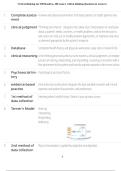
1. Complete assess- A review and physical examination of all body systems, for stable patients only
ment
2. clinical judgment "Thinking Like A Nurse". integral to the Safety of pt. Interpretation or conclusion
about a patient's needs, concerns, or health problems, and/or the decision to
take action (or not), use or modify standard approaches, or improvise new ones
as deemed appropriate by the patient's response.
3. Database Completed health history and physical examination, large store or bank of info
4. clinical reasoning is the thinking process by which a nurse reaches a clinical judgement. an iterative
process of noticing, interpreting, and responding- reasoning in transition with a
fine attunement to the patient and how the patient responds to the nurses action
5. Psychosocial his- Psychological and social factors
tory
6. evidence-based clinical decision making that integrates the best available research with clinical
practice expertise and patient characteristics and preferences
7. 1st method of Interiew patient, health history. Patient is your primary source
data collection
8. Tanner's Model Noticing
Interpreting
Responding
Reflecting
9. 2nd method of Physical examination ( guided by subjective and objective)
data collection
1
, Critical thinking nur 200 Hondros, 200 exam 1 critical thinking
Critical thinking nur 200 Hondros, 200 exam 1 critical thinking Questions & Answers
Study online at https://quizlet.com/_8j3b15
10. noticing (tanners identify s/s, gather complete and accurate data, assessing systematically and
model) comprehensively, *predicting (and managing) potential complications, identify-
ing assumptions
11. Concepts of clini- 1. Safety
cal judgment 2. Healthcare quality
3. Leadership
4. Patient education
5. Evidence
6. Professionalism
7. Care coordination
12. objective data information that is seen, heard, felt, or smelled by an observer; signs
(noticing)
13. Analytic reason- Situation is unfamiliar
ing
14. subjective data things a person tells you about that you cannot observe through your senses;
(noticing) symptoms
15. Intuitive reason- Able to recognize the situation immedialy. Pattern based
ing
16. factors that influ- -intrapersonal characteristics of the nurse
ence "Noticing" -theoretical and experiential knowledge of the nurse
-knowing the patient
-context or environment of care
17. Narrative reason- Situation to patient experience with illness.
ing
18.
2
, Critical thinking nur 200 Hondros, 200 exam 1 critical thinking
Critical thinking nur 200 Hondros, 200 exam 1 critical thinking Questions & Answers
Study online at https://quizlet.com/_8j3b15
Interpreting (tan- comparing and contrast data, clustering related information, recognizing incon-
ners) sistencies, checking accuracy, distinguishing relevant from irrelevant, determine
importance of info, judge how much ambiguity is acceptable (ie b/p dt condition),
determine legal ethical professional guidelines, (predicting and) *managing po-
tential complications
19. Noticing 1. Identify signs and symptoms
2. Complete and accurate date
3. Assessing systemically and comprehensively
4. Predicting and managing patient complications
5. Identifying assumptions
20. analytic reason- based on theoretical knowledge. nurse makes a hypothesis or best guess about
ing (interpreting) the pt care situation and then tests. typically students and novice nurses
21. Interpreting Understanding of the situation
22. intuitive reason- based on unstated but understood knowledge about the pt, the care giving
ing (interpreting) context, and their previous experiences. typically expert nurse.
23. Responding Based on what you interpreted the nurse will determine appropriate actions
24. narrative reason- way of making sense of a situation through telling and interpreting stories. nurse
ing (interpreting) hears pt stories of past medical experiences, helps nurse understand specific pt
experiences, setting the stage for individualized care
25. Reflection in ac- Observing patient reaction to the action the nurse chose and deciding if the
tion situation was fixed
26. responding (tan- taking action, ability to carry out nursing skills and effective communication,
ners) delegating, setting priorities
27. Reflection on ac- Patient responses to the outcomes. Nursing refelection after the situation was
tion solved
3
, Critical thinking nur 200 Hondros, 200 exam 1 critical thinking
Critical thinking nur 200 Hondros, 200 exam 1 critical thinking Questions & Answers
Study online at https://quizlet.com/_8j3b15
28. reflecting (tan- pt outcomes, evaluating data- complete actions then reassessment data is collect-
ners) ed again used to determine if interventions were effective or any further actions
needed, evaluating and correcting thinking.
29. Novice nurse Uses analytic reasoning. Uses textbook in a systemic analysis of a situation
30. reflecting-in-ac- understanding of patients response to nursing actions while care is occurring.
tion (reflect) "real time" during pt care. determine pt statues and adjust care accordingly.
31. Expert nurse Uses intuitive reasoing. Recognizes patterns immediatly. Able to look at the big
picture
32. reflecting-on-ac- consideration of situation after the care occurs. contemplate a situation and
tion (reflect) decide what was and wasn't successful. critical for development of knowledge.
33. Assessment Collecting and analyzing data from the patient, family members, health care team
34. interrelated con-
cepts of clinical
judgment
35. Who does the ini- RN
tial assessment
36. critical thinking ability to think in a systematically and logical manner with openness to question
and reflect on the reasoning process. ask "why, what am i missing"
37. Focused assess- Used to gather information on a specific problem
ment
38. critical think- go hand in hand in making quality decisions about patient care. knowledge,
ing in nursing standards, attitudes, experience
process
4
Critical thinking nur 200 Hondros, 200 exam 1 critical thinking Questions & Answers
Study online at https://quizlet.com/_8j3b15
1. Complete assess- A review and physical examination of all body systems, for stable patients only
ment
2. clinical judgment "Thinking Like A Nurse". integral to the Safety of pt. Interpretation or conclusion
about a patient's needs, concerns, or health problems, and/or the decision to
take action (or not), use or modify standard approaches, or improvise new ones
as deemed appropriate by the patient's response.
3. Database Completed health history and physical examination, large store or bank of info
4. clinical reasoning is the thinking process by which a nurse reaches a clinical judgement. an iterative
process of noticing, interpreting, and responding- reasoning in transition with a
fine attunement to the patient and how the patient responds to the nurses action
5. Psychosocial his- Psychological and social factors
tory
6. evidence-based clinical decision making that integrates the best available research with clinical
practice expertise and patient characteristics and preferences
7. 1st method of Interiew patient, health history. Patient is your primary source
data collection
8. Tanner's Model Noticing
Interpreting
Responding
Reflecting
9. 2nd method of Physical examination ( guided by subjective and objective)
data collection
1
, Critical thinking nur 200 Hondros, 200 exam 1 critical thinking
Critical thinking nur 200 Hondros, 200 exam 1 critical thinking Questions & Answers
Study online at https://quizlet.com/_8j3b15
10. noticing (tanners identify s/s, gather complete and accurate data, assessing systematically and
model) comprehensively, *predicting (and managing) potential complications, identify-
ing assumptions
11. Concepts of clini- 1. Safety
cal judgment 2. Healthcare quality
3. Leadership
4. Patient education
5. Evidence
6. Professionalism
7. Care coordination
12. objective data information that is seen, heard, felt, or smelled by an observer; signs
(noticing)
13. Analytic reason- Situation is unfamiliar
ing
14. subjective data things a person tells you about that you cannot observe through your senses;
(noticing) symptoms
15. Intuitive reason- Able to recognize the situation immedialy. Pattern based
ing
16. factors that influ- -intrapersonal characteristics of the nurse
ence "Noticing" -theoretical and experiential knowledge of the nurse
-knowing the patient
-context or environment of care
17. Narrative reason- Situation to patient experience with illness.
ing
18.
2
, Critical thinking nur 200 Hondros, 200 exam 1 critical thinking
Critical thinking nur 200 Hondros, 200 exam 1 critical thinking Questions & Answers
Study online at https://quizlet.com/_8j3b15
Interpreting (tan- comparing and contrast data, clustering related information, recognizing incon-
ners) sistencies, checking accuracy, distinguishing relevant from irrelevant, determine
importance of info, judge how much ambiguity is acceptable (ie b/p dt condition),
determine legal ethical professional guidelines, (predicting and) *managing po-
tential complications
19. Noticing 1. Identify signs and symptoms
2. Complete and accurate date
3. Assessing systemically and comprehensively
4. Predicting and managing patient complications
5. Identifying assumptions
20. analytic reason- based on theoretical knowledge. nurse makes a hypothesis or best guess about
ing (interpreting) the pt care situation and then tests. typically students and novice nurses
21. Interpreting Understanding of the situation
22. intuitive reason- based on unstated but understood knowledge about the pt, the care giving
ing (interpreting) context, and their previous experiences. typically expert nurse.
23. Responding Based on what you interpreted the nurse will determine appropriate actions
24. narrative reason- way of making sense of a situation through telling and interpreting stories. nurse
ing (interpreting) hears pt stories of past medical experiences, helps nurse understand specific pt
experiences, setting the stage for individualized care
25. Reflection in ac- Observing patient reaction to the action the nurse chose and deciding if the
tion situation was fixed
26. responding (tan- taking action, ability to carry out nursing skills and effective communication,
ners) delegating, setting priorities
27. Reflection on ac- Patient responses to the outcomes. Nursing refelection after the situation was
tion solved
3
, Critical thinking nur 200 Hondros, 200 exam 1 critical thinking
Critical thinking nur 200 Hondros, 200 exam 1 critical thinking Questions & Answers
Study online at https://quizlet.com/_8j3b15
28. reflecting (tan- pt outcomes, evaluating data- complete actions then reassessment data is collect-
ners) ed again used to determine if interventions were effective or any further actions
needed, evaluating and correcting thinking.
29. Novice nurse Uses analytic reasoning. Uses textbook in a systemic analysis of a situation
30. reflecting-in-ac- understanding of patients response to nursing actions while care is occurring.
tion (reflect) "real time" during pt care. determine pt statues and adjust care accordingly.
31. Expert nurse Uses intuitive reasoing. Recognizes patterns immediatly. Able to look at the big
picture
32. reflecting-on-ac- consideration of situation after the care occurs. contemplate a situation and
tion (reflect) decide what was and wasn't successful. critical for development of knowledge.
33. Assessment Collecting and analyzing data from the patient, family members, health care team
34. interrelated con-
cepts of clinical
judgment
35. Who does the ini- RN
tial assessment
36. critical thinking ability to think in a systematically and logical manner with openness to question
and reflect on the reasoning process. ask "why, what am i missing"
37. Focused assess- Used to gather information on a specific problem
ment
38. critical think- go hand in hand in making quality decisions about patient care. knowledge,
ing in nursing standards, attitudes, experience
process
4