WGU D430 Information Security
Objective Assessment | OA | V1 and V2
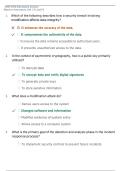
1. Which of the following describes how a security breach involving
modification affects data integrity?
It enhances the accuracy of the data.
It compromises the authenticity of the data.
It ensures the data remains accessible to authorized users.
It prevents unauthorized access to the data.
2. In the context of asymmetric cryptography, how is a public key primarily
utilized?
To decrypt data
To encrypt data and verify digital signatures
To generate private keys
To store sensitive information
3. What does a modification attack do?
Denies users access to the system
Changes software and information
Modifies evidence of system entry
Allows access to a computer system
4. What is the primary goal of the detection and analysis phase in the incident
response process?
To implement security controls to prevent future incidents
, To identify and evaluate security incidents and their potential
impact
To recover lost data and restore systems to normal operation
To conduct training sessions for incident response teams
5. Which of the following actions is primarily focused on limiting the spread and
impact of a security incident during the containment phase?
Restoring affected systems from backups
Isolating affected systems from the network
Conducting a root cause analysis
Implementing new security policies
6. What does PCI DSS stand for?
Payment Card Industry Data Security Standard
Payment Card Infrastructure Data Security Standard
Payment Card Industry Dynamic Security Standard
Payment Control Industry Data Security Standard
7. What role do digital certificates play in the authentication process of e-
commerce transactions?
Verifying the authenticity of the Certificate Authority
Authenticating the user's computer
Ensuring the confidentiality of sensitive data
Verifying the identity of parties involved
Encrypting communication channels
,8. The purpose of the containment step in a security incident response plan is:
Correct answer
9. Which of the following best describes what FISMA does?
Defines the security standards for any organization that handles
cardholder information
Defines how federal government data, operations, and assets are
handled.
Implements accounting and disclosure requirements that increase
transparency.
Defines standards that ensure medical information is kept safe.
10. ___ application attacks and ___ can easily affect the confidentiality of an
organization's data.
rogue, spyware
focused, switch statements
random, APIs
dynamic, APIs
11. What do you use fuzzing for?
, Correct answer
12. The cryptographic algorithms can be three types: Single Key, Two Keys and
_______
Correct answer
Keyless
13. What does accountability mean in information security?
Tracking and recording all activities related to the information.
Preserving the confidentiality, integrity, and availability of information
systems.
Ensuring that individuals have the necessary permissions to access
the information.
Making data viewable or available only to authorized individuals.
14. What are the 4 main types of network security attacks?
Correct answer
Objective Assessment | OA | V1 and V2
1. Which of the following describes how a security breach involving
modification affects data integrity?
It enhances the accuracy of the data.
It compromises the authenticity of the data.
It ensures the data remains accessible to authorized users.
It prevents unauthorized access to the data.
2. In the context of asymmetric cryptography, how is a public key primarily
utilized?
To decrypt data
To encrypt data and verify digital signatures
To generate private keys
To store sensitive information
3. What does a modification attack do?
Denies users access to the system
Changes software and information
Modifies evidence of system entry
Allows access to a computer system
4. What is the primary goal of the detection and analysis phase in the incident
response process?
To implement security controls to prevent future incidents
, To identify and evaluate security incidents and their potential
impact
To recover lost data and restore systems to normal operation
To conduct training sessions for incident response teams
5. Which of the following actions is primarily focused on limiting the spread and
impact of a security incident during the containment phase?
Restoring affected systems from backups
Isolating affected systems from the network
Conducting a root cause analysis
Implementing new security policies
6. What does PCI DSS stand for?
Payment Card Industry Data Security Standard
Payment Card Infrastructure Data Security Standard
Payment Card Industry Dynamic Security Standard
Payment Control Industry Data Security Standard
7. What role do digital certificates play in the authentication process of e-
commerce transactions?
Verifying the authenticity of the Certificate Authority
Authenticating the user's computer
Ensuring the confidentiality of sensitive data
Verifying the identity of parties involved
Encrypting communication channels
,8. The purpose of the containment step in a security incident response plan is:
Correct answer
9. Which of the following best describes what FISMA does?
Defines the security standards for any organization that handles
cardholder information
Defines how federal government data, operations, and assets are
handled.
Implements accounting and disclosure requirements that increase
transparency.
Defines standards that ensure medical information is kept safe.
10. ___ application attacks and ___ can easily affect the confidentiality of an
organization's data.
rogue, spyware
focused, switch statements
random, APIs
dynamic, APIs
11. What do you use fuzzing for?
, Correct answer
12. The cryptographic algorithms can be three types: Single Key, Two Keys and
_______
Correct answer
Keyless
13. What does accountability mean in information security?
Tracking and recording all activities related to the information.
Preserving the confidentiality, integrity, and availability of information
systems.
Ensuring that individuals have the necessary permissions to access
the information.
Making data viewable or available only to authorized individuals.
14. What are the 4 main types of network security attacks?
Correct answer