
Grade A+ Burns' Pediatric Primary Care 7th edition 2025
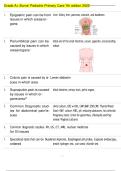
1. Epigastric pain can be from Liver, biliary tree, pancreas, stomach, and duodenum
issues in which areas/or-
gans:
2. Periumbilical pain can be distal end of the small intestine, cecum, appendix, and ascending
caused by issues in which colon
areas/organs:
3. Colonic pain is caused by is- Lower abdomin
sues in which area
4. Suprapubic pain is caused distal intestine, urinary tract, pelvic organs,
by issues in which or-
gans/area?
5. Common Diagnositc stud- UA & culture, CBC w/ditt, CMP,BMP, ESR,CRP, Thyroid Panel
ies for abdominal pain/is- Stool= O&P, culture, WBC, pH, reducing substances, fat collection
sues Pregnancy tests, Urine for gonorrhea, chlamydia and Pap
smear/Vaginal cultures
6. Common diagnostic studies XR, US, CT, MRI, nuclear medicine
for GI issues
7. Specialized tests that can be Duodenal Aspirate, Esophageal pH probe, Capsule endoscopy,
ordered breath hydrogen test, and sweat chloride test
, Grade A+ Burns' Pediatric Primary Care 7th edition 2025
8. Indications for Duodenal diarrhea from things like giardia, unintentional weight loss, dys-
Aspirate pepsia(reflux/GERD), and abdominal pain
9. A hydrogen breath test can IBS, Intestinal Methanogen overgrowth, rapid small bowel transit
help diagnose: time, and possibly esophageal and gastric cancer in early stages.
10. Sweat chloride test is used Cystic Fibrosis. This is usually done when a patient is having diges-
to diagnose: tive problems, & FTT along with history of respiratory issues.
11. Most common reasons for IBS, Infectious diarrhea, antibiotic associated diarrhea, and colic
the use of Probiotics
12. What is Colic? Crying for no apparent reason that lasts > 3 hrs/day and occurs >
3 days/wk in otherwise healthy infant <3months
13. Potential causes of vomit- infectious process, congenital GI anomaly, CNS abnormality, or
ing in Newborn or young in- newborn errors of metabolism
fants
14. Potential causes of vomit- Gastroenteritis, GERD, milk/soy protien allergies, pyloric stenosis
ing in Infants or young chil- or obstructive lesion, inborn errors of metabolism, intussusception,
dren child abuse, &intracranial mass
15. Potential causes of vomit- Gastroenteritis, systemic illness, CNS (cyclic vomiting syndrome,
ing in older children and abdominal migraine, meningitis, brain tumor), intussusception,
adolescents rumination, superior mesenteric artery syndrome, pregnancy
16. is one of the vomiting
most common symptoms in
childhood.
17. Non-bilious vomiting is gen- infection, inflammation, and metabolic, neurologic, or psycholog-
erally caused by: ical problems.
1. Epigastric pain can be from Liver, biliary tree, pancreas, stomach, and duodenum
issues in which areas/or-
gans:
2. Periumbilical pain can be distal end of the small intestine, cecum, appendix, and ascending
caused by issues in which colon
areas/organs:
3. Colonic pain is caused by is- Lower abdomin
sues in which area
4. Suprapubic pain is caused distal intestine, urinary tract, pelvic organs,
by issues in which or-
gans/area?
5. Common Diagnositc stud- UA & culture, CBC w/ditt, CMP,BMP, ESR,CRP, Thyroid Panel
ies for abdominal pain/is- Stool= O&P, culture, WBC, pH, reducing substances, fat collection
sues Pregnancy tests, Urine for gonorrhea, chlamydia and Pap
smear/Vaginal cultures
6. Common diagnostic studies XR, US, CT, MRI, nuclear medicine
for GI issues
7. Specialized tests that can be Duodenal Aspirate, Esophageal pH probe, Capsule endoscopy,
ordered breath hydrogen test, and sweat chloride test
, Grade A+ Burns' Pediatric Primary Care 7th edition 2025
8. Indications for Duodenal diarrhea from things like giardia, unintentional weight loss, dys-
Aspirate pepsia(reflux/GERD), and abdominal pain
9. A hydrogen breath test can IBS, Intestinal Methanogen overgrowth, rapid small bowel transit
help diagnose: time, and possibly esophageal and gastric cancer in early stages.
10. Sweat chloride test is used Cystic Fibrosis. This is usually done when a patient is having diges-
to diagnose: tive problems, & FTT along with history of respiratory issues.
11. Most common reasons for IBS, Infectious diarrhea, antibiotic associated diarrhea, and colic
the use of Probiotics
12. What is Colic? Crying for no apparent reason that lasts > 3 hrs/day and occurs >
3 days/wk in otherwise healthy infant <3months
13. Potential causes of vomit- infectious process, congenital GI anomaly, CNS abnormality, or
ing in Newborn or young in- newborn errors of metabolism
fants
14. Potential causes of vomit- Gastroenteritis, GERD, milk/soy protien allergies, pyloric stenosis
ing in Infants or young chil- or obstructive lesion, inborn errors of metabolism, intussusception,
dren child abuse, &intracranial mass
15. Potential causes of vomit- Gastroenteritis, systemic illness, CNS (cyclic vomiting syndrome,
ing in older children and abdominal migraine, meningitis, brain tumor), intussusception,
adolescents rumination, superior mesenteric artery syndrome, pregnancy
16. is one of the vomiting
most common symptoms in
childhood.
17. Non-bilious vomiting is gen- infection, inflammation, and metabolic, neurologic, or psycholog-
erally caused by: ical problems.


