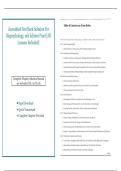
Table of Contents are Given Below
Accredited Test Bank Solution For
Biopsychology, 11th Edition Pinel [All Here is the list of chapters from "Biopsychology," 11th Edition by John P.J. Pinel and Steven J. Barnes:
Lessons Included] Part I: What Is Biopsychology?
1. Biopsychology as a Neuroscience: What Is Biopsychology, Anyway?
Part II: Foundations of Biopsychology
2. Evolution, Genetics, and Experience: Thinking about the Biology of Behavior
3. Anatomy of the Nervous System: Structure and Functions of Cells of the Nervous System
4. Neural Conduction and Synaptic Transmission: How Neurons Send and Receive Signals
5. The Research Methods of Biopsychology: Understanding What Biopsychologists Do
Part III: Sensory and Motor Systems
Complete Chapter Solution Manual 6. The Visual System: How We See
are Included (Ch.1 to Ch.18) 7. Mechanisms of Perception: Hearing, Touch, Smell, Taste, and Attention
8. The Sensorimotor System: How We Move
Part IV: Brain Plasticity
9. Development of the Nervous System: From Fertilized Egg to You
• Rapid Download 10. Brain Damage and Neuroplasticity: Can the Brain Recover from Damage?
• Quick Turnaround 11. Learning, Memory, and Amnesia: How Your Brain Stores Information
Part V: Biopsychology of Motivation
• Complete Chapters Provided 12. Hunger, Eating, and Health: Why Do Many People Eat Too Much?
13. Hormones and Sex: What’s Wrong with the Mamawawa?
14. Sleep, Dreaming, and Circadian Rhythms: How Much Do You Need to Sleep?
15. Drug Use, Drug Addiction, and the Brain’s Reward Circuits: Chemicals That Harm with Pleasure
Part VI: Disorders of Cognition and Emotion
16. Lateralization, Language, and the Split Brain: The Left Brain and the Right Brain of Language
17. Biopsychology of Emotion, Stress, and Health: Fear, the Dark Side of Emotion
18. Biopsychology of Psychiatric Disorders: The Brain Unhinged
PAGE 1
,This comprehensive structure covers various aspects of biopsychology, providing a solid foundation for
understanding the biological basis of behavior.
Q4. Which of the following areas is NOT typically studied within biopsychology?
For more detailed information, you can visit the publisher's website.
A) Neurotransmitter function
B) Genetic influences on behavior
Part I: What Is Biopsychology? C) Cultural rituals
D) Brain structure and function
1. Biopsychology as a Neuroscience: What Is Biopsychology, Anyway?
Answer: C) Cultural rituals
Q1. Biopsychology primarily focuses on:
Explanation: While cultural rituals are important in social psychology, biopsychology focuses more on
A) The influence of culture on behavior biological aspects like neurotransmitters, genetics, and brain structures.
B) The biological underpinnings of behavior and mental processes
C) The development of social norms
D) The economic factors affecting mental health
Q5. The study of how hormones affect behavior is primarily associated with which subfield of biopsychology?
Answer: B) The biological underpinnings of behavior and mental processes
A) Cognitive biopsychology
Explanation: Biopsychology examines how the brain and nervous system influence behavior and cognitive B) Behavioral genetics
functions, integrating principles from biology and psychology. C) Neuroendocrinology
D) Psychopharmacology
Answer: C) Neuroendocrinology
Q2. Which of the following best describes the main goal of biopsychology?
Explanation: Neuroendocrinology examines how hormones interact with the nervous system to influence
A) To understand how environmental factors shape behavior behavior and physiological processes.
B) To explore the relationship between biological processes and psychological phenomena
C) To analyze the impact of societal structures on mental health
D) To study the effectiveness of different psychotherapies
Q6. Which historical figure is considered a pioneer in the field of biopsychology?
Answer: B) To explore the relationship between biological processes and psychological phenomena
A) Sigmund Freud
Explanation: The primary goal of biopsychology is to investigate how biological mechanisms, such as neural B) Wilhelm Wundt
activity, influence behavior and mental states. C) Santiago Ramón y Cajal
D) B.F. Skinner
Answer: C) Santiago Ramón y Cajal
Q3. Biopsychology is often considered a bridge between which two disciplines?
Explanation: Santiago Ramón y Cajal is known for his groundbreaking work in neuroanatomy, laying the
A) Sociology and anthropology foundation for modern biopsychology.
B) Biology and psychology
C) Chemistry and physics
D) Economics and political science
Part II: Foundations of Biopsychology
Answer: B) Biology and psychology 2. Evolution, Genetics, and Experience: Thinking about the Biology of Behavior
Explanation: Biopsychology integrates concepts from both biology and psychology to understand how Q7. The principle that behavior and mental processes are influenced by evolutionary adaptations is known as:
biological factors affect behavior and mental processes.
PAGE 2 PAGE 3
,A) Genetic determinism Explanation: Adaptive behaviors are those that have evolved because they provide a survival or reproductive
B) Behavioral ecology advantage.
C) Evolutionary psychology
D) Cognitive ethology
Answer: C) Evolutionary psychology Q11. Epigenetics involves:
Explanation: Evolutionary psychology explores how evolutionary processes like natural selection have shaped A) Changes in the DNA sequence
behavior and mental processes. B) How external factors can alter gene expression without changing the DNA sequence
C) The study of ancient genes
D) Genetic mutations that occur during reproduction
Q8. Which term refers to the study of how genes and environment interact to influence behavior? Answer: B) How external factors can alter gene expression without changing the DNA sequence
A) Heritability Explanation: Epigenetics examines modifications that affect gene activity and expression without altering the
B) Gene-environment interaction underlying DNA sequence, often influenced by environmental factors.
C) Epigenetics
D) Phenotypic plasticity
Answer: B) Gene-environment interaction Q12. The concept that an organism's development is influenced by both its genetic makeup and its experiences
is known as:
Explanation: Gene-environment interaction examines how genetic predispositions and environmental factors
jointly influence behaviors and traits. A) Nature vs. nurture
B) Genetic determinism
C) Behavioral genetics
D) Dual inheritance
Q9. Twin studies are primarily used to investigate:
Answer: A) Nature vs. nurture
A) The impact of parenting styles on behavior
B) The relative contributions of genetics and environment to individual differences Explanation: The nature vs. nurture debate centers on the relative contributions of genetic inheritance (nature)
C) The effectiveness of different teaching methods and environmental factors (nurture) to behavior and development.
D) The correlation between diet and cognitive function
Answer: B) The relative contributions of genetics and environment to individual differences
3. Anatomy of the Nervous System: Structure and Functions of Cells of the Nervous System
Explanation: Twin studies compare identical and fraternal twins to disentangle the effects of genetics and
environment on various traits and behaviors. Q13. The basic functional unit of the nervous system is the:
A) Glial cell
B) Neuron
Q10. Which concept suggests that certain behaviors have been naturally selected because they enhance survival C) Synapse
or reproduction? D) Axon
A) Genetic drift Answer: B) Neuron
B) Adaptive behavior
C) Behavioral inhibition Explanation: Neurons are the primary cells responsible for transmitting and processing information in the
D) Neuroplasticity nervous system.
Answer: B) Adaptive behavior
PAGE 4 PAGE 5
, Q14. Which part of the neuron receives incoming signals from other neurons? Answer: C) Soma
A) Axon Explanation: The soma, or cell body, houses the nucleus and organelles, maintaining the neuron's metabolic
B) Dendrite activities.
C) Soma
D) Myelin sheath
Answer: B) Dendrite Q18. Synapses are critical for:
Explanation: Dendrites are branched extensions of neurons that receive and integrate incoming signals from A) Neuron growth
other neurons. B) Signal transmission between neurons
C) Protecting neurons
D) Myelinating axons
Q15. The myelin sheath serves to: Answer: B) Signal transmission between neurons
A) Protect the neuron from pathogens Explanation: Synapses are the junctions where neurons communicate with each other through chemical or
B) Increase the speed of electrical signal transmission electrical signals.
C) Facilitate neurotransmitter release
D) Connect neurons to muscles
Answer: B) Increase the speed of electrical signal transmission 4. Neural Conduction and Synaptic Transmission: How Neurons Send and Receive Signals
Explanation: The myelin sheath is a fatty layer that insulates axons, allowing electrical impulses to travel faster Q19. The process by which an electrical signal travels along the neuron is called:
along the neuron.
A) Synaptic transmission
B) Neural conduction
C) Neuroplasticity
Q16. Which glial cell type is responsible for forming the myelin sheath in the central nervous system? D) Neurogenesis
A) Astrocytes Answer: B) Neural conduction
B) Oligodendrocytes
C) Schwann cells Explanation: Neural conduction refers to the propagation of electrical impulses along the neuron’s axon.
D) Microglia
Answer: B) Oligodendrocytes
Q20. An action potential is:
Explanation: Oligodendrocytes produce the myelin sheath in the central nervous system, whereas Schwann
cells perform this function in the peripheral nervous system. A) A chemical messenger released at the synapse
B) A change in electrical charge that travels down a neuron
C) A type of glial cell
D) The structural part of a neuron that receives signals
Q17. The region of the neuron that contains the nucleus and most of the cell's organelles is the:
Answer: B) A change in electrical charge that travels down a neuron
A) Axon
B) Dendrite Explanation: An action potential is a rapid rise and subsequent fall in voltage or membrane potential across a
C) Soma cellular membrane, enabling signal transmission.
D) Synaptic terminal
PAGE 6 PAGE 7
Accredited Test Bank Solution For
Biopsychology, 11th Edition Pinel [All Here is the list of chapters from "Biopsychology," 11th Edition by John P.J. Pinel and Steven J. Barnes:
Lessons Included] Part I: What Is Biopsychology?
1. Biopsychology as a Neuroscience: What Is Biopsychology, Anyway?
Part II: Foundations of Biopsychology
2. Evolution, Genetics, and Experience: Thinking about the Biology of Behavior
3. Anatomy of the Nervous System: Structure and Functions of Cells of the Nervous System
4. Neural Conduction and Synaptic Transmission: How Neurons Send and Receive Signals
5. The Research Methods of Biopsychology: Understanding What Biopsychologists Do
Part III: Sensory and Motor Systems
Complete Chapter Solution Manual 6. The Visual System: How We See
are Included (Ch.1 to Ch.18) 7. Mechanisms of Perception: Hearing, Touch, Smell, Taste, and Attention
8. The Sensorimotor System: How We Move
Part IV: Brain Plasticity
9. Development of the Nervous System: From Fertilized Egg to You
• Rapid Download 10. Brain Damage and Neuroplasticity: Can the Brain Recover from Damage?
• Quick Turnaround 11. Learning, Memory, and Amnesia: How Your Brain Stores Information
Part V: Biopsychology of Motivation
• Complete Chapters Provided 12. Hunger, Eating, and Health: Why Do Many People Eat Too Much?
13. Hormones and Sex: What’s Wrong with the Mamawawa?
14. Sleep, Dreaming, and Circadian Rhythms: How Much Do You Need to Sleep?
15. Drug Use, Drug Addiction, and the Brain’s Reward Circuits: Chemicals That Harm with Pleasure
Part VI: Disorders of Cognition and Emotion
16. Lateralization, Language, and the Split Brain: The Left Brain and the Right Brain of Language
17. Biopsychology of Emotion, Stress, and Health: Fear, the Dark Side of Emotion
18. Biopsychology of Psychiatric Disorders: The Brain Unhinged
PAGE 1
,This comprehensive structure covers various aspects of biopsychology, providing a solid foundation for
understanding the biological basis of behavior.
Q4. Which of the following areas is NOT typically studied within biopsychology?
For more detailed information, you can visit the publisher's website.
A) Neurotransmitter function
B) Genetic influences on behavior
Part I: What Is Biopsychology? C) Cultural rituals
D) Brain structure and function
1. Biopsychology as a Neuroscience: What Is Biopsychology, Anyway?
Answer: C) Cultural rituals
Q1. Biopsychology primarily focuses on:
Explanation: While cultural rituals are important in social psychology, biopsychology focuses more on
A) The influence of culture on behavior biological aspects like neurotransmitters, genetics, and brain structures.
B) The biological underpinnings of behavior and mental processes
C) The development of social norms
D) The economic factors affecting mental health
Q5. The study of how hormones affect behavior is primarily associated with which subfield of biopsychology?
Answer: B) The biological underpinnings of behavior and mental processes
A) Cognitive biopsychology
Explanation: Biopsychology examines how the brain and nervous system influence behavior and cognitive B) Behavioral genetics
functions, integrating principles from biology and psychology. C) Neuroendocrinology
D) Psychopharmacology
Answer: C) Neuroendocrinology
Q2. Which of the following best describes the main goal of biopsychology?
Explanation: Neuroendocrinology examines how hormones interact with the nervous system to influence
A) To understand how environmental factors shape behavior behavior and physiological processes.
B) To explore the relationship between biological processes and psychological phenomena
C) To analyze the impact of societal structures on mental health
D) To study the effectiveness of different psychotherapies
Q6. Which historical figure is considered a pioneer in the field of biopsychology?
Answer: B) To explore the relationship between biological processes and psychological phenomena
A) Sigmund Freud
Explanation: The primary goal of biopsychology is to investigate how biological mechanisms, such as neural B) Wilhelm Wundt
activity, influence behavior and mental states. C) Santiago Ramón y Cajal
D) B.F. Skinner
Answer: C) Santiago Ramón y Cajal
Q3. Biopsychology is often considered a bridge between which two disciplines?
Explanation: Santiago Ramón y Cajal is known for his groundbreaking work in neuroanatomy, laying the
A) Sociology and anthropology foundation for modern biopsychology.
B) Biology and psychology
C) Chemistry and physics
D) Economics and political science
Part II: Foundations of Biopsychology
Answer: B) Biology and psychology 2. Evolution, Genetics, and Experience: Thinking about the Biology of Behavior
Explanation: Biopsychology integrates concepts from both biology and psychology to understand how Q7. The principle that behavior and mental processes are influenced by evolutionary adaptations is known as:
biological factors affect behavior and mental processes.
PAGE 2 PAGE 3
,A) Genetic determinism Explanation: Adaptive behaviors are those that have evolved because they provide a survival or reproductive
B) Behavioral ecology advantage.
C) Evolutionary psychology
D) Cognitive ethology
Answer: C) Evolutionary psychology Q11. Epigenetics involves:
Explanation: Evolutionary psychology explores how evolutionary processes like natural selection have shaped A) Changes in the DNA sequence
behavior and mental processes. B) How external factors can alter gene expression without changing the DNA sequence
C) The study of ancient genes
D) Genetic mutations that occur during reproduction
Q8. Which term refers to the study of how genes and environment interact to influence behavior? Answer: B) How external factors can alter gene expression without changing the DNA sequence
A) Heritability Explanation: Epigenetics examines modifications that affect gene activity and expression without altering the
B) Gene-environment interaction underlying DNA sequence, often influenced by environmental factors.
C) Epigenetics
D) Phenotypic plasticity
Answer: B) Gene-environment interaction Q12. The concept that an organism's development is influenced by both its genetic makeup and its experiences
is known as:
Explanation: Gene-environment interaction examines how genetic predispositions and environmental factors
jointly influence behaviors and traits. A) Nature vs. nurture
B) Genetic determinism
C) Behavioral genetics
D) Dual inheritance
Q9. Twin studies are primarily used to investigate:
Answer: A) Nature vs. nurture
A) The impact of parenting styles on behavior
B) The relative contributions of genetics and environment to individual differences Explanation: The nature vs. nurture debate centers on the relative contributions of genetic inheritance (nature)
C) The effectiveness of different teaching methods and environmental factors (nurture) to behavior and development.
D) The correlation between diet and cognitive function
Answer: B) The relative contributions of genetics and environment to individual differences
3. Anatomy of the Nervous System: Structure and Functions of Cells of the Nervous System
Explanation: Twin studies compare identical and fraternal twins to disentangle the effects of genetics and
environment on various traits and behaviors. Q13. The basic functional unit of the nervous system is the:
A) Glial cell
B) Neuron
Q10. Which concept suggests that certain behaviors have been naturally selected because they enhance survival C) Synapse
or reproduction? D) Axon
A) Genetic drift Answer: B) Neuron
B) Adaptive behavior
C) Behavioral inhibition Explanation: Neurons are the primary cells responsible for transmitting and processing information in the
D) Neuroplasticity nervous system.
Answer: B) Adaptive behavior
PAGE 4 PAGE 5
, Q14. Which part of the neuron receives incoming signals from other neurons? Answer: C) Soma
A) Axon Explanation: The soma, or cell body, houses the nucleus and organelles, maintaining the neuron's metabolic
B) Dendrite activities.
C) Soma
D) Myelin sheath
Answer: B) Dendrite Q18. Synapses are critical for:
Explanation: Dendrites are branched extensions of neurons that receive and integrate incoming signals from A) Neuron growth
other neurons. B) Signal transmission between neurons
C) Protecting neurons
D) Myelinating axons
Q15. The myelin sheath serves to: Answer: B) Signal transmission between neurons
A) Protect the neuron from pathogens Explanation: Synapses are the junctions where neurons communicate with each other through chemical or
B) Increase the speed of electrical signal transmission electrical signals.
C) Facilitate neurotransmitter release
D) Connect neurons to muscles
Answer: B) Increase the speed of electrical signal transmission 4. Neural Conduction and Synaptic Transmission: How Neurons Send and Receive Signals
Explanation: The myelin sheath is a fatty layer that insulates axons, allowing electrical impulses to travel faster Q19. The process by which an electrical signal travels along the neuron is called:
along the neuron.
A) Synaptic transmission
B) Neural conduction
C) Neuroplasticity
Q16. Which glial cell type is responsible for forming the myelin sheath in the central nervous system? D) Neurogenesis
A) Astrocytes Answer: B) Neural conduction
B) Oligodendrocytes
C) Schwann cells Explanation: Neural conduction refers to the propagation of electrical impulses along the neuron’s axon.
D) Microglia
Answer: B) Oligodendrocytes
Q20. An action potential is:
Explanation: Oligodendrocytes produce the myelin sheath in the central nervous system, whereas Schwann
cells perform this function in the peripheral nervous system. A) A chemical messenger released at the synapse
B) A change in electrical charge that travels down a neuron
C) A type of glial cell
D) The structural part of a neuron that receives signals
Q17. The region of the neuron that contains the nucleus and most of the cell's organelles is the:
Answer: B) A change in electrical charge that travels down a neuron
A) Axon
B) Dendrite Explanation: An action potential is a rapid rise and subsequent fall in voltage or membrane potential across a
C) Soma cellular membrane, enabling signal transmission.
D) Synaptic terminal
PAGE 6 PAGE 7