Summary MED SURG EXAM 4 GU / REPRO ( CH 36, 37, 41, 42, 43) NUR 238/ NUR238 (Complete Updated 2025-26 A+ Guide) | Maternal/Child Health Nursing Care (NUR 238) - SCCC.
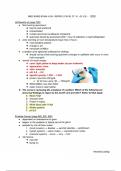
MED SURG EXAM 4 GU / REPRO ( CH 36, 37, 41, 42, 43) - 3/30/22 UA Results x2 (page 726) ● first-morning specimens: best & most preferred concentrated contain abnormal constituents (if present) specimen should be examined within 1 hour of collection or kept refrigerated ● urine standing at room temperature longer than 2 hours: more bacteria present change in pH hemolysis of RBCs ● a random urine specimen collected for cytology: should not be a first-morning specimen (changes in epithelial cells occur in urine held overnight) ● normal UA result ranges: color: light yellow to deep amber (as per textbook) appearance: clear odor: aromatic pH: 4.5 → 8.0 specific gravity: 1.005 → 1.030 protein: less than 20mg/dL for 24 hour urine: 30 → 150mg/dL RBCs/WBCs: less than 5/hpf casts: none to rare hyaline The nurse is reviewing the urinalysis of a patient. Which of the following are abnormal findings to report to the health care provider? Select all that apply. A. Blood 7/hpf B. Glucose none C. Protein 4 mg/dL D. White blood cells 11/hpf E. Nitrites positive F. pH 9.0 Prostate Cancer (page 860, 907, 909) ● dependant on testosterone to grow ● begins: in the posterior or lateral part of the gland ● spreads by one of three routes: 1. (local invasion) → bladder → seminal vesicles → peritoneum 2. (lymph system) → pelvic nodes → supraclavicular nodes 3. (vascular system) → bone → lung → liver ● risk factors: men 65+ family hx 2025 elevated testosterone high fat diet occupational exposures (hydrocarbons, fire smoke) ● S/S: abdominal pain anemia back pain bone pain (hip) fatigue hematuria urinary obstruction urinary retention weakness weight loss ● complications: bladder/kidney infection bone fractures depression difficulty urinating erectile dysfunction pain weight loss tests: PSA (less than 4ng/mL) PAP (less than 3ng/mL) acid phosphatase alkaline phosphatase serum calcium physical examination ultrasound biopsy ● therapeutic measures: Lupron Zoladex Casodex TURP radical prostatectomy brachytherapy sipuleucel-T (provenge) bilateral orchiectomy Acute Renal Failure → Oliguric Phase (page 756, 757) ● less than 400 mL of urine is produced in 24 hours ● phase can last from up to 2 weeks to several months ● renal function recovery decreases the longer this phase lasts ● fluid is retained ● electrolytes become imbalanced ● waste products are not excreted as urine output decreases ● increased: potassium phosphate ● decreased: sodium calcium ● abnormal: RBCs WBCs platelets ● neurologic effects: confusion seizures coma ● metabolic acidosis during this phase (due to reduced hydrogen ion excretion) Renal Calculi x2 (page 744, 745) ● stones that begin in the kidney → can travel to the urinary tract ● crystals start to form: urine is too concentrated with minerals and salts resulting in high levels of: calcium oxalate phosphorus uric acid substances such as citrate that inhibit stone formation are low ● four types of calculi: 1. calcium: with oxalate or phosphate 2. cystine: rare, hereditary (also found in foods) 3. struvite: rare, large, fast-growing stone found in alkaline urine caused by bacteria in chronic UTIs 4. uric acid ● possible causes: family hx of stones inadequate consumption of fluids warm climate hyperthyroidism diet high in sodium, sugar or protein obesity UTI ● S/S: severe, wavelike pain from obstructed urine flow flank, side, or lower abdomen pain radiating to genitalia intense urge to void frequency, dysuria, reduced output hematuria due to irritation from stone nausea/vomiting with severe pain ● complications: hydroureter hydronephrosis shock sepsis CKD UTI ● diagnostic tests: abdominal x-ray blood tests: calcium, uric acid, BUN, creatinine CT MRI renal ultrasound (preferred test for pregnant women) urinalysis: hematuria, crystals, urine pH two 24-hour urine collections ● therapeutic measures: small stones: hydration analgesics alpha-blocker (Tamsulosin) symptomatic large stones: IV fluids pain control Thiazide diuretic Allopurinol (Zyloprim) Lithotripsy surgery: percutaneous nephrolithotomy, ureteroscopy, cystoscopy, cystolitholapaxy The nurse is planning care for a patient with a diagnosis of a kidney stone. Which of the following interventions would the nurse implement? Select all that apply. A. Restrict fluids B. Strain all urine C. Increase calcium intake D. Maintain bedrest E. Teach to increase fluid intake F. Give analgesics as ordered Cystoscope & Pyelogram (page 732) ● is a minor surgical procedure with lighted fiberoptic cystoscope ....Continued
Document information
- Uploaded on
- November 18, 2025
- Number of pages
- 17
- Written in
- 2025/2026
- Type
- Summary