ISTQB FOUNDATION CHAPTER 1
EXAM QUESTIONS AND ANSWERS
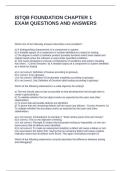
Which one of the following answers describes a test condition?
a) A distinguishing characteristic of a component or system.
b) A testable aspect of a component or system identified as a basis for testing.
c) The degree to which a software product provides functions which meet stated and
implied needs when the software is used under specified conditions.
d) Test cases designed to execute combinations of conditions and actions resulting
from them. - Correct Answers -b) A testable aspect of a component or system identified
as a basis for testing
a) Is not correct. Definition of feature according to glossary.
b) Is correct. From glossary.
c) Is not correct. Definition of functionality suitability according to glossary.
d) Is not correct. Like Definition of Decision table testing according to glossary
Which of the following statements is a valid objective for testing?
a) The test should start as late as possible so that development had enough time to
create a good product.
b) To validate whether the test object works as expected by the users and other
stakeholders.
c) To prove that all possible defects are identified.
d) To prove that any remaining defects will not cause any failures - Correct Answers -b)
To validate whether the test object works as expected by the users and other
stakeholders.
a) Is not correct. Contradiction to principle 3: "Early testing saves time and money".
b) Is correct. This is one objective of testing.
c) Is not correct. Principle #2 states that exhaustive testing is impossible, so one can
never prove that all defects were identified.
d) Is not correct. To make an assessment whether a defect will cause a failure or not,
one must detect the defect first. Saying that no remaining defect will cause a failure
implicitly means that all defects were found. This again contradicts principle #2
Which of the following statements correctly describes the difference between testing
and debugging?
, a) Testing identifies the source of defects; debugging analyzes the defects and
proposes prevention activities.
b) Dynamic testing shows failures caused by defects; debugging eliminates the defects,
which are the source of failures.
c) Testing removes faults; but debugging removes defects that cause the faults.
d) Dynamic testing prevents the causes of failures; debugging removes the failures. -
Correct Answers -b) Dynamic testing shows failures caused by defects; debugging
eliminates the defects, which are the source of failures.
a) Is not correct. Testing does not identify the source of defects, debugging identifies
the source of defects.
b) Is correct. Dynamic testing can show failures that are caused by defects in the
software. Debugging eliminates the defects, which are the source of failures.
c) Is not correct. Testing does not remove faults, but debugging removes faults, which is
synonyms for defects, that may cause the failures.
d) Is not correct. Dynamic testing does not directly prevent the causes of failures
(defects) but detects the presence of defects
Which one of the statements below describes the most common situation for a failure
discovered during testing or in production?
a) The product crashed when the user selected an option in a dialog box.
b) The wrong version of a compiled source code file was included in the build.
c) The computation algorithm used the wrong input variables.
d) The developer misinterpreted the requirement for the algorithm - Correct Answers -a)
The product crashed when the user selected an option in a dialog box.
a) Is correct. A crash is clearly noticeable by the user.
b) Is not correct. This is a defect, not a failure since there is something wrong in the
code. It may not result in a visible or noticeable failure, for example if the changes in the
source code file are only in comments.
c) Is not correct. The use of wrong input variables may not result in a visible or
noticeable failure, for example if nobody uses this particular algorithm; or if the wrong
input variable has a similar value to the correct input variable; or if the FALSE result of
the algorithm is not used.
d) Is not correct. This type of fault will not necessarily lead to a failure; for example, if no
one uses this special algorithm
Mr. Test has been testing software applications on mobile devices for a period of 5
years. He has a wealth of experience in testing mobile applications and achieves better
results in a shorter time than others. Over several months, Mr. Test did not modify the
existing automated test cases and did not create any new test cases. This leads to
fewer and fewer defects being found by executing the tests. What principle of testing did
Mr. Test not observe?
EXAM QUESTIONS AND ANSWERS
Which one of the following answers describes a test condition?
a) A distinguishing characteristic of a component or system.
b) A testable aspect of a component or system identified as a basis for testing.
c) The degree to which a software product provides functions which meet stated and
implied needs when the software is used under specified conditions.
d) Test cases designed to execute combinations of conditions and actions resulting
from them. - Correct Answers -b) A testable aspect of a component or system identified
as a basis for testing
a) Is not correct. Definition of feature according to glossary.
b) Is correct. From glossary.
c) Is not correct. Definition of functionality suitability according to glossary.
d) Is not correct. Like Definition of Decision table testing according to glossary
Which of the following statements is a valid objective for testing?
a) The test should start as late as possible so that development had enough time to
create a good product.
b) To validate whether the test object works as expected by the users and other
stakeholders.
c) To prove that all possible defects are identified.
d) To prove that any remaining defects will not cause any failures - Correct Answers -b)
To validate whether the test object works as expected by the users and other
stakeholders.
a) Is not correct. Contradiction to principle 3: "Early testing saves time and money".
b) Is correct. This is one objective of testing.
c) Is not correct. Principle #2 states that exhaustive testing is impossible, so one can
never prove that all defects were identified.
d) Is not correct. To make an assessment whether a defect will cause a failure or not,
one must detect the defect first. Saying that no remaining defect will cause a failure
implicitly means that all defects were found. This again contradicts principle #2
Which of the following statements correctly describes the difference between testing
and debugging?
, a) Testing identifies the source of defects; debugging analyzes the defects and
proposes prevention activities.
b) Dynamic testing shows failures caused by defects; debugging eliminates the defects,
which are the source of failures.
c) Testing removes faults; but debugging removes defects that cause the faults.
d) Dynamic testing prevents the causes of failures; debugging removes the failures. -
Correct Answers -b) Dynamic testing shows failures caused by defects; debugging
eliminates the defects, which are the source of failures.
a) Is not correct. Testing does not identify the source of defects, debugging identifies
the source of defects.
b) Is correct. Dynamic testing can show failures that are caused by defects in the
software. Debugging eliminates the defects, which are the source of failures.
c) Is not correct. Testing does not remove faults, but debugging removes faults, which is
synonyms for defects, that may cause the failures.
d) Is not correct. Dynamic testing does not directly prevent the causes of failures
(defects) but detects the presence of defects
Which one of the statements below describes the most common situation for a failure
discovered during testing or in production?
a) The product crashed when the user selected an option in a dialog box.
b) The wrong version of a compiled source code file was included in the build.
c) The computation algorithm used the wrong input variables.
d) The developer misinterpreted the requirement for the algorithm - Correct Answers -a)
The product crashed when the user selected an option in a dialog box.
a) Is correct. A crash is clearly noticeable by the user.
b) Is not correct. This is a defect, not a failure since there is something wrong in the
code. It may not result in a visible or noticeable failure, for example if the changes in the
source code file are only in comments.
c) Is not correct. The use of wrong input variables may not result in a visible or
noticeable failure, for example if nobody uses this particular algorithm; or if the wrong
input variable has a similar value to the correct input variable; or if the FALSE result of
the algorithm is not used.
d) Is not correct. This type of fault will not necessarily lead to a failure; for example, if no
one uses this special algorithm
Mr. Test has been testing software applications on mobile devices for a period of 5
years. He has a wealth of experience in testing mobile applications and achieves better
results in a shorter time than others. Over several months, Mr. Test did not modify the
existing automated test cases and did not create any new test cases. This leads to
fewer and fewer defects being found by executing the tests. What principle of testing did
Mr. Test not observe?