Phys 118 – Worksheet 1: Electric charges and forces.
2025 Phys 118|PHYS_V 118 – Worksheet solution 1: Electric charges and forces University
of British Columbia
Scotch tape experiment
A simple experiment, that you can easily carry out on your own. It captures all key information about electric charges.
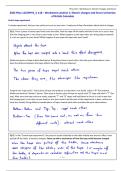
Q1.1. Press a piece of sticky tape firmly onto the table. Peel the tape off the table and hold in the air in such a way
that the hanging part is not close to your body or arm. What happens to the tape when you bring objects towards
it, such as a pencil or your hand? What happens if you swipe the tape with your hand?
Make two pieces of tape as described above. Bring them close to each other. Describe your observations. How
does the distance between the tapes affects the effect that you observe?
Prepare two “tape units”. Fold a piece of tape and produce a stripe that is not sticky. Label it “B” (for bottom).
Make two identical “bottom” pieces. Then press a shorter piece of tape on top of each “B” tape and label it “T” (for
top). After your two tape units are ready, separate “T” and “B” tapes and hold them in the air in such a way that
the hanging part is not close to your body or arm (you need to do this part of the experiment in pairs, unless you
have four hands). Bring different combinations of tapes toward each other and describe your observations.
Q1.2. In the “Scotch tape experiment”, the piece of scotch attached to the table initially was neutral. After it was
peeled off the table, it became charged. Come up with a mechanism of how the tape could become charged.
, Phys 118 – Worksheet 1: Electric charges and forces.
Insulators and conductors
Insulators: are made of neutral atoms. Can be weakly polarized by external charges (each individual atom is polarized).
No charge motion.
Conductors: lattice of positively charged ions (heavy, immobile) & “negatively charged sea of electrons” (light, mobile).
Easily polarized by external charges. Electrons freely “flow” about the static ionic lattice.
The charge mobility determines how these materials react on external charges.
Q1.3. Identical metal spheres are initially charged as shown.
1. Spheres P and Q are touched together and then separated.
2. Then spheres Q and R are touched together and separated.
Afterward the charge on the sphere R is:
Interactions between charged and neutral objects (summary)
• There are two different types of charges (“positive” and “negative”)
• Charged objects are able to exert a force on other charged and neutral (!) objects without touching them.
• The force increases as you bring the objects closer.
• Unlike charges attract, like charges repel
Q1.4. In the “Scotch tape experiment”, why did a charged tape attract to a neutral object, such as a pen or a hand?
2025 Phys 118|PHYS_V 118 – Worksheet solution 1: Electric charges and forces University
of British Columbia
Scotch tape experiment
A simple experiment, that you can easily carry out on your own. It captures all key information about electric charges.
Q1.1. Press a piece of sticky tape firmly onto the table. Peel the tape off the table and hold in the air in such a way
that the hanging part is not close to your body or arm. What happens to the tape when you bring objects towards
it, such as a pencil or your hand? What happens if you swipe the tape with your hand?
Make two pieces of tape as described above. Bring them close to each other. Describe your observations. How
does the distance between the tapes affects the effect that you observe?
Prepare two “tape units”. Fold a piece of tape and produce a stripe that is not sticky. Label it “B” (for bottom).
Make two identical “bottom” pieces. Then press a shorter piece of tape on top of each “B” tape and label it “T” (for
top). After your two tape units are ready, separate “T” and “B” tapes and hold them in the air in such a way that
the hanging part is not close to your body or arm (you need to do this part of the experiment in pairs, unless you
have four hands). Bring different combinations of tapes toward each other and describe your observations.
Q1.2. In the “Scotch tape experiment”, the piece of scotch attached to the table initially was neutral. After it was
peeled off the table, it became charged. Come up with a mechanism of how the tape could become charged.
, Phys 118 – Worksheet 1: Electric charges and forces.
Insulators and conductors
Insulators: are made of neutral atoms. Can be weakly polarized by external charges (each individual atom is polarized).
No charge motion.
Conductors: lattice of positively charged ions (heavy, immobile) & “negatively charged sea of electrons” (light, mobile).
Easily polarized by external charges. Electrons freely “flow” about the static ionic lattice.
The charge mobility determines how these materials react on external charges.
Q1.3. Identical metal spheres are initially charged as shown.
1. Spheres P and Q are touched together and then separated.
2. Then spheres Q and R are touched together and separated.
Afterward the charge on the sphere R is:
Interactions between charged and neutral objects (summary)
• There are two different types of charges (“positive” and “negative”)
• Charged objects are able to exert a force on other charged and neutral (!) objects without touching them.
• The force increases as you bring the objects closer.
• Unlike charges attract, like charges repel
Q1.4. In the “Scotch tape experiment”, why did a charged tape attract to a neutral object, such as a pen or a hand?