NR 603 Advanced Clinical Diagnosis Key Concepts for CEA Exam Study Guide (everything you need to know 2025 exam prep doc) Chamberlain College of Nursing
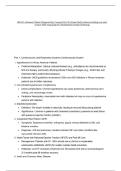
NR 603 Advanced Clinical Diagnosis Key Concepts for CEA Exam Study Guide (everything you need to know 2025 exam prep doc) Chamberlain College of Nursing Part 1: Cardiovascular and Respiratory Systems Cardiovascular System 1. Hypertension in African American Patients ● Preferred Medication: Calcium channel blockers (e.g., amlodipine) are recommended as first-line therapy, particularly dihydropyridines if lifestyle changes (e.g., DASH diet, salt restriction) fail to control blood pressure. ● Rationale: JNC8 guidelines recommend CCBs over ACE inhibitors in African American patients due to better outcomes. 2. Uncontrolled Hypertension Complications ● Direct Complications: Chronic hypertension can cause proteinuria, arteriovenous (AV) nicking, and hemorrhagic stroke. ● Peripheral Neuropathy: Associated more with diabetes but may co-occur in hypertensive patients with diabetes. 3. Diastolic Dysfunction ● Definition: The heart's inability to relax fully, leading to reduced filling during diastole. ● Significance: Common in patients with thickened myocardium; presents as heart failure with preserved ejection fraction (HFpEF). 4. Congestive Heart Failure (CHF) ● Symptoms: Dyspnea on exertion, orthopnea, jugular venous distention (JVD), and bilateral crackles. ● Diagnosis: JVD and pulmonary crackles indicate CHF over other conditions like myocardial infarction (MI). 5. Heart Failure with Reduced Ejection Fraction (HFrEF) and Post-MI Care ● Management: Patients with EF 35% should use a LifeVest or implantable cardioverter-defibrillator (AICD) for sudden cardiac death prevention. ● Rationale: Low EF increases arrhythmia risk. Re-assessment with an echocardiogram 2-3 months post-MI monitors recovery. 6. Aortic and Coronary Artery Disease ● Aortic Aneurysm Surveillance: CT angiography is preferred, offering precise aneurysm measurements and detailed imaging for assessment. ● Coronary Artery Disease: High-risk patients (e.g., smokers, high LDL) should be prescribed statins to reduce ASCVD risk.
Document information
- Uploaded on
- November 14, 2025
- Number of pages
- 59
- Written in
- 2025/2026
- Type
- Other
- Person
- Unknown