FIT1043 Introduction to Data Science EXAMINATION PREPARATION NOTES
2025-2026 with key concept from week 1-11 Monash University Malaysia
FIT1043 EXAMINATION PREPARATION NOTES
WK1 DATA SCIENCE
1.1 WHAT IS DATA Examples:
SCIENCE Narrow: Machine Learning on Big Data
Broad: Extraction of knowledge/Value from data through complete data life cycle process
Includes:
1. Broad Concern with different stages
2. Focus on learning/knowledge discovery
1.2 DATA SCIENCE
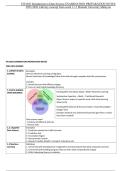
Hacking Skills (To Obtain Data) + Math= Machine Learning
VENN DIAGRAM
Substantive Expertise + Math = Traditional Research
(Spent time to expert in specific areas, little time learning
about tech)
Hacking Skills (Extract & Structure Data) + Good Knowledge =
Danger Zone
(Analysis without any understand how they got there or what
they have created)
Data science need
- Combine of different skill sets
- Diverse skills
1.2.1 Applied Examples:
Data Science 1. Predictive analytic for traffic forecast
2. Predictive text
3. Translation Engine
4. Reccomender System
5. Research studies (Health, Transport, Education etc)
1.3 Machine Definition
Learning 1. Concerned with development of algorithms and techniques that allow computers to learn
2. Concerned with building program that can learn with computational output
3. With Underlying theory in statistics
,1.3.1 Why 1. Humans are incapable
Machine Learning (Expertise not available, Expertise cannot be explained)
2. Automation
(Large amount of data, Humans are too expensive for such situation)
3. Rule Based experts system, with variable changes in situation all the time
(Auto adaptation (user personalisation), situation changes over time)
1.4 Data Science * Many different task come together to complete ds project, but not all labelled as ds.
Process 1. Pitching Ideas ( For DS projects to investors/managers)
2. Collecting Data
3. Integration (Integrate from various different sources)
4. Interpretation (Describe data using database schema)
5. Governance ( i. Caring for data & its subject ii.Managing data standards and formats)
6. Engineering (Data engineers make the back-end work)
7. Wrangling (Inspecting & Cleaning the data)
8. Modelling (Propose model -> Analyst build model -> Analytic/statistic/ML work on data)
9. Visualisation (Choose appropriate Visualisation -> Visualise & Interpret -> Present result)
10. Operationalise (Putting Results to work)
1.4.1 Standard
Value Chain
1. Collection ( Getting the data)
2. Engineering ( Storage and computational resources across full lifecycle)
3. Governance (Overall management of data across full lifecycle)
4. Wrangling (Data pre-processing, cleaning)
5. Analysis (Discovery(learning, visualisation,etc)
6. Visualisation (Arguing the case that the results are significant and useful.)
7. Operationalise (Putting the results to work, so as to gain benefits or value)
1.4.2 Roles within
Standard Value
Chain
1. Data Scientist
- Addresses the data science process to extract meaning/value from data
2. Chief Data Scientist
- Form of Chief Scientist, addresses data management, data engineering & data science goals
* Chief scientist = corporate position , responsible for science related aspects of a company / org
1.5 Relationship 1. Data Engineering
of Data Science to - Build scalable systems for storage, processing data
Other Disciplines 2. Data Analyst
- Performs analysis and understanding results
3. Data Management
- Managing data through lifecycles
, WK 2 Data Scientist Roles & Skills, Impact of DS & Business Models with Data
2.1 Role of Advantages
Python In DS 1. Easy to Learn
2. Flexible & Multi purpose
3. Great libraries
4. Well designed computer language
5. Good Visualisation for basic analysis
2.2 Roles of Data 1. Data Analysis
Scientists Quote From Quora:
Primarily people who develop insights with data
Data Analytics HandBook :
Important communication skills
Collection & Wrangling steps are biggest challenges for Data Analysis
2. Data Scientists
Quote From Quora:
Primarily people who develop data models and products, that in turn produce insights
Data Analytics HandBook :
Better at stats than software engineer and better at software engineering than statistician
3. Data engineers
Quote From Quora:
Primarily people who manage data infrastructure, automate data processing and deploy models
at scale.
4. Future enabled (DA Handbook)
- Growing data industry , roles less well defined
- Data related works get to interact w many parts of the company from engineering to business
intelligence to product managers.
Quality – Keep curiosity about working with data, important quality as technical abilities.
2.3 Skills of Data 1. Business:
Scientists - Product development, business
2. Machine Learning/ Big Data
- Unstructured data, structured data, machine learning, big and distributed data
3. Mathematics/Operations research:
- Optimisation, Maths, graphical models, algorithms
4. Programming
- Systems admins, back end / front end programming
5. Statistics
- Visualisation, temporal stats, surveys & marketing, spatial stats, science, data manipulation
2.4 Career as Data 1. Solid Machine Learning & Stats
Scientist 2. Related Maths
3. Proof of Concepts
4. Unix Experience
2.5 Impact of DS 1. Life in the cloud
2. Social Good
3. Futurology
2.5.1 Life in the - personal information increasingly stored in cloud (social life, career, search history)
cloud Advantages
- Personalised agents computerised support for health
Disadvantages
- Security & Privacy Breaches ( Corporate Leakage to government)
- No rights to access/delete own data
- department of pre-crime
- corporate mergers
- changes in lifestyle ( mix up the data collected?)
- Social Scoring ?
2025-2026 with key concept from week 1-11 Monash University Malaysia
FIT1043 EXAMINATION PREPARATION NOTES
WK1 DATA SCIENCE
1.1 WHAT IS DATA Examples:
SCIENCE Narrow: Machine Learning on Big Data
Broad: Extraction of knowledge/Value from data through complete data life cycle process
Includes:
1. Broad Concern with different stages
2. Focus on learning/knowledge discovery
1.2 DATA SCIENCE
Hacking Skills (To Obtain Data) + Math= Machine Learning
VENN DIAGRAM
Substantive Expertise + Math = Traditional Research
(Spent time to expert in specific areas, little time learning
about tech)
Hacking Skills (Extract & Structure Data) + Good Knowledge =
Danger Zone
(Analysis without any understand how they got there or what
they have created)
Data science need
- Combine of different skill sets
- Diverse skills
1.2.1 Applied Examples:
Data Science 1. Predictive analytic for traffic forecast
2. Predictive text
3. Translation Engine
4. Reccomender System
5. Research studies (Health, Transport, Education etc)
1.3 Machine Definition
Learning 1. Concerned with development of algorithms and techniques that allow computers to learn
2. Concerned with building program that can learn with computational output
3. With Underlying theory in statistics
,1.3.1 Why 1. Humans are incapable
Machine Learning (Expertise not available, Expertise cannot be explained)
2. Automation
(Large amount of data, Humans are too expensive for such situation)
3. Rule Based experts system, with variable changes in situation all the time
(Auto adaptation (user personalisation), situation changes over time)
1.4 Data Science * Many different task come together to complete ds project, but not all labelled as ds.
Process 1. Pitching Ideas ( For DS projects to investors/managers)
2. Collecting Data
3. Integration (Integrate from various different sources)
4. Interpretation (Describe data using database schema)
5. Governance ( i. Caring for data & its subject ii.Managing data standards and formats)
6. Engineering (Data engineers make the back-end work)
7. Wrangling (Inspecting & Cleaning the data)
8. Modelling (Propose model -> Analyst build model -> Analytic/statistic/ML work on data)
9. Visualisation (Choose appropriate Visualisation -> Visualise & Interpret -> Present result)
10. Operationalise (Putting Results to work)
1.4.1 Standard
Value Chain
1. Collection ( Getting the data)
2. Engineering ( Storage and computational resources across full lifecycle)
3. Governance (Overall management of data across full lifecycle)
4. Wrangling (Data pre-processing, cleaning)
5. Analysis (Discovery(learning, visualisation,etc)
6. Visualisation (Arguing the case that the results are significant and useful.)
7. Operationalise (Putting the results to work, so as to gain benefits or value)
1.4.2 Roles within
Standard Value
Chain
1. Data Scientist
- Addresses the data science process to extract meaning/value from data
2. Chief Data Scientist
- Form of Chief Scientist, addresses data management, data engineering & data science goals
* Chief scientist = corporate position , responsible for science related aspects of a company / org
1.5 Relationship 1. Data Engineering
of Data Science to - Build scalable systems for storage, processing data
Other Disciplines 2. Data Analyst
- Performs analysis and understanding results
3. Data Management
- Managing data through lifecycles
, WK 2 Data Scientist Roles & Skills, Impact of DS & Business Models with Data
2.1 Role of Advantages
Python In DS 1. Easy to Learn
2. Flexible & Multi purpose
3. Great libraries
4. Well designed computer language
5. Good Visualisation for basic analysis
2.2 Roles of Data 1. Data Analysis
Scientists Quote From Quora:
Primarily people who develop insights with data
Data Analytics HandBook :
Important communication skills
Collection & Wrangling steps are biggest challenges for Data Analysis
2. Data Scientists
Quote From Quora:
Primarily people who develop data models and products, that in turn produce insights
Data Analytics HandBook :
Better at stats than software engineer and better at software engineering than statistician
3. Data engineers
Quote From Quora:
Primarily people who manage data infrastructure, automate data processing and deploy models
at scale.
4. Future enabled (DA Handbook)
- Growing data industry , roles less well defined
- Data related works get to interact w many parts of the company from engineering to business
intelligence to product managers.
Quality – Keep curiosity about working with data, important quality as technical abilities.
2.3 Skills of Data 1. Business:
Scientists - Product development, business
2. Machine Learning/ Big Data
- Unstructured data, structured data, machine learning, big and distributed data
3. Mathematics/Operations research:
- Optimisation, Maths, graphical models, algorithms
4. Programming
- Systems admins, back end / front end programming
5. Statistics
- Visualisation, temporal stats, surveys & marketing, spatial stats, science, data manipulation
2.4 Career as Data 1. Solid Machine Learning & Stats
Scientist 2. Related Maths
3. Proof of Concepts
4. Unix Experience
2.5 Impact of DS 1. Life in the cloud
2. Social Good
3. Futurology
2.5.1 Life in the - personal information increasingly stored in cloud (social life, career, search history)
cloud Advantages
- Personalised agents computerised support for health
Disadvantages
- Security & Privacy Breaches ( Corporate Leakage to government)
- No rights to access/delete own data
- department of pre-crime
- corporate mergers
- changes in lifestyle ( mix up the data collected?)
- Social Scoring ?