
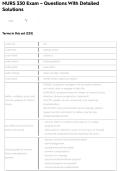
NURS 330 Exam – Questions With Detailed
Solutions
Save
Terms in this set (233)
code red fire
code blue cardiac arrest
code white violence
code yellow missing patient
code green evacuation
code orange mass casualty / disaster
code black bomb threat, suspicious object
STABLE: symptoms managed well by health routines
and meds, able to engage in daily life
UNSTABLE: symptoms become harder to control (stress,
stable, unstable, acute, and infection, disease progression, treatment)
recovery phases of chronic ACUTE: sudden, severe worsening crisis requiring
illness hospitalization
RECOVERY: improvement after acute episode, goal to
regain function and return to stable, may be new
limitations/adjustments
- chronic often 3+ months, acute days to 1-2 weeks
key differences of chronic - gradual onset
illness from acute - diet, posture, habits (vs. acute is from injury or trauma)
- continued symptoms beyond expected recovery
- person-centred care (bioindividuality)
- self-management
- polypharmacy/med safety
nursing goals for chronic
- prevent complications
illness management,
- monitor for changes
general
- psychosocial/emotional support
- family/caregiver involvement
- interprofessional collaboration
, assessment
diagnosis
know ADPIE and identifying
planning
examples
implementation
evaluation
assuming poor health and disability is normal in older
adults, minimizing these symptoms/concerns, not
providing enough/urgent care
ageism diseases can be common in older adults ( just like other
populations are at higher risk for certain things) but are
NOT normal
patronizing/disrespectful language
NORMAL AGING
• brain atrophy
• myelin degeneration
normal aging neurological • decreased cerebral circulation
changes and clinical CLINICAL MANIFESTATIONS
manifestations • decreased reaction/response time
• reduced short-term memory
• postural hypotension
• impaired balance, vertigo
NORMAL AGING
• weaker heart muscle, easier to strain
• weaker blood vessels
• decreased contractility (insensitive to inotropes)
normal aging • thickened ventricle walls
cardiovascular changes and • decreased circulation to organs
clinical manifestations • increased atherosclerotic plaque
CLINICAL MANIFESTATIONS
• increased BP
• slower HR
• cold feet and hands
, NORMAL AGING
• weaker pulmonary capillary walls
• weaker lung tissue
• declining thoracic articular cartilage
• atrophy of respiratory muscles
normal aging respiratory
• fewer alveoli
changes and clinical
CLINICAL MANIFESTATIONS
manifestations
• barrel chest
• decreased ability to deep breathe and cough
• lower SpO2
• thicker mucus
• increased RR
NORMAL AGING
• reduced saliva production
• trouble swallowing
• less/weaker teeth
normal aging • decreased gastric motility
gastrointestinal changes • weaker sphincters
and clinical manifestations CLINICAL MANIFESTATIONS
• dry oral mucosa
• more constipation
• reduced drug metabolism
• altered nutrition
NORMAL AGING
• less hormone produced
• reduced sexual functioning
• weaker bladder muscles and sphincter control,
decreased bladder capacity
normal aging genitourinary
• decreased nephron blood supply and diluting ability
changes and clinical
• increased residual urine volume
manifestations
CLINICAL MANIFESTATIONS
• increased frequency and urgency to pee
• nocturia
• potential for dehydration
• decreased excretion of toxins and drugs
, NORMAL AGING
• muscle atrophy
normal aging • joint cartilage decay
musculoskeletal changes • bone resorption
and clinical manifestations • stiffer ligaments
CLINICAL MANIFESTATIONS
• decreased height, flexibility, strength, agility, mobility
NORMAL AGING
• reduced oil and sweat production
• thin, less elastic skin
• increased pigmentation
CLINICAL MANIFESTATIONS
normal aging skin changes
• dry
and clinical manifestations
• heals slowly
• easily tears and bruises
• decreased heat regulation
• less hair
• brittle nails
• older age
risk factors • genetics
• diet and exercise
dementia = chronic, progressive, irreversible decline in
cognition
• vascular dementia from strokes and concussions
dementia types • Lewy body
• frontotemporal
• Alzheimer's (abnormal protein buildup in the brain
causing problems with memory neuroinfrastructure)
Montreal Cognitive Assessment
MoCA
Attention, memory, language, executive functions
MoCa
MRI or CT = see severe atrophy indicative of
Alzheimer's, rule out damage from small strokes or fluid
buildup
Diagnostics for Alzheimer's
PET = use radioactive tracer to show parts with reduced
glucose metabolism and detect amyloid plaques
blood tests = rule out liver and blood sugar issues
contributing to dementia
Solutions
Save
Terms in this set (233)
code red fire
code blue cardiac arrest
code white violence
code yellow missing patient
code green evacuation
code orange mass casualty / disaster
code black bomb threat, suspicious object
STABLE: symptoms managed well by health routines
and meds, able to engage in daily life
UNSTABLE: symptoms become harder to control (stress,
stable, unstable, acute, and infection, disease progression, treatment)
recovery phases of chronic ACUTE: sudden, severe worsening crisis requiring
illness hospitalization
RECOVERY: improvement after acute episode, goal to
regain function and return to stable, may be new
limitations/adjustments
- chronic often 3+ months, acute days to 1-2 weeks
key differences of chronic - gradual onset
illness from acute - diet, posture, habits (vs. acute is from injury or trauma)
- continued symptoms beyond expected recovery
- person-centred care (bioindividuality)
- self-management
- polypharmacy/med safety
nursing goals for chronic
- prevent complications
illness management,
- monitor for changes
general
- psychosocial/emotional support
- family/caregiver involvement
- interprofessional collaboration
, assessment
diagnosis
know ADPIE and identifying
planning
examples
implementation
evaluation
assuming poor health and disability is normal in older
adults, minimizing these symptoms/concerns, not
providing enough/urgent care
ageism diseases can be common in older adults ( just like other
populations are at higher risk for certain things) but are
NOT normal
patronizing/disrespectful language
NORMAL AGING
• brain atrophy
• myelin degeneration
normal aging neurological • decreased cerebral circulation
changes and clinical CLINICAL MANIFESTATIONS
manifestations • decreased reaction/response time
• reduced short-term memory
• postural hypotension
• impaired balance, vertigo
NORMAL AGING
• weaker heart muscle, easier to strain
• weaker blood vessels
• decreased contractility (insensitive to inotropes)
normal aging • thickened ventricle walls
cardiovascular changes and • decreased circulation to organs
clinical manifestations • increased atherosclerotic plaque
CLINICAL MANIFESTATIONS
• increased BP
• slower HR
• cold feet and hands
, NORMAL AGING
• weaker pulmonary capillary walls
• weaker lung tissue
• declining thoracic articular cartilage
• atrophy of respiratory muscles
normal aging respiratory
• fewer alveoli
changes and clinical
CLINICAL MANIFESTATIONS
manifestations
• barrel chest
• decreased ability to deep breathe and cough
• lower SpO2
• thicker mucus
• increased RR
NORMAL AGING
• reduced saliva production
• trouble swallowing
• less/weaker teeth
normal aging • decreased gastric motility
gastrointestinal changes • weaker sphincters
and clinical manifestations CLINICAL MANIFESTATIONS
• dry oral mucosa
• more constipation
• reduced drug metabolism
• altered nutrition
NORMAL AGING
• less hormone produced
• reduced sexual functioning
• weaker bladder muscles and sphincter control,
decreased bladder capacity
normal aging genitourinary
• decreased nephron blood supply and diluting ability
changes and clinical
• increased residual urine volume
manifestations
CLINICAL MANIFESTATIONS
• increased frequency and urgency to pee
• nocturia
• potential for dehydration
• decreased excretion of toxins and drugs
, NORMAL AGING
• muscle atrophy
normal aging • joint cartilage decay
musculoskeletal changes • bone resorption
and clinical manifestations • stiffer ligaments
CLINICAL MANIFESTATIONS
• decreased height, flexibility, strength, agility, mobility
NORMAL AGING
• reduced oil and sweat production
• thin, less elastic skin
• increased pigmentation
CLINICAL MANIFESTATIONS
normal aging skin changes
• dry
and clinical manifestations
• heals slowly
• easily tears and bruises
• decreased heat regulation
• less hair
• brittle nails
• older age
risk factors • genetics
• diet and exercise
dementia = chronic, progressive, irreversible decline in
cognition
• vascular dementia from strokes and concussions
dementia types • Lewy body
• frontotemporal
• Alzheimer's (abnormal protein buildup in the brain
causing problems with memory neuroinfrastructure)
Montreal Cognitive Assessment
MoCA
Attention, memory, language, executive functions
MoCa
MRI or CT = see severe atrophy indicative of
Alzheimer's, rule out damage from small strokes or fluid
buildup
Diagnostics for Alzheimer's
PET = use radioactive tracer to show parts with reduced
glucose metabolism and detect amyloid plaques
blood tests = rule out liver and blood sugar issues
contributing to dementia


