NUR 3111 Perfusion – Questions With Guaranteed
Solutions
Save
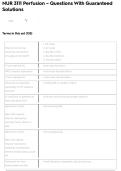
Terms in this set (135)
1. SA node
What is the normal 2. AV node
electrical conduction 3. Bundle of His
throughout the heart? 4. Bundle branches
5. Purkinje fibers
P wave represents atrial depolarization
QRS complex represents ventricular depolarization
T wave represents ventricular repolarization
Atrial kick is important, it holds 20% of cardiac output
especially for HF patients
because
In what kind of patients do AFib and ventricular pacemaker patients
they lose atrial kick?
Name this rhythm. Sinus tachycardia
Rate >100, regular
May be induced by
exercise, fever, stress, or
pain
Name this rhythm. Sinus bradycardia
Rate <60, regular
May be induced by
sleeping, hypotension,
altered mental status, acute
HF
Treatment for sinus Meds (atropine, dopamine, epi) and pacing
bradycardia includes
, Name this abnormality. Premature Atrial Complex (PAC)
Early impulses in the atrium
prior to SA node firing
Can occur in normal heart
Treatment for PAC's include nothing, just monitor closely
Name this abnormality. Supraventricular Tachycardia (A-Fib)
Tachycardia that originates
above the ventricles
Name this abnormality. Atrial Fibrillation (A-Fib)
Most common arrhythmia
in the U.S.
Can change structure of
the heart over time
Loss of atrial kick
AV node doesn't conduct
all impulses due to
tachycardia (350-450 BPM,
irregular)
- increasing age
A-Fib risk factors include - HTN
- HF
Name this arrhythmia. Premature Ventricular Complex (PVC)
Complex is early, wide
Originates in the ventricles;
retrogrades through atria
Multifocal PVCs are more dangerous
___ to patient than unifocal
PVCs.
- getting apical heart rate
Assessment of potential - hypotension (lightheadedness, dizziness, SOB, chest
PVC patient includes pain)
- assess BMP and other electrolytes
Treat cause (electrolytes, ischemia) and/or
Treatment of PVCs include
antiarrhythmics
Solutions
Save
Terms in this set (135)
1. SA node
What is the normal 2. AV node
electrical conduction 3. Bundle of His
throughout the heart? 4. Bundle branches
5. Purkinje fibers
P wave represents atrial depolarization
QRS complex represents ventricular depolarization
T wave represents ventricular repolarization
Atrial kick is important, it holds 20% of cardiac output
especially for HF patients
because
In what kind of patients do AFib and ventricular pacemaker patients
they lose atrial kick?
Name this rhythm. Sinus tachycardia
Rate >100, regular
May be induced by
exercise, fever, stress, or
pain
Name this rhythm. Sinus bradycardia
Rate <60, regular
May be induced by
sleeping, hypotension,
altered mental status, acute
HF
Treatment for sinus Meds (atropine, dopamine, epi) and pacing
bradycardia includes
, Name this abnormality. Premature Atrial Complex (PAC)
Early impulses in the atrium
prior to SA node firing
Can occur in normal heart
Treatment for PAC's include nothing, just monitor closely
Name this abnormality. Supraventricular Tachycardia (A-Fib)
Tachycardia that originates
above the ventricles
Name this abnormality. Atrial Fibrillation (A-Fib)
Most common arrhythmia
in the U.S.
Can change structure of
the heart over time
Loss of atrial kick
AV node doesn't conduct
all impulses due to
tachycardia (350-450 BPM,
irregular)
- increasing age
A-Fib risk factors include - HTN
- HF
Name this arrhythmia. Premature Ventricular Complex (PVC)
Complex is early, wide
Originates in the ventricles;
retrogrades through atria
Multifocal PVCs are more dangerous
___ to patient than unifocal
PVCs.
- getting apical heart rate
Assessment of potential - hypotension (lightheadedness, dizziness, SOB, chest
PVC patient includes pain)
- assess BMP and other electrolytes
Treat cause (electrolytes, ischemia) and/or
Treatment of PVCs include
antiarrhythmics