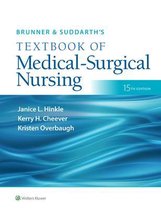
Brunner & Suddarth's Textbook of Medical-
Surgical Nursing
15th Edition
Author(s)Janice Hinkle, Kerry H. Cheever,
Kristen Overbaugh
TEST BANK
1
Reference
Ch. 1 — Nursing
Question Stem
A newly hired RN is orienting to a medical-surgical unit. Which
action best demonstrates the professional scope of nursing
practice when caring for a complex patient with multisystem
problems?
Options
A. Performing an independent diagnostic test interpretation to
change the medical regimen.
,B. Collaborating with the interdisciplinary team to develop and
adjust the plan of care.
C. Refusing to perform delegated tasks that are in the licensed
practical nurse’s job description.
D. Delegating all assessments to assistive personnel to focus on
documentation.
Correct Answer
B
Rationales
• Correct (B): Professional nursing practice emphasizes
assessment, clinical judgment, planning, and collaboration
with the health care team to manage complex patients.
Nurses integrate knowledge and coordinate care rather
than unilaterally changing medical regimens.
• Incorrect (A): Interpreting diagnostic tests to change
medical therapy exceeds nursing scope; that’s a
prescriptive/medical decision.
• Incorrect (C): Refusing reasonable delegation without
cause is not demonstration of professional practice;
appropriate delegation decisions should be based on
competence and scope.
• Incorrect (D): Delegating all assessments to assistive
personnel abdicates the nurse’s professional responsibility
for ongoing assessment and judgment.
,Teaching Point
Nursing practice centers on assessment, clinical judgment, and
interdisciplinary collaboration.
Citation (APA)
Hinkle, J., Cheever, K., & Overbaugh, K. (2022). Brunner &
Suddarth’s Textbook of Medical-Surgical Nursing (15th Ed.). Ch.
1 — Nursing.
2
Reference
Ch. 1 — The Patient: Consumer of Nursing and Health Care
Question Stem
A 68-year-old man expresses distrust of the health-care system
and declines recommended screening. Which nursing response
best addresses him as a health-care consumer and supports
shared decision-making?
Options
A. Insist that he accept the screening because it’s standard of
care.
B. Provide evidence-based information about benefits and risks
and explore his concerns.
C. Briefly tell him that screening results have saved many lives
to persuade him.
D. Document refusal and leave further discussion to the
physician.
, Correct Answer
B
Rationales
• Correct (B): Treating patients as consumers involves
informing them with evidence, eliciting values and
concerns, and engaging them in shared decision-making.
• Incorrect (A): Insistence undermines autonomy and
informed consent.
• Incorrect (C): Persuasion without eliciting concerns ignores
patient values and may be coercive.
• Incorrect (D): Documenting refusal is necessary, but
abandoning the discussion neglects the nurse’s role in
patient education and advocacy.
Teaching Point
Engage patients with clear evidence, explore values, and
support shared decisions.
Citation (APA)
Hinkle, J., Cheever, K., & Overbaugh, K. (2022). Brunner &
Suddarth’s Textbook of Medical-Surgical Nursing (15th Ed.). Ch.
1 — The Patient: Consumer of Nursing and Health Care.
3
Reference
Ch. 1 — The Patient’s Basic Needs: Maslow Hierarchy of Needs
Surgical Nursing
15th Edition
Author(s)Janice Hinkle, Kerry H. Cheever,
Kristen Overbaugh
TEST BANK
1
Reference
Ch. 1 — Nursing
Question Stem
A newly hired RN is orienting to a medical-surgical unit. Which
action best demonstrates the professional scope of nursing
practice when caring for a complex patient with multisystem
problems?
Options
A. Performing an independent diagnostic test interpretation to
change the medical regimen.
,B. Collaborating with the interdisciplinary team to develop and
adjust the plan of care.
C. Refusing to perform delegated tasks that are in the licensed
practical nurse’s job description.
D. Delegating all assessments to assistive personnel to focus on
documentation.
Correct Answer
B
Rationales
• Correct (B): Professional nursing practice emphasizes
assessment, clinical judgment, planning, and collaboration
with the health care team to manage complex patients.
Nurses integrate knowledge and coordinate care rather
than unilaterally changing medical regimens.
• Incorrect (A): Interpreting diagnostic tests to change
medical therapy exceeds nursing scope; that’s a
prescriptive/medical decision.
• Incorrect (C): Refusing reasonable delegation without
cause is not demonstration of professional practice;
appropriate delegation decisions should be based on
competence and scope.
• Incorrect (D): Delegating all assessments to assistive
personnel abdicates the nurse’s professional responsibility
for ongoing assessment and judgment.
,Teaching Point
Nursing practice centers on assessment, clinical judgment, and
interdisciplinary collaboration.
Citation (APA)
Hinkle, J., Cheever, K., & Overbaugh, K. (2022). Brunner &
Suddarth’s Textbook of Medical-Surgical Nursing (15th Ed.). Ch.
1 — Nursing.
2
Reference
Ch. 1 — The Patient: Consumer of Nursing and Health Care
Question Stem
A 68-year-old man expresses distrust of the health-care system
and declines recommended screening. Which nursing response
best addresses him as a health-care consumer and supports
shared decision-making?
Options
A. Insist that he accept the screening because it’s standard of
care.
B. Provide evidence-based information about benefits and risks
and explore his concerns.
C. Briefly tell him that screening results have saved many lives
to persuade him.
D. Document refusal and leave further discussion to the
physician.
, Correct Answer
B
Rationales
• Correct (B): Treating patients as consumers involves
informing them with evidence, eliciting values and
concerns, and engaging them in shared decision-making.
• Incorrect (A): Insistence undermines autonomy and
informed consent.
• Incorrect (C): Persuasion without eliciting concerns ignores
patient values and may be coercive.
• Incorrect (D): Documenting refusal is necessary, but
abandoning the discussion neglects the nurse’s role in
patient education and advocacy.
Teaching Point
Engage patients with clear evidence, explore values, and
support shared decisions.
Citation (APA)
Hinkle, J., Cheever, K., & Overbaugh, K. (2022). Brunner &
Suddarth’s Textbook of Medical-Surgical Nursing (15th Ed.). Ch.
1 — The Patient: Consumer of Nursing and Health Care.
3
Reference
Ch. 1 — The Patient’s Basic Needs: Maslow Hierarchy of Needs