
NSG 3320 Final Exam – Questions With Accurate
Answers
Save
Practice questions for this set
Learn 1 /7 Study with Learn
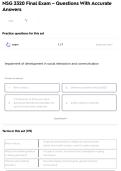
Impairment of development in social interaction and communication
Choose an answer
1 BMI in history 2 Difference between BN and BED
T/F delusions of those who have
3 delusional disorder are plausible, but 4 Autism spectrum disorder
can't convince them otherwise
Don't know?
Terms in this set (175)
Originally developed to categorize various human
BMI in history
builds, then health studies used it to define obesity
What is the defining feature It is about control, not about food, maladaptive coping
of eating disorders? mechanism
Theories about Eating Neurobiological, psychological, genetic theories,
Disorders sociocultural
,What is the most important Medical stabilization
thing when someone is
hospitalized for an eating
disorder
can't maintain adequate behaviours for health based on
behaviours
Anorexia Nervosa powerful fear of gaining weight
disturbance in how person sees their shape
does not fully appreciate the seriousness of illness
Why does AN override The person would rather die than eat, it is a compulsion
survival instints
Complications of AN low bp pulse and temp, low k and dysrhythmias, etc
same as AN but weight is above or within average
Atypical AN
(controversial to tell pt this is their diag)
recurrent episodes of binge eating (compulsions) and
Bulimia Nervosa inappropriate compensatory behaviours to prevent
weight gain
do not initially appear ill but upon investigation: dental
Complications of BN
erosion, carries, bradycardia, etc
it is more dangerous in the short term due to disruptions
What is the danger of BN of electrolyte and fluid balance as well as cardiac
function problems
most common, least likely for hospital admission (not as
Binge Eating Disorder
dangerous compared to BN and AN)
Difference between BN BED there are no maladaptive compensatory
and BED mechanisms
eating quickly, eating regardless of hunger cues, eating
Criteria for BED
until painfully full, eating alone, psychological feelings
Difference between binge binge eating is a COMPULSION over eating is a
eating and overeating DECISION
Not technically a diag, but still important and require
Feeding Disorders
treatment
eating disorder not otherwise specified, or feeding
What does EDNOS or
disorder not otherwise specified (used before finalizing
FDNOS mean
a diagnosis)
, Avoidant Restrictive Food restrictive eating not due to medical or psychological
Intake Disorder reasons etc
lack of interest in food, food avoidance due to smell,
Presentations of AFRID taste, texture, intake restrictions related to upsetting
event
persistent consumption of non-nutritive substances over
PICA
a period of at least 1 mo
What group has a higher institutionalized children
percentage of pica
Complications of PICA intestinal blockages, poisoning etc
Rumination disorder unintentional regurgitation of undigested food
What group is associated intellectual development disorder and neglect
but not definitively
connected to rumination
disorder
profound occupation with exercise (compulsive,
Anorexia Athletica prioritizing exercise, self-worth equated to
performance, rarely satisfied)
A disordered eating pattern characterized by eating
nocturnal sleep related
while asleep without any recollection of having done
eating disorder
so.
an obsession with eating foods that one considers
Orthorexia
healthy, rather eat clean than enjoy food
Criteria for Hospitalization Severe bradycardia, electrolyte imbalances, low weight
for ED
Inpatient Interventions for food = medicine, strict rules etc
ED
adults: can be removed if not adhering, self takes
Inpatient treatment
charge
differences for ED in adults
and pediatrics
Pediatrics: parents take charge, unlikely for removal
Caused by rapid refeeding following a long period of
Refeeding syndrome
fasting
Answers
Save
Practice questions for this set
Learn 1 /7 Study with Learn
Impairment of development in social interaction and communication
Choose an answer
1 BMI in history 2 Difference between BN and BED
T/F delusions of those who have
3 delusional disorder are plausible, but 4 Autism spectrum disorder
can't convince them otherwise
Don't know?
Terms in this set (175)
Originally developed to categorize various human
BMI in history
builds, then health studies used it to define obesity
What is the defining feature It is about control, not about food, maladaptive coping
of eating disorders? mechanism
Theories about Eating Neurobiological, psychological, genetic theories,
Disorders sociocultural
,What is the most important Medical stabilization
thing when someone is
hospitalized for an eating
disorder
can't maintain adequate behaviours for health based on
behaviours
Anorexia Nervosa powerful fear of gaining weight
disturbance in how person sees their shape
does not fully appreciate the seriousness of illness
Why does AN override The person would rather die than eat, it is a compulsion
survival instints
Complications of AN low bp pulse and temp, low k and dysrhythmias, etc
same as AN but weight is above or within average
Atypical AN
(controversial to tell pt this is their diag)
recurrent episodes of binge eating (compulsions) and
Bulimia Nervosa inappropriate compensatory behaviours to prevent
weight gain
do not initially appear ill but upon investigation: dental
Complications of BN
erosion, carries, bradycardia, etc
it is more dangerous in the short term due to disruptions
What is the danger of BN of electrolyte and fluid balance as well as cardiac
function problems
most common, least likely for hospital admission (not as
Binge Eating Disorder
dangerous compared to BN and AN)
Difference between BN BED there are no maladaptive compensatory
and BED mechanisms
eating quickly, eating regardless of hunger cues, eating
Criteria for BED
until painfully full, eating alone, psychological feelings
Difference between binge binge eating is a COMPULSION over eating is a
eating and overeating DECISION
Not technically a diag, but still important and require
Feeding Disorders
treatment
eating disorder not otherwise specified, or feeding
What does EDNOS or
disorder not otherwise specified (used before finalizing
FDNOS mean
a diagnosis)
, Avoidant Restrictive Food restrictive eating not due to medical or psychological
Intake Disorder reasons etc
lack of interest in food, food avoidance due to smell,
Presentations of AFRID taste, texture, intake restrictions related to upsetting
event
persistent consumption of non-nutritive substances over
PICA
a period of at least 1 mo
What group has a higher institutionalized children
percentage of pica
Complications of PICA intestinal blockages, poisoning etc
Rumination disorder unintentional regurgitation of undigested food
What group is associated intellectual development disorder and neglect
but not definitively
connected to rumination
disorder
profound occupation with exercise (compulsive,
Anorexia Athletica prioritizing exercise, self-worth equated to
performance, rarely satisfied)
A disordered eating pattern characterized by eating
nocturnal sleep related
while asleep without any recollection of having done
eating disorder
so.
an obsession with eating foods that one considers
Orthorexia
healthy, rather eat clean than enjoy food
Criteria for Hospitalization Severe bradycardia, electrolyte imbalances, low weight
for ED
Inpatient Interventions for food = medicine, strict rules etc
ED
adults: can be removed if not adhering, self takes
Inpatient treatment
charge
differences for ED in adults
and pediatrics
Pediatrics: parents take charge, unlikely for removal
Caused by rapid refeeding following a long period of
Refeeding syndrome
fasting


