

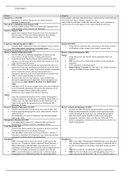
1950/1960’s
Positive Negative
Henderson vs US 1950 sharecroppers and black industrial workers could easily be evicted and jobs
segregation on railway dining cars was illegal under the lost if they were brave enough to register to vote
Interstate Commerce Act many southern politicians would often increase their racist comments at
McLaurin vs Oklahoma State Regents 1950 election time to win the support of the white, prejudiced electorate.
said that a black student could not be physically separated from
white students in the University of Oklahoma.
Sweatt vs Painter 1950
agreed that a separate black Texan law school was not equal to
the University of Texas Law School despite a three million
dollar upgrading of the black Prairie View University
Congress of Racial Equality (CORE) Emmett Till 1955
Freedom Rides- organised to make the Supreme Court to enforce young African-American who was lynched, after being accused
their ruling against segregation on interstate buses of offending a white woman in her family's grocery store
NAACP- implemented economic boycotts
Brown vs Board of Education 1954 Brown vs Board of Education 1954
NAACP decided to challenge segregation in schools in four Impact
states: Kansas, South Carolina, Virginia and Delaware ruling did not give any date by which segregation had to be
Linda Brown from Topeka, Kansas, had to attend an all-black achieved
school over a mile from her home despite the existence of an all- 1957- less than 12% of 6300 school districts in the South had
white school around the corner integrated
1953- Thurgood Marshall argued that segregated education was active opposition in the Deep South
against the Fourteenth Amendment and focused on the idea that White Citizens’ Councils- by 1956 had ¼ of a million members,
it was not just about the quality of provision but that a segregated made up of middle to upper income whites
system created low-esteem among black people and so
segregated education could never equal (whatever attempts were
made to ensure equal funding and resources).
Warren (Chief Justice of the Supreme Court )insisted that
decision be unanimous and judged that school segregation was
unconstitutional (REVERSING PLESSY VS FERGUSON
1896)
separation was by its nature unequal and as such unconstitutional
as the Fourteenth Amendment did require the admittance of all
children on equal terms to public (state) schools.
Eisenhower wasn’t happy with Warren’s decision
Impact
removed constitutional sanction for the system of segregation
produced change in a number places outside the Deep South, as
within a year over 500 school districts in the North and in the
Upper South quietly desegregated such as Washington DC,
Baltimore, St Louis.
Brown vs Board of Education (2) 1955 Brown vs Board of Education (2) 1955
NAACP returned and a second ruling was issued in May 1955 no fixed timetable that the desegregation had to occur within
Warren urged that desegregation occur within schools ‘with all Warren underestimated the resistance in the South and school
deliberate speed’ boards throughout the South drew up complex desegregation
the culmination of a series of Supreme Court decisions dating plans that would require decades to achieve full integration.
back to the 1930s segregation remained in place until the late 1960s and 1970s.
Montgomery Bus Boycott 1955 de facto segregation remained even when Southern schools were
civil-rights protest where AA’s refused to ride city buses in finally desegregated.
Montgomery, Alabama, to protest segregated seating
Little Rock Nine 1957
group of nine black students who enrolled at formerly all-white
Central High School in Little Rock, Arkansas.
their attendance at the school was a test of Brown v. Board of
Education, a landmark 1954 Supreme Court ruling that declared
segregation in public schools unconstitutional.
Eisenhower Eisenhower
1957- civil rights bill to ensure all citizens could exercise the 1957- only 7,000 of Mississippi’s 900,000 blacks were allowed to
right to vote. Eisenhower openly expressed ‘shock’ that only 7 vote, Southern Democratic senators worked to weaken the bill so
000 of Mississippi’s 900 000 blacks were allowed to vote, it the first Civil Rights Act did little to help black people use their
established a Civil Rights Division of the Justice Department and vote
a federal Civil Rights Commission to monitor race relations 1960- the second bill was diluted by Southern congressmen.
1960- a second bill made it a federal crime to obstruct school 1960- the two Civil Right Acts combined added a mere 3% of
desegregation and established penalties for obstructing black black voters to the electoral rolls, only 6.4 % of blacks went to
Positive Negative
Henderson vs US 1950 sharecroppers and black industrial workers could easily be evicted and jobs
segregation on railway dining cars was illegal under the lost if they were brave enough to register to vote
Interstate Commerce Act many southern politicians would often increase their racist comments at
McLaurin vs Oklahoma State Regents 1950 election time to win the support of the white, prejudiced electorate.
said that a black student could not be physically separated from
white students in the University of Oklahoma.
Sweatt vs Painter 1950
agreed that a separate black Texan law school was not equal to
the University of Texas Law School despite a three million
dollar upgrading of the black Prairie View University
Congress of Racial Equality (CORE) Emmett Till 1955
Freedom Rides- organised to make the Supreme Court to enforce young African-American who was lynched, after being accused
their ruling against segregation on interstate buses of offending a white woman in her family's grocery store
NAACP- implemented economic boycotts
Brown vs Board of Education 1954 Brown vs Board of Education 1954
NAACP decided to challenge segregation in schools in four Impact
states: Kansas, South Carolina, Virginia and Delaware ruling did not give any date by which segregation had to be
Linda Brown from Topeka, Kansas, had to attend an all-black achieved
school over a mile from her home despite the existence of an all- 1957- less than 12% of 6300 school districts in the South had
white school around the corner integrated
1953- Thurgood Marshall argued that segregated education was active opposition in the Deep South
against the Fourteenth Amendment and focused on the idea that White Citizens’ Councils- by 1956 had ¼ of a million members,
it was not just about the quality of provision but that a segregated made up of middle to upper income whites
system created low-esteem among black people and so
segregated education could never equal (whatever attempts were
made to ensure equal funding and resources).
Warren (Chief Justice of the Supreme Court )insisted that
decision be unanimous and judged that school segregation was
unconstitutional (REVERSING PLESSY VS FERGUSON
1896)
separation was by its nature unequal and as such unconstitutional
as the Fourteenth Amendment did require the admittance of all
children on equal terms to public (state) schools.
Eisenhower wasn’t happy with Warren’s decision
Impact
removed constitutional sanction for the system of segregation
produced change in a number places outside the Deep South, as
within a year over 500 school districts in the North and in the
Upper South quietly desegregated such as Washington DC,
Baltimore, St Louis.
Brown vs Board of Education (2) 1955 Brown vs Board of Education (2) 1955
NAACP returned and a second ruling was issued in May 1955 no fixed timetable that the desegregation had to occur within
Warren urged that desegregation occur within schools ‘with all Warren underestimated the resistance in the South and school
deliberate speed’ boards throughout the South drew up complex desegregation
the culmination of a series of Supreme Court decisions dating plans that would require decades to achieve full integration.
back to the 1930s segregation remained in place until the late 1960s and 1970s.
Montgomery Bus Boycott 1955 de facto segregation remained even when Southern schools were
civil-rights protest where AA’s refused to ride city buses in finally desegregated.
Montgomery, Alabama, to protest segregated seating
Little Rock Nine 1957
group of nine black students who enrolled at formerly all-white
Central High School in Little Rock, Arkansas.
their attendance at the school was a test of Brown v. Board of
Education, a landmark 1954 Supreme Court ruling that declared
segregation in public schools unconstitutional.
Eisenhower Eisenhower
1957- civil rights bill to ensure all citizens could exercise the 1957- only 7,000 of Mississippi’s 900,000 blacks were allowed to
right to vote. Eisenhower openly expressed ‘shock’ that only 7 vote, Southern Democratic senators worked to weaken the bill so
000 of Mississippi’s 900 000 blacks were allowed to vote, it the first Civil Rights Act did little to help black people use their
established a Civil Rights Division of the Justice Department and vote
a federal Civil Rights Commission to monitor race relations 1960- the second bill was diluted by Southern congressmen.
1960- a second bill made it a federal crime to obstruct school 1960- the two Civil Right Acts combined added a mere 3% of
desegregation and established penalties for obstructing black black voters to the electoral rolls, only 6.4 % of blacks went to


