

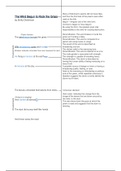
Many of Dickinson’s poems did not have titles,
The Wind Begun to Rock the Grass and thus the first lines of the poems were often
by Emily Dickinson used as the title.
begun = irregular use of the verb form.
(Correct is began or have begun)
By using this form, the speaker gives sole
responsibility to the wind for causing destruction.
(Poetic license) Personification: The wind shakes or rocks the
The wind begun to rock the grass grass as if rocking a baby.
Personification: The wind is compared to a
person who sings tunes or songs.
The sound of the wind is described as
With threatening tunes and low — threatening and low.
Environment
This diction adds to the menacing tone.
(Dashes: Indicate a transition from one movement to next)
Personification: The wind is referred to as a he.
The male gender is associated with strength.
He flung a menace at the earth — This strength is capable of wreaking havoc.
Personification: The storm is described as
having the human ability of being menacing or to
have ill-will.
A menace at the sky. A possible source of danger or harm or having a
threatening quality, feeling, or tone.
Adds to the menacing or intimidating or perilous
tone of the poem, whilst repetition enhances it.
Speaker suggests the storm or entity behind the
storm has ill-intent.
The leaves unhooked themselves from trees— Conscious decision
Semi colon: Indicates the change from the
(Going to or ongoing) image of the leaves that are blown around by
the wind, to the dust.
Environment
And started all abroad ;
This also slows down the pace at which the
poem is read and suggests that the storm is
brewing.
The dust did scoop itself like hands
And throw away the road
The Wind Begun to Rock the Grass and thus the first lines of the poems were often
by Emily Dickinson used as the title.
begun = irregular use of the verb form.
(Correct is began or have begun)
By using this form, the speaker gives sole
responsibility to the wind for causing destruction.
(Poetic license) Personification: The wind shakes or rocks the
The wind begun to rock the grass grass as if rocking a baby.
Personification: The wind is compared to a
person who sings tunes or songs.
The sound of the wind is described as
With threatening tunes and low — threatening and low.
Environment
This diction adds to the menacing tone.
(Dashes: Indicate a transition from one movement to next)
Personification: The wind is referred to as a he.
The male gender is associated with strength.
He flung a menace at the earth — This strength is capable of wreaking havoc.
Personification: The storm is described as
having the human ability of being menacing or to
have ill-will.
A menace at the sky. A possible source of danger or harm or having a
threatening quality, feeling, or tone.
Adds to the menacing or intimidating or perilous
tone of the poem, whilst repetition enhances it.
Speaker suggests the storm or entity behind the
storm has ill-intent.
The leaves unhooked themselves from trees— Conscious decision
Semi colon: Indicates the change from the
(Going to or ongoing) image of the leaves that are blown around by
the wind, to the dust.
Environment
And started all abroad ;
This also slows down the pace at which the
poem is read and suggests that the storm is
brewing.
The dust did scoop itself like hands
And throw away the road




