

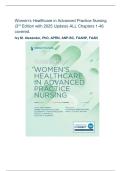
Women’s Healthcare in Advanced Practice Nursing
(3rd Edition with 2025 Update)-ALL Chapters 1-46
covered.
Ivy M. Alexander, PhD, APRN, ANP-BC, FAANP, FAAN
,1. A 29-year-old transgender man presents for a routine wellness exam. He
expresses concern about being misgendered and past negative healthcare
experiences. As an advanced practice nurse, what is the most appropriate first
step?
A. Refer him to a mental health provider for evaluation
B. Ask clinical questions without addressing identity concerns
C. Affirm his gender identity and create a safe, inclusive environment
D. Focus on physical exam findings only to avoid awkwardness
ANS: C
Rationale: Culturally responsive care begins with affirming the patient's identity
and creating an inclusive, respectful space. This builds trust and improves health
outcomes for transgender and nonbinary individuals.
2. A nurse practitioner evaluates a 42-year-old Black woman who delayed seeking
care for hypertension due to prior dismissive encounters. Which concept best
explains this delay?
A. Health illiteracy
B. Structural racism
C. Personal negligence
D. Genetic predisposition
ANS: B
Rationale: Structural racism contributes to healthcare mistrust, disparities in
care, and delayed health-seeking behaviors among marginalized populations.
Addressing these barriers is essential to equitable practice.
3. A Latina agricultural worker presents with fatigue and anemia. She lacks
insurance and has limited English proficiency. What is the best initial action by
the clinician?
A. Proceed with clinical workup without addressing language needs
B. Delay the visit due to her insurance status
C. Use a qualified medical interpreter to assess her needs fully
D. Provide pamphlets for self-care in English
ANS: C
Rationale: Effective communication is critical for accurate assessment and
equitable care. Using a certified medical interpreter is a best practice in cross-
linguistic healthcare encounters.
,4. A nonbinary college student reports depression related to family rejection. Which
response best demonstrates inclusive care?
A. “This is a phase many people go through.”
B. “Would you like me to refer you to conversion therapy?”
C. “I’m here to support you. How can I help you feel safe?”
D. “Let's focus on your physical health first.”
ANS: C
Rationale: Emotional safety and validation are central to inclusive, trauma-
informed care. Minimizing or redirecting concerns can worsen distress and
increase barriers to care.
5. During a clinic visit, a nurse practitioner advocates for menstrual equity by
offering reusable menstrual products. What broader issue is this addressing?
A. Lack of consumer education
B. Environmental sustainability
C. Gender-affirming hormone therapy
D. Reproductive justice and access
ANS: D
Rationale: Menstrual equity is a key component of reproductive justice,
promoting access, dignity, and health across all menstruating individuals,
especially those in marginalized communities.
6. A 38-year-old Native American woman describes ongoing trauma from forced
sterilization in her community's history. What is the most appropriate nursing
response?
A. Reassure her that modern practices are ethical
B. Acknowledge the history and explore how it affects her healthcare decisions
C. Focus the visit only on current symptoms
D. Ask her not to dwell on the past
ANS: B
Rationale: Recognizing historical trauma and its impact on trust and healthcare
utilization is essential to culturally competent, patient-centered care.
7. A nurse practitioner organizes a community health fair in a rural, low-income area
to provide screenings and wellness education. What core principle of women's
health does this reflect?
A. Individualism in care
, B. Holistic, community-based outreach
C. Disease-focused surveillance
D. Limiting access to reduce overdiagnosis
ANS: B
Rationale: Women’s health extends beyond individual care to address
community needs, access, and prevention, especially in underserved
populations.
8. A 25-year-old nonbinary person seeks contraception but avoids clinical settings
due to fear of discrimination. What is the best nurse practitioner approach?
A. Encourage abstinence as the safest option
B. Provide telehealth-based contraceptive counseling and care
C. Refer to another provider without addressing fears
D. Avoid discussing gender identity during the visit
ANS: B
Rationale: Offering inclusive, accessible options such as telehealth can reduce
barriers and build trust for minoritized gender persons seeking reproductive
healthcare.
9. A 60-year-old woman reports caregiver burnout from supporting her partner with
dementia. What response by the nurse best reflects holistic care?
A. Recommend more efficient caregiving routines
B. Refer only to a neurologist
C. Assess her mental health, support systems, and offer community resources
D. Suggest she hire a private nurse
ANS: C
Rationale: Holistic care includes addressing caregiver stress, mental health,
and social supports, especially in women who often carry disproportionate
caregiving burdens.
10. A nurse practitioner student asks why transgender health is part of women’s
healthcare education. Which response best reflects current inclusive practice?
A. “It’s required for accreditation, but not clinically relevant.”
B. “Transgender and nonbinary persons have overlapping health needs and
deserve competent, affirming care.”
C. “Most clinics don’t see these patients, so it’s not a priority.”
D. “It’s only relevant in specialty gender clinics.”
(3rd Edition with 2025 Update)-ALL Chapters 1-46
covered.
Ivy M. Alexander, PhD, APRN, ANP-BC, FAANP, FAAN
,1. A 29-year-old transgender man presents for a routine wellness exam. He
expresses concern about being misgendered and past negative healthcare
experiences. As an advanced practice nurse, what is the most appropriate first
step?
A. Refer him to a mental health provider for evaluation
B. Ask clinical questions without addressing identity concerns
C. Affirm his gender identity and create a safe, inclusive environment
D. Focus on physical exam findings only to avoid awkwardness
ANS: C
Rationale: Culturally responsive care begins with affirming the patient's identity
and creating an inclusive, respectful space. This builds trust and improves health
outcomes for transgender and nonbinary individuals.
2. A nurse practitioner evaluates a 42-year-old Black woman who delayed seeking
care for hypertension due to prior dismissive encounters. Which concept best
explains this delay?
A. Health illiteracy
B. Structural racism
C. Personal negligence
D. Genetic predisposition
ANS: B
Rationale: Structural racism contributes to healthcare mistrust, disparities in
care, and delayed health-seeking behaviors among marginalized populations.
Addressing these barriers is essential to equitable practice.
3. A Latina agricultural worker presents with fatigue and anemia. She lacks
insurance and has limited English proficiency. What is the best initial action by
the clinician?
A. Proceed with clinical workup without addressing language needs
B. Delay the visit due to her insurance status
C. Use a qualified medical interpreter to assess her needs fully
D. Provide pamphlets for self-care in English
ANS: C
Rationale: Effective communication is critical for accurate assessment and
equitable care. Using a certified medical interpreter is a best practice in cross-
linguistic healthcare encounters.
,4. A nonbinary college student reports depression related to family rejection. Which
response best demonstrates inclusive care?
A. “This is a phase many people go through.”
B. “Would you like me to refer you to conversion therapy?”
C. “I’m here to support you. How can I help you feel safe?”
D. “Let's focus on your physical health first.”
ANS: C
Rationale: Emotional safety and validation are central to inclusive, trauma-
informed care. Minimizing or redirecting concerns can worsen distress and
increase barriers to care.
5. During a clinic visit, a nurse practitioner advocates for menstrual equity by
offering reusable menstrual products. What broader issue is this addressing?
A. Lack of consumer education
B. Environmental sustainability
C. Gender-affirming hormone therapy
D. Reproductive justice and access
ANS: D
Rationale: Menstrual equity is a key component of reproductive justice,
promoting access, dignity, and health across all menstruating individuals,
especially those in marginalized communities.
6. A 38-year-old Native American woman describes ongoing trauma from forced
sterilization in her community's history. What is the most appropriate nursing
response?
A. Reassure her that modern practices are ethical
B. Acknowledge the history and explore how it affects her healthcare decisions
C. Focus the visit only on current symptoms
D. Ask her not to dwell on the past
ANS: B
Rationale: Recognizing historical trauma and its impact on trust and healthcare
utilization is essential to culturally competent, patient-centered care.
7. A nurse practitioner organizes a community health fair in a rural, low-income area
to provide screenings and wellness education. What core principle of women's
health does this reflect?
A. Individualism in care
, B. Holistic, community-based outreach
C. Disease-focused surveillance
D. Limiting access to reduce overdiagnosis
ANS: B
Rationale: Women’s health extends beyond individual care to address
community needs, access, and prevention, especially in underserved
populations.
8. A 25-year-old nonbinary person seeks contraception but avoids clinical settings
due to fear of discrimination. What is the best nurse practitioner approach?
A. Encourage abstinence as the safest option
B. Provide telehealth-based contraceptive counseling and care
C. Refer to another provider without addressing fears
D. Avoid discussing gender identity during the visit
ANS: B
Rationale: Offering inclusive, accessible options such as telehealth can reduce
barriers and build trust for minoritized gender persons seeking reproductive
healthcare.
9. A 60-year-old woman reports caregiver burnout from supporting her partner with
dementia. What response by the nurse best reflects holistic care?
A. Recommend more efficient caregiving routines
B. Refer only to a neurologist
C. Assess her mental health, support systems, and offer community resources
D. Suggest she hire a private nurse
ANS: C
Rationale: Holistic care includes addressing caregiver stress, mental health,
and social supports, especially in women who often carry disproportionate
caregiving burdens.
10. A nurse practitioner student asks why transgender health is part of women’s
healthcare education. Which response best reflects current inclusive practice?
A. “It’s required for accreditation, but not clinically relevant.”
B. “Transgender and nonbinary persons have overlapping health needs and
deserve competent, affirming care.”
C. “Most clinics don’t see these patients, so it’s not a priority.”
D. “It’s only relevant in specialty gender clinics.”


