
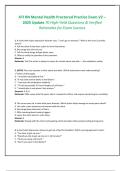
ATI RN Mental Health Proctored Practice Exam V2 –
2025 Update 70 High-Yield Questions & Verified
Rationales for Exam Success
1. A client with major depressive disorder says, “I can’t go on anymore.” What is the nurse’s priority
action?
A. Ask the client if they have a plan to harm themselves.
B. Encourage the client to rest.
C. Tell the client things will get better soon.
D. Offer to notify the provider of the comment.
Answer: A
Rationale: The first action is always to assess for suicide intent and plan — this establishes safety.
2. (SATA) The nurse teaches a client about sertraline. Which statements show understanding?
✅ Select all that apply.
A. “I may feel nauseated at first.”
B. “It may take several weeks to feel better.”
C. “I can stop this medication suddenly.”
D. “I’ll call my provider if I have thoughts of self-harm.”
E. “I should take it only when I feel anxious.”
Answers: A, B, D
Rationale: SSRIs cause initial GI upset, take 2–4 weeks for effect, and require monitoring for suicidality.
3. The nurse cares for a client with panic disorder. Which action helps manage an acute panic attack?
A. Use calm, short sentences and remain with the client.
B. Encourage deep discussion of fears.
C. Offer teaching about anxiety triggers.
D. Leave the client alone to calm down.
Answer: A
Rationale: Staying with the client and speaking calmly provides safety and grounding during panic.
4. A client with depression refuses to get out of bed for breakfast. Which nursing approach is best?
A. “You have to get up now.”
B. “Would you like to get up now or in 10 minutes?”
C. “I’ll let you sleep until lunch.”
D. “Don’t you want to feel better?”
,Answer: B
Rationale: Offering limited choices promotes autonomy and cooperation without overwhelming the
client.
5. A nurse teaches relaxation techniques for generalized anxiety disorder. Which statement shows
understanding?
A. “I’ll only use this when I’m at work.”
B. “I’ll practice it daily, not just when anxious.”
C. “It won’t help much.”
D. “I’ll use it if my family reminds me.”
Answer: B
Rationale: Consistent practice enhances the effectiveness of relaxation techniques.
6. (Prioritization) The nurse receives four clients. Who should be assessed first?
A. A client with OCD who washes hands frequently
B. A client with depression expressing hopelessness
C. A client taking sertraline reporting mild nausea
D. A client with anxiety requesting deep-breathing exercises
Answer: B
Rationale: Hopelessness indicates suicide risk — the highest priority.
7. The nurse is communicating with a client who has schizophrenia and says, “The sky is falling.” What is
the best response?
A. “That’s not true.”
B. “You’re safe here, even if the sky seems scary.”
C. “Why do you think that?”
D. “That’s silly; you know that can’t happen.”
Answer: B
Rationale: Validating feelings without agreeing with the delusion maintains reality orientation and trust.
8. (SATA) Which interventions support recovery for a client with depression?
✅ Select all that apply.
A. Encourage participation in group activities.
B. Focus on completing complex tasks.
C. Provide positive reinforcement for small successes.
D. Allow long isolation periods for rest.
E. Maintain consistent daily routines.
Answers: A, C, E
Rationale: Socialization, positive feedback, and structure promote recovery and motivation.
, 9. A client begins buspirone for anxiety. Which statement indicates correct understanding?
A. “I can take it when I’m having a panic attack.”
B. “I’ll take it daily, even when I feel fine.”
C. “It will start working right away.”
D. “I can combine it with alcohol.”
Answer: B
Rationale: Buspirone must be taken routinely; its onset is gradual (1–4 weeks).
10. A client reports side effects from amitriptyline. Which finding should the nurse report immediately?
A. Dry mouth
B. Constipation
C. Urinary retention
D. Mild drowsiness
Answer: C
Rationale: Urinary retention signals severe anticholinergic effects — report promptly.
11. (Case Item – 2 parts)
A client presents with restlessness, diaphoresis, and tremors 12 hours after last alcohol intake.
11a. What is the nurse’s priority assessment?
A. Determine blood alcohol level.
B. Check for hallucinations or seizures.
C. Ask about caffeine intake.
D. Evaluate fluid intake.
Answer: B
Rationale: Early withdrawal can progress to seizures — assess risk immediately.
11b. Which medication should the nurse expect to administer?
A. Disulfiram
B. Lorazepam
C. Fluoxetine
D. Haloperidol
Answer: B
Rationale: Benzodiazepines prevent and treat alcohol withdrawal complications.
12. Which response demonstrates therapeutic communication?
A. “You shouldn’t worry so much.”
B. “Let’s talk about what’s making you anxious right now.”
C. “Why are you anxious?”
D. “You’ll be fine soon.”
2025 Update 70 High-Yield Questions & Verified
Rationales for Exam Success
1. A client with major depressive disorder says, “I can’t go on anymore.” What is the nurse’s priority
action?
A. Ask the client if they have a plan to harm themselves.
B. Encourage the client to rest.
C. Tell the client things will get better soon.
D. Offer to notify the provider of the comment.
Answer: A
Rationale: The first action is always to assess for suicide intent and plan — this establishes safety.
2. (SATA) The nurse teaches a client about sertraline. Which statements show understanding?
✅ Select all that apply.
A. “I may feel nauseated at first.”
B. “It may take several weeks to feel better.”
C. “I can stop this medication suddenly.”
D. “I’ll call my provider if I have thoughts of self-harm.”
E. “I should take it only when I feel anxious.”
Answers: A, B, D
Rationale: SSRIs cause initial GI upset, take 2–4 weeks for effect, and require monitoring for suicidality.
3. The nurse cares for a client with panic disorder. Which action helps manage an acute panic attack?
A. Use calm, short sentences and remain with the client.
B. Encourage deep discussion of fears.
C. Offer teaching about anxiety triggers.
D. Leave the client alone to calm down.
Answer: A
Rationale: Staying with the client and speaking calmly provides safety and grounding during panic.
4. A client with depression refuses to get out of bed for breakfast. Which nursing approach is best?
A. “You have to get up now.”
B. “Would you like to get up now or in 10 minutes?”
C. “I’ll let you sleep until lunch.”
D. “Don’t you want to feel better?”
,Answer: B
Rationale: Offering limited choices promotes autonomy and cooperation without overwhelming the
client.
5. A nurse teaches relaxation techniques for generalized anxiety disorder. Which statement shows
understanding?
A. “I’ll only use this when I’m at work.”
B. “I’ll practice it daily, not just when anxious.”
C. “It won’t help much.”
D. “I’ll use it if my family reminds me.”
Answer: B
Rationale: Consistent practice enhances the effectiveness of relaxation techniques.
6. (Prioritization) The nurse receives four clients. Who should be assessed first?
A. A client with OCD who washes hands frequently
B. A client with depression expressing hopelessness
C. A client taking sertraline reporting mild nausea
D. A client with anxiety requesting deep-breathing exercises
Answer: B
Rationale: Hopelessness indicates suicide risk — the highest priority.
7. The nurse is communicating with a client who has schizophrenia and says, “The sky is falling.” What is
the best response?
A. “That’s not true.”
B. “You’re safe here, even if the sky seems scary.”
C. “Why do you think that?”
D. “That’s silly; you know that can’t happen.”
Answer: B
Rationale: Validating feelings without agreeing with the delusion maintains reality orientation and trust.
8. (SATA) Which interventions support recovery for a client with depression?
✅ Select all that apply.
A. Encourage participation in group activities.
B. Focus on completing complex tasks.
C. Provide positive reinforcement for small successes.
D. Allow long isolation periods for rest.
E. Maintain consistent daily routines.
Answers: A, C, E
Rationale: Socialization, positive feedback, and structure promote recovery and motivation.
, 9. A client begins buspirone for anxiety. Which statement indicates correct understanding?
A. “I can take it when I’m having a panic attack.”
B. “I’ll take it daily, even when I feel fine.”
C. “It will start working right away.”
D. “I can combine it with alcohol.”
Answer: B
Rationale: Buspirone must be taken routinely; its onset is gradual (1–4 weeks).
10. A client reports side effects from amitriptyline. Which finding should the nurse report immediately?
A. Dry mouth
B. Constipation
C. Urinary retention
D. Mild drowsiness
Answer: C
Rationale: Urinary retention signals severe anticholinergic effects — report promptly.
11. (Case Item – 2 parts)
A client presents with restlessness, diaphoresis, and tremors 12 hours after last alcohol intake.
11a. What is the nurse’s priority assessment?
A. Determine blood alcohol level.
B. Check for hallucinations or seizures.
C. Ask about caffeine intake.
D. Evaluate fluid intake.
Answer: B
Rationale: Early withdrawal can progress to seizures — assess risk immediately.
11b. Which medication should the nurse expect to administer?
A. Disulfiram
B. Lorazepam
C. Fluoxetine
D. Haloperidol
Answer: B
Rationale: Benzodiazepines prevent and treat alcohol withdrawal complications.
12. Which response demonstrates therapeutic communication?
A. “You shouldn’t worry so much.”
B. “Let’s talk about what’s making you anxious right now.”
C. “Why are you anxious?”
D. “You’ll be fine soon.”


