Co
1|Page
nfi
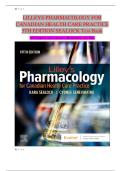
LILLEYS PHARMACOLOGY FOR
de
CANADIAN HEALTH CARE PRACTICE
n
5TH EDITION SEALOCK Test Bank
al
All Chapters with Answers {Rationales} |A+ Pass
1|Page
, Co
2|Page
nfi
de
n
Chapter 01: Nursing Practice in Canada and Drug Therapy
al
MULTIPLE CHOICE
1. Which is a judgement about a particular patient‘s potential need or problem?
a. A goal
b. An assessment
c. Subjective data
d. A nursing diagnosis
ANSWER: D
Nursing diagnosis is the phase of the nursing process during which a clinical judgement is made about how a patient
responds to heath conditions and life processes or vulnerability for that response.
DIF: Cognitive Level: Knowledge
2. The patient is to receive oral furosemide (Lasix) every day; however, because the patient is unable to
swallow, he cannot tak e medication orally, as ordered. The nurse needs to contact the physician. What type of
problem is this?
a. A ―right time‖ problem
b. A ―right dose‖ problem
c. A ―right route‖ problem
d. A ―right medication‖ problem
ANSWER: C
This is a ―right route‖ problem: the nurse cannot assume the route and must clarify the route with the prescriber.
This is not a ―rig ht time‖ problem because the ordered frequency has not changed. This is not a ―right dose‖
problem because the dose is not relate d to an inability to swallow. This is not a ―right medication‖ problem
because the medication ordered will not change, just the rou te.
DIF: Cognitive Level: Application
3. The nurse has been monitoringfythe patient‘s progress on his new drug regimen since the first dose and has
been documenting sign s of possible adverse effects. What nursing process phase is the nurse practising?
a. Planning
b. Evaluation
c. Implementation
2|Page
, Co
3|Page
nfi
d. Nursingfydiagnosis
de
ANSWER: B
Monitoring the patient‘s progress is part of the evaluation phase. Planning, implementation, and nursing diagnosis
n
are not illustrat ed by this example.
DIF: Cognitive Level: Application
al
4. The nurse is caringfyfor a patient who has been newly diagnosed with type 1 diabetes mellitus. Which
statement best illustrates a n outcome criterion for this patient?
a. The patient will follow instructions.
b. The patient will not experience complications.
c. The patient adheres to the new insulin treatment regimen.
d. The patient demonstrates safe insulin self-administration technique.
ANSWER: D
Having the patient demonstrate safe insulin self-
administration technique is a specific and measurable outcome criterion. Following instructions and avoiding
complications are no t specific criteria. Adherence to the new insulin treatment regimen is not objective and would
be difficult to measure.
DIF: Cognitive Level: Application
5. Which activity best reflects the implementation phase of the nursing process for the patient who is newly
diagnosed with type 1 diabetes mellitus?
a. Providing education regarding self-injection technique
b. Setting goals and outcome criteria with the patient‘s input
c. Recording a history of over-the-counter medications used at home
d. Formulating nursing diagnoses regarding knowledge deficits related to the new treatment regimen
ANSWER: A
Education is an intervention that occurs during the implementation phase. Setting goals and outcome criteria reflects
the planning phase. Recording a drug history reflects the assessment phase. Formulating nursing diagnoses
regarding a knowledge deficit refle cts analysis of data as part of the planning phase.
DIF: Cognitive Level: Analysis
6. The nurse is working during a very busy night shift, and the health care provider has just given the nurse a
medication order ove r the telephone, but the nurse does not recall the route. What is the best way for the nurse to
avoid medication errors?
a. Recopy the order neatly on the order sheet, with the most common route indicated
b. Consult with the pharmacist for clarification about the most common route
3|Page
, Co
4|Page
nfi
c. Call the health care provider to clarify the route of administration
de
d. Withhold the drug until the health care provider visits the patient
ANSWER: C
n
If a medication order does not include the route, the nurse must ask the health care provider to clarify it. Never
assume the route of ad ministration.
al
DIF: Cognitive Level: Application | Cognitive Level: Analysis
7. Which constitutes the traditional Five Rights of medication administration?
a. Right drug, right route, right dose, right time, and right patient
b. Right drug, the right effect, the right route, the right time, and the right patient
c. Right patient, right strength, right diagnosis, right drug, and right route
d. Right patient, right diagnosis, right drug, right route, and right time
ANSWER: A
The traditional Five Rights of medication administration were considered to be Right drug, Right route, Right dose,
Right time, and Ri ght patient. Right effect, right strength, and right diagnosis are not part of the traditional Five
Rights.
DIF: Cognitive Level: Comprehension
8. What correctly describes the nursing process?
a. Diagnosing, planning, assessing, implementing, and finally evaluating
b. Assessing, then diagnosing, implementing, and ending with evaluating
c. A linear direction that begins with assessing and continues through diagnosing, planning, and finally
implementing
d. An ongoing process that begins with assessing andfycontinues with diagnosing, planning, implementing,
and evaluating
ANSWER: D
The nursing process is an ongoing, flexible, adaptable, and adjustable five-
step process that begins with assessing and continues through diagnosing, planning, implementing, and finally
evaluating, which may then lead back to any of the other phases.
DIF: Cognitive Level: Application
9. When the nurse is considering the timing of a drug dose, which is most important to assess?
a. The patient‘s identification
b. The patient‘s weight
4|Page
1|Page
nfi
LILLEYS PHARMACOLOGY FOR
de
CANADIAN HEALTH CARE PRACTICE
n
5TH EDITION SEALOCK Test Bank
al
All Chapters with Answers {Rationales} |A+ Pass
1|Page
, Co
2|Page
nfi
de
n
Chapter 01: Nursing Practice in Canada and Drug Therapy
al
MULTIPLE CHOICE
1. Which is a judgement about a particular patient‘s potential need or problem?
a. A goal
b. An assessment
c. Subjective data
d. A nursing diagnosis
ANSWER: D
Nursing diagnosis is the phase of the nursing process during which a clinical judgement is made about how a patient
responds to heath conditions and life processes or vulnerability for that response.
DIF: Cognitive Level: Knowledge
2. The patient is to receive oral furosemide (Lasix) every day; however, because the patient is unable to
swallow, he cannot tak e medication orally, as ordered. The nurse needs to contact the physician. What type of
problem is this?
a. A ―right time‖ problem
b. A ―right dose‖ problem
c. A ―right route‖ problem
d. A ―right medication‖ problem
ANSWER: C
This is a ―right route‖ problem: the nurse cannot assume the route and must clarify the route with the prescriber.
This is not a ―rig ht time‖ problem because the ordered frequency has not changed. This is not a ―right dose‖
problem because the dose is not relate d to an inability to swallow. This is not a ―right medication‖ problem
because the medication ordered will not change, just the rou te.
DIF: Cognitive Level: Application
3. The nurse has been monitoringfythe patient‘s progress on his new drug regimen since the first dose and has
been documenting sign s of possible adverse effects. What nursing process phase is the nurse practising?
a. Planning
b. Evaluation
c. Implementation
2|Page
, Co
3|Page
nfi
d. Nursingfydiagnosis
de
ANSWER: B
Monitoring the patient‘s progress is part of the evaluation phase. Planning, implementation, and nursing diagnosis
n
are not illustrat ed by this example.
DIF: Cognitive Level: Application
al
4. The nurse is caringfyfor a patient who has been newly diagnosed with type 1 diabetes mellitus. Which
statement best illustrates a n outcome criterion for this patient?
a. The patient will follow instructions.
b. The patient will not experience complications.
c. The patient adheres to the new insulin treatment regimen.
d. The patient demonstrates safe insulin self-administration technique.
ANSWER: D
Having the patient demonstrate safe insulin self-
administration technique is a specific and measurable outcome criterion. Following instructions and avoiding
complications are no t specific criteria. Adherence to the new insulin treatment regimen is not objective and would
be difficult to measure.
DIF: Cognitive Level: Application
5. Which activity best reflects the implementation phase of the nursing process for the patient who is newly
diagnosed with type 1 diabetes mellitus?
a. Providing education regarding self-injection technique
b. Setting goals and outcome criteria with the patient‘s input
c. Recording a history of over-the-counter medications used at home
d. Formulating nursing diagnoses regarding knowledge deficits related to the new treatment regimen
ANSWER: A
Education is an intervention that occurs during the implementation phase. Setting goals and outcome criteria reflects
the planning phase. Recording a drug history reflects the assessment phase. Formulating nursing diagnoses
regarding a knowledge deficit refle cts analysis of data as part of the planning phase.
DIF: Cognitive Level: Analysis
6. The nurse is working during a very busy night shift, and the health care provider has just given the nurse a
medication order ove r the telephone, but the nurse does not recall the route. What is the best way for the nurse to
avoid medication errors?
a. Recopy the order neatly on the order sheet, with the most common route indicated
b. Consult with the pharmacist for clarification about the most common route
3|Page
, Co
4|Page
nfi
c. Call the health care provider to clarify the route of administration
de
d. Withhold the drug until the health care provider visits the patient
ANSWER: C
n
If a medication order does not include the route, the nurse must ask the health care provider to clarify it. Never
assume the route of ad ministration.
al
DIF: Cognitive Level: Application | Cognitive Level: Analysis
7. Which constitutes the traditional Five Rights of medication administration?
a. Right drug, right route, right dose, right time, and right patient
b. Right drug, the right effect, the right route, the right time, and the right patient
c. Right patient, right strength, right diagnosis, right drug, and right route
d. Right patient, right diagnosis, right drug, right route, and right time
ANSWER: A
The traditional Five Rights of medication administration were considered to be Right drug, Right route, Right dose,
Right time, and Ri ght patient. Right effect, right strength, and right diagnosis are not part of the traditional Five
Rights.
DIF: Cognitive Level: Comprehension
8. What correctly describes the nursing process?
a. Diagnosing, planning, assessing, implementing, and finally evaluating
b. Assessing, then diagnosing, implementing, and ending with evaluating
c. A linear direction that begins with assessing and continues through diagnosing, planning, and finally
implementing
d. An ongoing process that begins with assessing andfycontinues with diagnosing, planning, implementing,
and evaluating
ANSWER: D
The nursing process is an ongoing, flexible, adaptable, and adjustable five-
step process that begins with assessing and continues through diagnosing, planning, implementing, and finally
evaluating, which may then lead back to any of the other phases.
DIF: Cognitive Level: Application
9. When the nurse is considering the timing of a drug dose, which is most important to assess?
a. The patient‘s identification
b. The patient‘s weight
4|Page