

d yie
GOO Bes
x -
Lu2
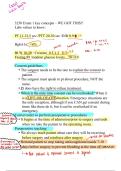
3250 Exam 1 key concepts – WE GOT THIS!!
Labs values to know:
PT 11-12.5 sec /PTT 20-30 sec /INR 0.9-2
Ric
--
HgbA1c&
<6% : nSe
~
WBC 5-10
=
BUN 10-20 / Creatine 0.5-1.2
-
Fasting 99 /random glucose levels
- -
70-110
Consent guidelines
• The surgeon needs to be the one to explain the consent to
- -
patient.
• The surgeon must speak to pt about procedure, NOT the
nurse.
• Pt does have the right to refuse treatment.
-
-
• When is the only time consent can be overlooked? When it
is ae
LIFE-OR-DEATH situation. Emergency situations are
the only exception, although if you CAN get consent during
times like these do it, but it can be overlooked if an
emergency.
moproedadi
Correct order to perform preoperative procedures
en • It begins at the time of admission/prior to surgery and ends
when we take the patient to the operating room.
Preoperative teaching
• We always teach patient about care they will be receiving
before surgery and reinforce after surgery. riskforbleeding
no
mantic
aviander
• Remind patient to stop taking anticoagulants/nsaids 7-10
e days before surgery to prevent bleeding at the time of operation
Ask patient it informed consent is signed
IU ares
meds
, Diuretics electrolyteimbalance tell surgeon meds
Bring inhalerto hospitals
operation. Mayhem Parkinson
blocker
• Discharge teaching begins at admission beta
• We give beta blockers and seizure meds because we don’t
want patient to seize. To also Parkinson'smeds
Risk factors and clinical manifestations of malignant
=
hyperthermia
E-
• People at risk for malignant hyperthermia are patients who
have it before or have a family history.
• You will see tachycardia, hypotension, elevated Co2,
shivering. lastsign t temp
• Muscular people are at higher risk.
Post op assessment/complications
• Assess surgical site
op Ita
padbony
prominescen
• Respirations
payoff positioning
• Vitals
• Bleeding /Hemorrage/Shock/DVT/VTE are possible
complications post op
•
Concious sedation should
Moderate/conscious sedation monitoring
"aⁿ"""
( ) • monitor HR cardiac box & Oz
• You must monitor them and their LOC. Make sure they are
still responsive.
Spinal sedation nursing care
• Pt will experience headaches, feeling of pressure.
• Tell them it will be a brief sharp pain with a bit of pressure
*NORMAL SIGN* danglefeet before gettingup
• REMEMBER pt is placed flat after spinal tap
• Reduce noise after spinal tap to help with headache.
Sterile dressing principles
break sterile field
• If we happen to break sterile dressing, we MUST start over.
starto =
DO NOT continue.
drop dressing
Starter = • Example from review > If you are packing a wound and
drop the gauze on the floor what do you do? START OVER
GOO Bes
x -
Lu2
3250 Exam 1 key concepts – WE GOT THIS!!
Labs values to know:
PT 11-12.5 sec /PTT 20-30 sec /INR 0.9-2
Ric
--
HgbA1c&
<6% : nSe
~
WBC 5-10
=
BUN 10-20 / Creatine 0.5-1.2
-
Fasting 99 /random glucose levels
- -
70-110
Consent guidelines
• The surgeon needs to be the one to explain the consent to
- -
patient.
• The surgeon must speak to pt about procedure, NOT the
nurse.
• Pt does have the right to refuse treatment.
-
-
• When is the only time consent can be overlooked? When it
is ae
LIFE-OR-DEATH situation. Emergency situations are
the only exception, although if you CAN get consent during
times like these do it, but it can be overlooked if an
emergency.
moproedadi
Correct order to perform preoperative procedures
en • It begins at the time of admission/prior to surgery and ends
when we take the patient to the operating room.
Preoperative teaching
• We always teach patient about care they will be receiving
before surgery and reinforce after surgery. riskforbleeding
no
mantic
aviander
• Remind patient to stop taking anticoagulants/nsaids 7-10
e days before surgery to prevent bleeding at the time of operation
Ask patient it informed consent is signed
IU ares
meds
, Diuretics electrolyteimbalance tell surgeon meds
Bring inhalerto hospitals
operation. Mayhem Parkinson
blocker
• Discharge teaching begins at admission beta
• We give beta blockers and seizure meds because we don’t
want patient to seize. To also Parkinson'smeds
Risk factors and clinical manifestations of malignant
=
hyperthermia
E-
• People at risk for malignant hyperthermia are patients who
have it before or have a family history.
• You will see tachycardia, hypotension, elevated Co2,
shivering. lastsign t temp
• Muscular people are at higher risk.
Post op assessment/complications
• Assess surgical site
op Ita
padbony
prominescen
• Respirations
payoff positioning
• Vitals
• Bleeding /Hemorrage/Shock/DVT/VTE are possible
complications post op
•
Concious sedation should
Moderate/conscious sedation monitoring
"aⁿ"""
( ) • monitor HR cardiac box & Oz
• You must monitor them and their LOC. Make sure they are
still responsive.
Spinal sedation nursing care
• Pt will experience headaches, feeling of pressure.
• Tell them it will be a brief sharp pain with a bit of pressure
*NORMAL SIGN* danglefeet before gettingup
• REMEMBER pt is placed flat after spinal tap
• Reduce noise after spinal tap to help with headache.
Sterile dressing principles
break sterile field
• If we happen to break sterile dressing, we MUST start over.
starto =
DO NOT continue.
drop dressing
Starter = • Example from review > If you are packing a wound and
drop the gauze on the floor what do you do? START OVER


