CHAPTER 13 : MEASURING CAMPAIGN EFFECTIVENESS
Measuring campaign effectiveness is the other side of the coin of deciding objectives.
Campaign evaluation research should not lead to a situation in which all creativity is stifled, but should lead to
more relevant, functional, and, therefore, more effective creativity. Research can never replace marketing
knowledge, and even intuition, but should rather serve as an eye-opener and a correction to the ‘marketing
myopia’ that is often mistakenly called ‘experience’.
In campaign effectiveness research, very often intermediate effects, such as brand awareness, brand knowledge,
attitude, preference or purchase intention and activation, are measured, and they are assumed to be predictors
of commercial success. But positive intermediate effects are not always good predictors of commercial results.
Chapter objectives
- Understand the objectives, techniques and limitations of advertising pre-testing campaigns
- Understand the objectives, techniques and limitations of advertising post-testing campaigns
- Learn the techniques and procedures of advertising campaign evaluation research
- Gain insight into the way the effectiveness of online advertising campaigns, sales promotions, direct
marketing, PR, sponsorship and trade fairs can be assessed
Advertising research
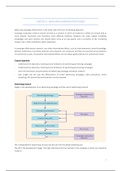
Stages in the development of an advertising campaign and the role of advertising research
This is developed for advertising, but you can also do it for the whole marketing mix.
The left is the development stages. The right side shows the four periods in the campaign in which you should do
research.
1
,- Strategic advertising research
You need to know a number of things about the market, competitors, consumer behaviours... -> this is the
starting point of any plan. We saw this already in previous chapters.
- Pre-tests
This is testing ads that are being developed before they come in the media. You can tests concepts, creative
executions or both. This is very important because once you put them in the media, it costs a lot of money,
so you don’t want them to fail.
- Post-tests
This is after placement in the media. These test that study to what extent the people processed the message
adequately and appropriately.
- Campaign evaluation research
You measure the effect of a campaign on brand indicators (knowledge, trial, repeat buying, market shares...)
Pre-testing of advertising
In a pre-test, advertising stimuli are tested before the ad appears in the media. The general purpose is to test an
ad or different ads to assess whether or not they can achieve the purpose for which they are designed.
Pre-testing is testing a stimulus that has been developed. Pre-testing has two purposes :
- Selection of appropriate stimuli
Your advertising agency develops a number of alternatives, the pre-test is used to select the most promising
concept of these. This is done on the basis of rough proposals.
- Testing an (almost) finished ad
After selecting concepts that work, the agency will often develop stimuli that are almost finished and in the
pre-test they will test them if they work with the target group. This is done of the basis of polished ads.
The extent to which intermediate effects are generated can be tested.
2
, Ideally you do also do pre-test for the following reasons, but it never happens in reality :
- To optimise exposure frequency
The more you expose the better it works and after some time people get bored and irritated. So ideally a pre-
test should test how much exposure is beneficent for a certain stimuli. In reality pre-tests take place after one
exposure, for instance you assemble people in the room and you propose them an ad and they can score it.
But in real life, the target group will be exposed to the add frequently, and the way they react to it will be
different than after one exposure. Humorous ads come rather good out of the test, with a high score; while
creative ads always score a bit lower, since there is a longer wear-in. Therefore exposure frequency is often
not tested since it is time- and cost-consuming.
A pre-test can never predict if an ad is going to work or not. You can select the ad that seems to work best from
all the proposals. You also can not assess the sales effect of an ad. What you do is the following :
- Assess communications efforts
Do people like it, do they have a positive attitude towards the ad, do they recall the ad afterwards, do they
understand it, is the ad clear, is the ad informative...?
You don’t test the long-term effects on a brand, the activation of the ad, the purchase behaviour of a brand... You
try with the pre-test to avoid mistakes : the mistake that it is not clear, not understandable, not informative... You
check if the basic communications effects are carried over.
Three basic categories of ad pre-tests can be distinguished : a number of desirable characteristics can be tested
internally, and samples of consumers can be used to test the communications or intermediate effects, or test
behavioural effects.
3
Measuring campaign effectiveness is the other side of the coin of deciding objectives.
Campaign evaluation research should not lead to a situation in which all creativity is stifled, but should lead to
more relevant, functional, and, therefore, more effective creativity. Research can never replace marketing
knowledge, and even intuition, but should rather serve as an eye-opener and a correction to the ‘marketing
myopia’ that is often mistakenly called ‘experience’.
In campaign effectiveness research, very often intermediate effects, such as brand awareness, brand knowledge,
attitude, preference or purchase intention and activation, are measured, and they are assumed to be predictors
of commercial success. But positive intermediate effects are not always good predictors of commercial results.
Chapter objectives
- Understand the objectives, techniques and limitations of advertising pre-testing campaigns
- Understand the objectives, techniques and limitations of advertising post-testing campaigns
- Learn the techniques and procedures of advertising campaign evaluation research
- Gain insight into the way the effectiveness of online advertising campaigns, sales promotions, direct
marketing, PR, sponsorship and trade fairs can be assessed
Advertising research
Stages in the development of an advertising campaign and the role of advertising research
This is developed for advertising, but you can also do it for the whole marketing mix.
The left is the development stages. The right side shows the four periods in the campaign in which you should do
research.
1
,- Strategic advertising research
You need to know a number of things about the market, competitors, consumer behaviours... -> this is the
starting point of any plan. We saw this already in previous chapters.
- Pre-tests
This is testing ads that are being developed before they come in the media. You can tests concepts, creative
executions or both. This is very important because once you put them in the media, it costs a lot of money,
so you don’t want them to fail.
- Post-tests
This is after placement in the media. These test that study to what extent the people processed the message
adequately and appropriately.
- Campaign evaluation research
You measure the effect of a campaign on brand indicators (knowledge, trial, repeat buying, market shares...)
Pre-testing of advertising
In a pre-test, advertising stimuli are tested before the ad appears in the media. The general purpose is to test an
ad or different ads to assess whether or not they can achieve the purpose for which they are designed.
Pre-testing is testing a stimulus that has been developed. Pre-testing has two purposes :
- Selection of appropriate stimuli
Your advertising agency develops a number of alternatives, the pre-test is used to select the most promising
concept of these. This is done on the basis of rough proposals.
- Testing an (almost) finished ad
After selecting concepts that work, the agency will often develop stimuli that are almost finished and in the
pre-test they will test them if they work with the target group. This is done of the basis of polished ads.
The extent to which intermediate effects are generated can be tested.
2
, Ideally you do also do pre-test for the following reasons, but it never happens in reality :
- To optimise exposure frequency
The more you expose the better it works and after some time people get bored and irritated. So ideally a pre-
test should test how much exposure is beneficent for a certain stimuli. In reality pre-tests take place after one
exposure, for instance you assemble people in the room and you propose them an ad and they can score it.
But in real life, the target group will be exposed to the add frequently, and the way they react to it will be
different than after one exposure. Humorous ads come rather good out of the test, with a high score; while
creative ads always score a bit lower, since there is a longer wear-in. Therefore exposure frequency is often
not tested since it is time- and cost-consuming.
A pre-test can never predict if an ad is going to work or not. You can select the ad that seems to work best from
all the proposals. You also can not assess the sales effect of an ad. What you do is the following :
- Assess communications efforts
Do people like it, do they have a positive attitude towards the ad, do they recall the ad afterwards, do they
understand it, is the ad clear, is the ad informative...?
You don’t test the long-term effects on a brand, the activation of the ad, the purchase behaviour of a brand... You
try with the pre-test to avoid mistakes : the mistake that it is not clear, not understandable, not informative... You
check if the basic communications effects are carried over.
Three basic categories of ad pre-tests can be distinguished : a number of desirable characteristics can be tested
internally, and samples of consumers can be used to test the communications or intermediate effects, or test
behavioural effects.
3