

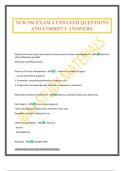
NUR 356 EXAM 4 UPDATED QUESTIONS
AND CORRECT ANSWERS.
What are the two major dysfunctions in the process of cancer development? - ANS Defective
cell proliferation (growth)
Defective cell differentiation
Process of Cancer Developmett - ANS 1. Initiation: mutation of genes
- can be inherited or acquired
2. Promotion: reversible proliferation of altered cells
3. Progression: increased growth of tumor, invasiveness, metastasis
Reversible activities of promotion - ANS Obesity, smoking, alcohol use, dietary fat
Carcinogens - ANS cancer causing agents
Failure of protective mechanisms lets them enter cells
Examples: chemical, radiation, viral
Chemical carcinogens - ANS - benzene
- arsenic
- formaldehyde
Radiation - ANS Damages DNA
1 @COPYRIGHT 2025/2026 ALLRIGHTS RESERVED
,UV radiation associated w/ melanoma & squamous/basal cell carcinoma
Viral Carcinogens - ANS -Human pappilomavirus (HPV) (squamous cell carcinoma)
-Hepatitis B Virus (hepatocellular carcinoma)
-Epstein-Barr virus (EBV) (lymphoma)
-HIV (Kaposi sarcoma)
Tumor Classification - ANS Anatomical
Histology (grading severity)
Extent (staging)
TNM classification system - ANS T: tumor size and invasiveness (1-4)
N: spread to lymph nodes (0-2)
M: metastasis (0-1)
Clinical staging classifications - ANS 0: Cancer in situ
1: Tumor limited to tissue of origin; localized tumor growth
2: Limited local spread
3: Extensive local and regional spread
4: Metastasis
What is the only definitive means to diagnose cancer? - ANS pathological evaluation of a
tissue
Lifestyle habits to reduce cancer risks - ANS - recommended cancer screenings
- self-examination
- know the 7 warning signs
- seek medical care early
2 @COPYRIGHT 2025/2026 ALLRIGHTS RESERVED
,- avoid/reduce exposure to carcinogens (cigarettes, sun exposure)
- healthy diet and weight
- limit alcohol
- regular exercise and rest
- family risks
Goals of cancer treatment - ANS cure, control, palliation
Cancer Tx: surgery - ANS Prevention: eliminate/reduce risk of cancer
Cure and control: remove necessary tissue, follow with chemo or radiation
Supportive/palliative care: gastric feeding tube, fixation of bones at risk for pathologic fracture
Cancer Tx: Chemotherapy - ANS Antineoplastic: chemical therapy, for most solid tumors and
hematologic cancer, effects against dividing cells, problems: resting/non cycling cells as tumors
get large and cells become inactive
- typically given in combination
- route: PO, IM, IV (most common)
- deliver high concentration of drugs directly to tumor
- delivery methods: intraarterial intraperitoneal, intrathecal/intraventricular, intravesical
bladder
- can't distinguish between normal and cancer cells
- mutated cancer cells can become resistant
Cancer Tx: radiation - ANS Used to treat a carefully defined area of the body
- low energy beam = quick, short penetration, used for skin
- high energy beam = greater penetration, used for internal targets
- divided delivery
- used alone or with chemo or surgery
3 @COPYRIGHT 2025/2026 ALLRIGHTS RESERVED
, Cancer Tx: side effects of chemo & radiation - ANS - bone marrow suppression
- reduction in RBC & WBC (infection risk)
- fatigue
- GI disturbances
- integumentary/mucosal reactions
- pulmonary effects (cough, SOB, pulmonary edema)
- cardio
- cognitive: chemo brain/mental fog
- reproductive effects: fertility preservation
- skin reactions in radiation treatment field
- secondary cancers: leukemia, angiosarcoma, skin cancer
Cancer Tx: immunotherapy - ANS Uses the immune system to fight cancer
Aka biological therapy
Boost/manipulate immune system
Create environment not conducive for cancer cells
Attack cancer cells
Cancer Tx: targeted therapy - ANS Interferes w/ cancer growth by targeting specific cell
receptors and pathways that are important in tumor growth
Ex: tyrosine kinase inhibitors, monoclonal antibodies, angiogenesis inhibitors, proteasome
inhibitors
- cancer cells can become resistant
Cancer Tx: side effects of immuno & targeted therapy - ANS - flulike symptoms
- anorexia/weight loss
- fatigue, malaise, weakness
- nausea/vomiting
- photosensitivity
4 @COPYRIGHT 2025/2026 ALLRIGHTS RESERVED
AND CORRECT ANSWERS.
What are the two major dysfunctions in the process of cancer development? - ANS Defective
cell proliferation (growth)
Defective cell differentiation
Process of Cancer Developmett - ANS 1. Initiation: mutation of genes
- can be inherited or acquired
2. Promotion: reversible proliferation of altered cells
3. Progression: increased growth of tumor, invasiveness, metastasis
Reversible activities of promotion - ANS Obesity, smoking, alcohol use, dietary fat
Carcinogens - ANS cancer causing agents
Failure of protective mechanisms lets them enter cells
Examples: chemical, radiation, viral
Chemical carcinogens - ANS - benzene
- arsenic
- formaldehyde
Radiation - ANS Damages DNA
1 @COPYRIGHT 2025/2026 ALLRIGHTS RESERVED
,UV radiation associated w/ melanoma & squamous/basal cell carcinoma
Viral Carcinogens - ANS -Human pappilomavirus (HPV) (squamous cell carcinoma)
-Hepatitis B Virus (hepatocellular carcinoma)
-Epstein-Barr virus (EBV) (lymphoma)
-HIV (Kaposi sarcoma)
Tumor Classification - ANS Anatomical
Histology (grading severity)
Extent (staging)
TNM classification system - ANS T: tumor size and invasiveness (1-4)
N: spread to lymph nodes (0-2)
M: metastasis (0-1)
Clinical staging classifications - ANS 0: Cancer in situ
1: Tumor limited to tissue of origin; localized tumor growth
2: Limited local spread
3: Extensive local and regional spread
4: Metastasis
What is the only definitive means to diagnose cancer? - ANS pathological evaluation of a
tissue
Lifestyle habits to reduce cancer risks - ANS - recommended cancer screenings
- self-examination
- know the 7 warning signs
- seek medical care early
2 @COPYRIGHT 2025/2026 ALLRIGHTS RESERVED
,- avoid/reduce exposure to carcinogens (cigarettes, sun exposure)
- healthy diet and weight
- limit alcohol
- regular exercise and rest
- family risks
Goals of cancer treatment - ANS cure, control, palliation
Cancer Tx: surgery - ANS Prevention: eliminate/reduce risk of cancer
Cure and control: remove necessary tissue, follow with chemo or radiation
Supportive/palliative care: gastric feeding tube, fixation of bones at risk for pathologic fracture
Cancer Tx: Chemotherapy - ANS Antineoplastic: chemical therapy, for most solid tumors and
hematologic cancer, effects against dividing cells, problems: resting/non cycling cells as tumors
get large and cells become inactive
- typically given in combination
- route: PO, IM, IV (most common)
- deliver high concentration of drugs directly to tumor
- delivery methods: intraarterial intraperitoneal, intrathecal/intraventricular, intravesical
bladder
- can't distinguish between normal and cancer cells
- mutated cancer cells can become resistant
Cancer Tx: radiation - ANS Used to treat a carefully defined area of the body
- low energy beam = quick, short penetration, used for skin
- high energy beam = greater penetration, used for internal targets
- divided delivery
- used alone or with chemo or surgery
3 @COPYRIGHT 2025/2026 ALLRIGHTS RESERVED
, Cancer Tx: side effects of chemo & radiation - ANS - bone marrow suppression
- reduction in RBC & WBC (infection risk)
- fatigue
- GI disturbances
- integumentary/mucosal reactions
- pulmonary effects (cough, SOB, pulmonary edema)
- cardio
- cognitive: chemo brain/mental fog
- reproductive effects: fertility preservation
- skin reactions in radiation treatment field
- secondary cancers: leukemia, angiosarcoma, skin cancer
Cancer Tx: immunotherapy - ANS Uses the immune system to fight cancer
Aka biological therapy
Boost/manipulate immune system
Create environment not conducive for cancer cells
Attack cancer cells
Cancer Tx: targeted therapy - ANS Interferes w/ cancer growth by targeting specific cell
receptors and pathways that are important in tumor growth
Ex: tyrosine kinase inhibitors, monoclonal antibodies, angiogenesis inhibitors, proteasome
inhibitors
- cancer cells can become resistant
Cancer Tx: side effects of immuno & targeted therapy - ANS - flulike symptoms
- anorexia/weight loss
- fatigue, malaise, weakness
- nausea/vomiting
- photosensitivity
4 @COPYRIGHT 2025/2026 ALLRIGHTS RESERVED


