
NYS SCBA-IFO EXAM WITH ACCURATE SOLUTIONS
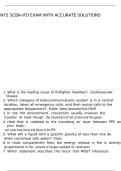
1. What f is f the f leading f cause f of f firefighter f fatalities?: f Cardiovascular
fDisease
2. Which fcategory fof ftelecommunications fsystem fis fin fa fcentral
flocation, ftakes fall femergency fcalls, fand fthen froutes fcalls fto fthe
fappropriate fdispatchers?: fPublic fSafety fAnswering fPoint f(PSAP)
3. In f the f fire f environment, f convection f usually f involves f the
f transfer f of f heat fthrough:: fthe fmovement fof fhot fsmoke fand ffire fgases
4. Heat f that f is f radiated f to f the f insulating f air f layer f between f PPE f an
f your f body:-
: fcan fcause fheat fstress fand ffailure fof fthe fPPE
5. What fwill fa fliquid fwith fa fspecific fgravity fof fless fthan fone fdo
fwhen fcombined fwith fwater?: fFloat
6. In f most f compartment f fires, f the f energy f release f in f fire f is f directly
f proportional fto fthe:: famount fof foxygen favailable ffor fcombustion
7. Which f statement f describes f the f factor f that f MOST f influences
1 f/
f5
, f compartment f fire f development?: fwhether fthe ffire fis ffuel-limited for fventilation-
limited
8. Which f type f of f phenomenon f occurs f when f the f fire f rapidly
f transitions f from f the fgrowth fstage fto fthe ffully fdeveloped fstage?:
fFlashover
9. The fflow fpath fof fa fstructure ffire fis fcomprised fof ftwo fregions: fthe
fambient fair fflow fin fand fthe:: fhot fexhaust fflow fout
10. What fis foften fthe fmost freadily favailable ffuel fsource fand
fsignificantly finflu- fences ffire fdevelopment fin fa fcompartment ffire?:
fcontents fwithin fthe fstructure
11. Type fII fconstruction fbuildings fare fcomposed fof:: fnoncombustible
fmaterials fthat fdo fnot fadd fto fthe ffuel fload
12. What f construction f features f tend f to f contain f fires f for f a
f longer f period f of f time, fthus fcreating ffuel-rich, fventilation-limited
fenvironments?: fEnergy-eflcient fdesigns
13. The f most f common f type f of f factory f built f home f that
f firefighters f will f encounter fis fthe f home.: fmobile
14. The f use f of f engineered f or f lightweight f construction f and
f trussed f support f systems fpose fa fdanger fto ffirefighters fbecause
fengineered ftrusses:: fcan ffail fafter f5 fto f10 fminutes fof fexposure fto ffire
15. In forder fto fbe fas fvisible fto fmotorists fas fpossible fduring
froadway fincident foperations, ffirefighters fshould fwear:: fhigh-visibility
fvests
2 f/
f5
1. What f is f the f leading f cause f of f firefighter f fatalities?: f Cardiovascular
fDisease
2. Which fcategory fof ftelecommunications fsystem fis fin fa fcentral
flocation, ftakes fall femergency fcalls, fand fthen froutes fcalls fto fthe
fappropriate fdispatchers?: fPublic fSafety fAnswering fPoint f(PSAP)
3. In f the f fire f environment, f convection f usually f involves f the
f transfer f of f heat fthrough:: fthe fmovement fof fhot fsmoke fand ffire fgases
4. Heat f that f is f radiated f to f the f insulating f air f layer f between f PPE f an
f your f body:-
: fcan fcause fheat fstress fand ffailure fof fthe fPPE
5. What fwill fa fliquid fwith fa fspecific fgravity fof fless fthan fone fdo
fwhen fcombined fwith fwater?: fFloat
6. In f most f compartment f fires, f the f energy f release f in f fire f is f directly
f proportional fto fthe:: famount fof foxygen favailable ffor fcombustion
7. Which f statement f describes f the f factor f that f MOST f influences
1 f/
f5
, f compartment f fire f development?: fwhether fthe ffire fis ffuel-limited for fventilation-
limited
8. Which f type f of f phenomenon f occurs f when f the f fire f rapidly
f transitions f from f the fgrowth fstage fto fthe ffully fdeveloped fstage?:
fFlashover
9. The fflow fpath fof fa fstructure ffire fis fcomprised fof ftwo fregions: fthe
fambient fair fflow fin fand fthe:: fhot fexhaust fflow fout
10. What fis foften fthe fmost freadily favailable ffuel fsource fand
fsignificantly finflu- fences ffire fdevelopment fin fa fcompartment ffire?:
fcontents fwithin fthe fstructure
11. Type fII fconstruction fbuildings fare fcomposed fof:: fnoncombustible
fmaterials fthat fdo fnot fadd fto fthe ffuel fload
12. What f construction f features f tend f to f contain f fires f for f a
f longer f period f of f time, fthus fcreating ffuel-rich, fventilation-limited
fenvironments?: fEnergy-eflcient fdesigns
13. The f most f common f type f of f factory f built f home f that
f firefighters f will f encounter fis fthe f home.: fmobile
14. The f use f of f engineered f or f lightweight f construction f and
f trussed f support f systems fpose fa fdanger fto ffirefighters fbecause
fengineered ftrusses:: fcan ffail fafter f5 fto f10 fminutes fof fexposure fto ffire
15. In forder fto fbe fas fvisible fto fmotorists fas fpossible fduring
froadway fincident foperations, ffirefighters fshould fwear:: fhigh-visibility
fvests
2 f/
f5


