
NSG 316 Exam 1 Guide
Study online at https://quizlet.com/_747zex
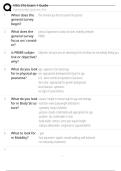
1. When does the The moment you first encounter the person
general survey
begin?
2. What does the physical appearance, body structure, mobility, behavior
general survey PBMB
focus on/ consid-
er?
3. is PBMB subjec- Objective, because you are observing them and they are not verbally telling you.
tive or objective?
why?
4. What do you look age- appears to be stated age
for in physical ap- sex- appropriate developmental stage for age
pearance? LOC- alert/ orients & responds to Questions
Skin color- appropriate for genetic background
facial features- symmetric
no signs of acute distress
5. What do you look -stature- height in normal rage for age and heritage
for in Body Struc- -nutrition- even body weight distribution
ture? -symmetry- body is bilateral
-posture- stands comfortably and appropriate for age
-position- sits comfortable in chair
-body build/ contour: arms span equals height
-Obvious deformities- congenital or squired defects
6. What to look for - gait
in Mobility? -foot placement- agitate, smooth walking, well balanced
-no involuntary movements
7.
, NSG 316 Exam 1 Guide
Study online at https://quizlet.com/_747zex
What to look for -facial expression- and sign of pain / distress, expressions are appropriate tot he
in behavior? situation
-mood & affect- comfortable and cooperative with examiner
-speech- even tased, clear, articulate, communicates in the same language as the
interviewee's
- dress- appropriate for climate, clean
-perosnal hygiene- well groomed and clean
8. What is subjec- Data that only the subject or "patient" can feel and will tell you. during taking of
tive data? history
9. IS subjective data symptoms
signs or symp-
toms?
10. What is objective What you observe and can measure when inspecting, percussing, palpating, and
data? ausculating during the physical
11. Is objective data signs
the signs or
symptoms?
12. What is a data subjective + objective + patient records + lab studies
base?
13. What is the Com- complete health history + full physical exam
plete total health current + past health state for a base line
database
14. What is the "mini" database
Episodic or prob- one body system/ one probable/ one cue complex
lem centered hx and exam followed after
database for short term/ limited problems
, NSG 316 Exam 1 Guide
Study online at https://quizlet.com/_747zex
15. What is a "after the fact"
follow-up data- status of the problem being evaluated at a regular or appropriate time
base? is problem getting better or worse
id coping strategies
16. What is Emer- Fast collection of data
gency database? usually only for lifesaving measures
rapid and comprehensive
- what did you take? How long ago? Who much?
17. Nursing process assessment, diagnosis, outcome identification, planning, implementation, evalu-
ation
18. Assessment: review of record, interview, health hx, physical exam, functional exam, cultural/
spiritual exam, consultation, review of literature
19. Diagnosis interpreting data, comparing clusters of cue to make inference, validation on
inference, identify related factors, document the diagnisis
20. Outcome identi- identifying the expected out acmes of the patent (individualized)
fication? ensuring realistic and measurable outcomes/goals
short term and long term goal criteria
21. Planning establish goal based on patient care goal
identify relevant intervention
document the plan of care
22. Implementation determine patient readiness in health care process
review intervention in a collaborative effort
use delegation, mindfulness, supervision, and evaluation
counsel person
refer for contenting care
document the care that was provided
Study online at https://quizlet.com/_747zex
1. When does the The moment you first encounter the person
general survey
begin?
2. What does the physical appearance, body structure, mobility, behavior
general survey PBMB
focus on/ consid-
er?
3. is PBMB subjec- Objective, because you are observing them and they are not verbally telling you.
tive or objective?
why?
4. What do you look age- appears to be stated age
for in physical ap- sex- appropriate developmental stage for age
pearance? LOC- alert/ orients & responds to Questions
Skin color- appropriate for genetic background
facial features- symmetric
no signs of acute distress
5. What do you look -stature- height in normal rage for age and heritage
for in Body Struc- -nutrition- even body weight distribution
ture? -symmetry- body is bilateral
-posture- stands comfortably and appropriate for age
-position- sits comfortable in chair
-body build/ contour: arms span equals height
-Obvious deformities- congenital or squired defects
6. What to look for - gait
in Mobility? -foot placement- agitate, smooth walking, well balanced
-no involuntary movements
7.
, NSG 316 Exam 1 Guide
Study online at https://quizlet.com/_747zex
What to look for -facial expression- and sign of pain / distress, expressions are appropriate tot he
in behavior? situation
-mood & affect- comfortable and cooperative with examiner
-speech- even tased, clear, articulate, communicates in the same language as the
interviewee's
- dress- appropriate for climate, clean
-perosnal hygiene- well groomed and clean
8. What is subjec- Data that only the subject or "patient" can feel and will tell you. during taking of
tive data? history
9. IS subjective data symptoms
signs or symp-
toms?
10. What is objective What you observe and can measure when inspecting, percussing, palpating, and
data? ausculating during the physical
11. Is objective data signs
the signs or
symptoms?
12. What is a data subjective + objective + patient records + lab studies
base?
13. What is the Com- complete health history + full physical exam
plete total health current + past health state for a base line
database
14. What is the "mini" database
Episodic or prob- one body system/ one probable/ one cue complex
lem centered hx and exam followed after
database for short term/ limited problems
, NSG 316 Exam 1 Guide
Study online at https://quizlet.com/_747zex
15. What is a "after the fact"
follow-up data- status of the problem being evaluated at a regular or appropriate time
base? is problem getting better or worse
id coping strategies
16. What is Emer- Fast collection of data
gency database? usually only for lifesaving measures
rapid and comprehensive
- what did you take? How long ago? Who much?
17. Nursing process assessment, diagnosis, outcome identification, planning, implementation, evalu-
ation
18. Assessment: review of record, interview, health hx, physical exam, functional exam, cultural/
spiritual exam, consultation, review of literature
19. Diagnosis interpreting data, comparing clusters of cue to make inference, validation on
inference, identify related factors, document the diagnisis
20. Outcome identi- identifying the expected out acmes of the patent (individualized)
fication? ensuring realistic and measurable outcomes/goals
short term and long term goal criteria
21. Planning establish goal based on patient care goal
identify relevant intervention
document the plan of care
22. Implementation determine patient readiness in health care process
review intervention in a collaborative effort
use delegation, mindfulness, supervision, and evaluation
counsel person
refer for contenting care
document the care that was provided


