
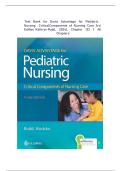
Test Bank for Davis Advantage for Pediatric
Nursing CriticalComponents of Nursing Care 3rd
c c c c c c
Edition Kathryn Rudd, 2024), Chapter 122 | All
c c c c c
Chapters
,Chapter 1 Issues and Trends in Pediatric Nursing
Multiple Choice
Identifythechoicethatbestcompletesthestatementoranswersthequestion.
1. The nurse has provided a presentation to middle school children
about nursing as a career. One of
c the children stated that he c c
wanted to be
c a pediatric nurse, because he wants to take c
care of c babies and little “kids.” What would be an c c c c c c c c c c c c c c
appropriate response to this middle school–aged child? c
“Nursing is a general practice; all nurses must c
know how to take care of all ages of patients.”
c c c
“As a pediatric nurse, you would get to care for c
babies and little kids as well as children through
c c c
their teenage years.” “What you are describing is
c c
actually a neonatal nurse.
c
Neonatal nurses work with newborn babies, toddlers, c
and preschool-age children.”
c c
“Being a pediatric nurse requires a master’s
degree, so be sure to work hard in school!” c
2. The medical-surgical float nurse is assigned to the pediatric c
unit for the first time and states that the skills are “the
c c
same as general nursing since children are little adults with
c c
smaller bodies.” What component of pediatric nursing
c c c c
contraindicates this statement? c c c c
Pediatric nursing involves care based on the developmental level
the patient. c
Pediatric nursing involves the patient’s family c c c c c c c c c c
in the plan of care. Pediatric nursing in based on
c c c c c c c c c c c
prevention of infectious diseases. Pediatric nursing involves
c c c c c c c
cultural sensitivity in patient care.
c c c c c c c c c
3. The culturally sensitive pediatric nurse is aware of the racial c c
makeup of the
c U.S. population. Which of the following reflects c
the demographics of the U.S. pediatric
c population in 2018, c c
basedc on U.S. Census Bureau data? c
The American Indian and Alaska Native population c c c c c c
represent c one- fifth of the pediatric c c
population. c
About half of the children fall in the category c c c c c c c c c c c c c c c c
of something other than White non- Hispanic.
c c c c c c c c c c c
The population of Asian children
c c decreased c from 2015 c c c c c c c c c c c c c c c c c c c c c to
2018. c
There was no change in the population cof Non-
c c c c c c c c c c c c c c c c c c c c c c
Hispanic children who represent two or more races c c c c c c c
between 2015 and 2018. c c c c c c
4. The nurse at a family clinic is providing care to an adolescent c
patient diagnosed with diabetes. The patient has verbalized
c c c c
discomfort with the feelings of isolation when unable to drink
c c
, alcohol with their friends. Which ofc the following would be
c the most appropriate response to this statement?
c
“Drinking alcohol is not only illegal but dangerous for
cyour blood sugar control and overall well-being.”
c
c
, “You can still drink alcohol, in moderation, if
c c
cyou control the sugar spike with more insulin.”
c
“Prepare for alcohol intake with more water and
c c
less carbohydrates before drinking to slow sugar
c c c
spikes.”
c
“It is understandable that you want to be included, but perhap
we can
c
Nursing CriticalComponents of Nursing Care 3rd
c c c c c c
Edition Kathryn Rudd, 2024), Chapter 122 | All
c c c c c
Chapters
,Chapter 1 Issues and Trends in Pediatric Nursing
Multiple Choice
Identifythechoicethatbestcompletesthestatementoranswersthequestion.
1. The nurse has provided a presentation to middle school children
about nursing as a career. One of
c the children stated that he c c
wanted to be
c a pediatric nurse, because he wants to take c
care of c babies and little “kids.” What would be an c c c c c c c c c c c c c c
appropriate response to this middle school–aged child? c
“Nursing is a general practice; all nurses must c
know how to take care of all ages of patients.”
c c c
“As a pediatric nurse, you would get to care for c
babies and little kids as well as children through
c c c
their teenage years.” “What you are describing is
c c
actually a neonatal nurse.
c
Neonatal nurses work with newborn babies, toddlers, c
and preschool-age children.”
c c
“Being a pediatric nurse requires a master’s
degree, so be sure to work hard in school!” c
2. The medical-surgical float nurse is assigned to the pediatric c
unit for the first time and states that the skills are “the
c c
same as general nursing since children are little adults with
c c
smaller bodies.” What component of pediatric nursing
c c c c
contraindicates this statement? c c c c
Pediatric nursing involves care based on the developmental level
the patient. c
Pediatric nursing involves the patient’s family c c c c c c c c c c
in the plan of care. Pediatric nursing in based on
c c c c c c c c c c c
prevention of infectious diseases. Pediatric nursing involves
c c c c c c c
cultural sensitivity in patient care.
c c c c c c c c c
3. The culturally sensitive pediatric nurse is aware of the racial c c
makeup of the
c U.S. population. Which of the following reflects c
the demographics of the U.S. pediatric
c population in 2018, c c
basedc on U.S. Census Bureau data? c
The American Indian and Alaska Native population c c c c c c
represent c one- fifth of the pediatric c c
population. c
About half of the children fall in the category c c c c c c c c c c c c c c c c
of something other than White non- Hispanic.
c c c c c c c c c c c
The population of Asian children
c c decreased c from 2015 c c c c c c c c c c c c c c c c c c c c c to
2018. c
There was no change in the population cof Non-
c c c c c c c c c c c c c c c c c c c c c c
Hispanic children who represent two or more races c c c c c c c
between 2015 and 2018. c c c c c c
4. The nurse at a family clinic is providing care to an adolescent c
patient diagnosed with diabetes. The patient has verbalized
c c c c
discomfort with the feelings of isolation when unable to drink
c c
, alcohol with their friends. Which ofc the following would be
c the most appropriate response to this statement?
c
“Drinking alcohol is not only illegal but dangerous for
cyour blood sugar control and overall well-being.”
c
c
, “You can still drink alcohol, in moderation, if
c c
cyou control the sugar spike with more insulin.”
c
“Prepare for alcohol intake with more water and
c c
less carbohydrates before drinking to slow sugar
c c c
spikes.”
c
“It is understandable that you want to be included, but perhap
we can
c


