EJPME-US002-17
Pre Test
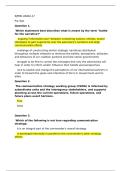
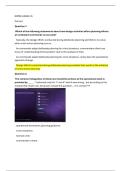
Question 1.
Which statement best describes what is meant by the term "battle
for the narrative?"
ongoing "information war" between competing nations, entities, and/or
ideologies to gain superiority over the adversary's narrative and align
communication efforts
challenge of constructing similar strategic narratives distributed
throughout multiple networks to reinforce the beliefs, perceptions, attitudes,
and behaviors of our coalition partners and host nation governments
struggle to be first to control the messages that only the adversaries will
hear in order to inform and/or influence their beliefs and perspectives
race to exploit and change the perceptions of our international partners in
order to forward the goals and intentions of the U.S. Government and its
allies
Question 2.
The communication strategy working group (CSWG) is informed by
subordinate units and the interagency stakeholders, and supports
planning across the current operations, future operations, and
future plans event horizons.
True
False
Question 3.
Which of the following is not true regarding communication
strategy:
it is an integral part of the commander's overall strategy
is developed internally in parallel to the commander's other strategy
efforts
, it ensures a shared understanding of the commander's vision, mission, and
objectives
helps coordinate use of images and words with deliberate application of
lethal and nonlethal actions
is nested, informing and informed by higher level strategic communications
Question 4.
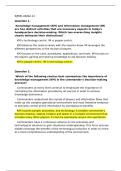
Commanders have recognized the need for some form of staff
organization that can _____ to inform or influence the audiences in
support of desired outcomes. (Select all that apply.) *I selected just
the first and second, which was not correct.
craft the themes and messages
direct communication strategy through a stove-piped process
remain passive in the information environment
synchronize actions, words, and images
Question 5.
Those responsible for identifying and understanding the key
audiences are also responsible for _____. (Select all that apply.)
determining how to inform and/or influence audiences
establishing a separate planning effort
crafting themes and messages
assigning which action-agent will engage each of the key audiences
Question 6.
Actions in the information environment affects how to plan and
conduct information actives in pursuit of mission accomplish for all
the following reasons except__
the Joint Force operates alone in the information environment
it involves the alignment of themes and messages with interagency
organizations and stakeholders
Pre Test
Question 1.
Which statement best describes what is meant by the term "battle
for the narrative?"
ongoing "information war" between competing nations, entities, and/or
ideologies to gain superiority over the adversary's narrative and align
communication efforts
challenge of constructing similar strategic narratives distributed
throughout multiple networks to reinforce the beliefs, perceptions, attitudes,
and behaviors of our coalition partners and host nation governments
struggle to be first to control the messages that only the adversaries will
hear in order to inform and/or influence their beliefs and perspectives
race to exploit and change the perceptions of our international partners in
order to forward the goals and intentions of the U.S. Government and its
allies
Question 2.
The communication strategy working group (CSWG) is informed by
subordinate units and the interagency stakeholders, and supports
planning across the current operations, future operations, and
future plans event horizons.
True
False
Question 3.
Which of the following is not true regarding communication
strategy:
it is an integral part of the commander's overall strategy
is developed internally in parallel to the commander's other strategy
efforts
, it ensures a shared understanding of the commander's vision, mission, and
objectives
helps coordinate use of images and words with deliberate application of
lethal and nonlethal actions
is nested, informing and informed by higher level strategic communications
Question 4.
Commanders have recognized the need for some form of staff
organization that can _____ to inform or influence the audiences in
support of desired outcomes. (Select all that apply.) *I selected just
the first and second, which was not correct.
craft the themes and messages
direct communication strategy through a stove-piped process
remain passive in the information environment
synchronize actions, words, and images
Question 5.
Those responsible for identifying and understanding the key
audiences are also responsible for _____. (Select all that apply.)
determining how to inform and/or influence audiences
establishing a separate planning effort
crafting themes and messages
assigning which action-agent will engage each of the key audiences
Question 6.
Actions in the information environment affects how to plan and
conduct information actives in pursuit of mission accomplish for all
the following reasons except__
the Joint Force operates alone in the information environment
it involves the alignment of themes and messages with interagency
organizations and stakeholders