NURS 380 EXAM 1 – Questions With Clear Final
Solutions
Save
Terms in this set (99)
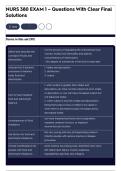
it is the process of regulating the extracellular fluid
define and describe the
volume, bodily fluid osmolality and plasma
concept of fluids and
concentrations of electrolytes.
electrolytes
- the degree of substances in the fluid is important
what are the 3 dynamic 1. intake and absorption
processes to balance 2. distribution
body fluid and 3. output
electrolytes
1. when output is greater then intake and
absorption-can have normal output but poor intake
or absorption or can can have increased output but
how to have impaired
not balanced intake
fluid and electrolyte
2. when output is less then intake and absorption-
balance
being that output is less or intake is too rapid or
when there is decreased output not balanced by
decreased intake
can have impaired perfusion and oxygenation,
consequences of fluid
impaired cerebral function, or impaired
imbalance
neuromuscular function
the very young and very old (especially preterm
risk factors for fluid and
infants), people with serious injuries or disease
electrolyte imbalance
processes
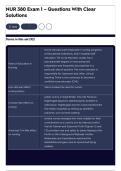
clinical manifestations for ancle edema, bounding pulse, distented neck veins,
people with fluid and left sided heart failure, muscle weakness,
electrolyte imbalance hypokalemia, diarrhea, skin integrity
, monitor I and O- usually focus on intake
nursing interventions to -can give fluids
promote fluid and - monitor medications that may be causing this
electrolyte balance disruption
-comfort measures
too little extracellular volume
- can be due to normal output but not enough
intake of Na and water
ECV deficit -can be due to increased output but not enough Na
and water (vomiting)
- can be due to rapid fluid shift from ECV into a third
space
too much extracellular volume
- can be due to output being less or intake being
ECV excess too rapid
- can be due to decreased output not balanced by
decreased intake of Na and water
body fluid concentration is too high
- can be due to normal output but not enough
intake of water
hypernatremia - can be due to increased output not balanced by
increased intake of water( so replacing with Na but
not enough water) -hyperthermia, tachycardia and
orthostatic hypotention
body fluid osmolality too low
- output less then excessive or too rapid intake of
water
hyponatremia
-or decreased output not balanced by decreased
intake of water- hypothermia, tachycardia, -shows as
low blood sodium
dehydration decrease output and decreased intake of water
Solutions
Save
Terms in this set (99)
it is the process of regulating the extracellular fluid
define and describe the
volume, bodily fluid osmolality and plasma
concept of fluids and
concentrations of electrolytes.
electrolytes
- the degree of substances in the fluid is important
what are the 3 dynamic 1. intake and absorption
processes to balance 2. distribution
body fluid and 3. output
electrolytes
1. when output is greater then intake and
absorption-can have normal output but poor intake
or absorption or can can have increased output but
how to have impaired
not balanced intake
fluid and electrolyte
2. when output is less then intake and absorption-
balance
being that output is less or intake is too rapid or
when there is decreased output not balanced by
decreased intake
can have impaired perfusion and oxygenation,
consequences of fluid
impaired cerebral function, or impaired
imbalance
neuromuscular function
the very young and very old (especially preterm
risk factors for fluid and
infants), people with serious injuries or disease
electrolyte imbalance
processes
clinical manifestations for ancle edema, bounding pulse, distented neck veins,
people with fluid and left sided heart failure, muscle weakness,
electrolyte imbalance hypokalemia, diarrhea, skin integrity
, monitor I and O- usually focus on intake
nursing interventions to -can give fluids
promote fluid and - monitor medications that may be causing this
electrolyte balance disruption
-comfort measures
too little extracellular volume
- can be due to normal output but not enough
intake of Na and water
ECV deficit -can be due to increased output but not enough Na
and water (vomiting)
- can be due to rapid fluid shift from ECV into a third
space
too much extracellular volume
- can be due to output being less or intake being
ECV excess too rapid
- can be due to decreased output not balanced by
decreased intake of Na and water
body fluid concentration is too high
- can be due to normal output but not enough
intake of water
hypernatremia - can be due to increased output not balanced by
increased intake of water( so replacing with Na but
not enough water) -hyperthermia, tachycardia and
orthostatic hypotention
body fluid osmolality too low
- output less then excessive or too rapid intake of
water
hyponatremia
-or decreased output not balanced by decreased
intake of water- hypothermia, tachycardia, -shows as
low blood sodium
dehydration decrease output and decreased intake of water