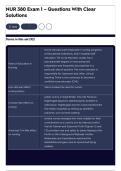
NUR 380 Exam 1 – Questions With Clear
Solutions
Save
Terms in this set (92)
Nurse educators are employed in nursing programs,
at educational institutions, and in hospital staff
education. The nurse educator usually has a
baccalaureate degree or more advanced
Roles of Education in
preparation and frequently has expertise in a
Nursing
particular area of practice. The nurse educator is
responsible for classroom and, often, clinical
teaching. There is now a process to become a
certified nurse educator (CNE).
How did wars affect Wars increase the need for nurses
nursing history
public outcry in Great Britain. The role Florence
Nightingale played in addressing this problem is
Crimean War effect on
well known. Nightingale and her nurses transformed
nursing
the military hospitals by setting up sanitation
practices, such as hand washing
several nurses emerged who were notable for their
contributions to a country torn by internal conflict.
Harriet Tubman and Sojourner Truth (Figures 1.2 and
American Civil War effect 1.3) provided care and safety to slaves fleeing to the
on nursing North on the Underground Railroad. Mother
Biekerdyke and Clara Barton searched the
battlefields and gave care to injured and dying
soldiers.
, World War I resulted in American, British, and
French women rushing to volunteer their nursing
services. These nurses endured harsh environments
World War 1 effect on and treated injuries not seen before. d. Progress in
nursing healthcare occurred during World War I, particularly
in the field of surgery. For example, advancements
were made in the use of anesthetic agents, infection
control, blood typing, and prosthetics.
casualties created an acute shortage of caregivers,
and the Cadet Nurse Corps was established in
response to a marked shortage of nurses. At that
World War 2 effect on time, auxiliary healthcare workers became
nursing prominent. "Practical" nurses, aides, and technicians
provided much of the actual nursing care under the
instruction and supervision of better prepared
nurses.
Established sanitary nursing care units. Founder of
Florence Nightingale modern nursing. began professional education of
nursing.
Nurse during the Civil War; founder of the American
Clara Barton
Red Cross
Graduated in 1873 from the New England Hospital
for Women and Children in Boston, Massachusetts,
as the first trained nurse in the United States;
Linda Richards
became the night superintendent of Bellevue
Hospital in 1874 and began the practice of keeping
records and writing orders
Mary Mahoney First professionally trained African American nurse
founded the Henry Street Settlement and Visiting
Nurse Service which provided nursing and social
Lillian Wald services and organized educational and cultural
activities. She is considered the founder of public
health nursing
, Participated in protests movement for women's
rights
Lavina Dock (1858-1956)
Fought for nurses rather than MDs to have control
of the nursing profession
American leader of the movement to legalize birth
control during the early 1900's. As a nurse in the
poor sections of New York City, she had seen the
Margaret Sanger suffering caused by unwanted pregnancy. Founded
the first birth control clinic in the U.S. and the
American Birth Control League, which later became
Planned Parenthood.
Mary Breckinridge Established the Frontier Nursing Service
Registered nurse and a founder of the American
Luther Christman Assembly for Men in Nursing (AAMN). Also founded
the National Student Nurse's Association
first male president of the American Nurses
Ernest Grant
Association
Known for working with the Underground Railroad
Harriet Tubman and
to help fleeing slaves during the American Civil War,
Sojourner Truth
also cared for the sick.
A reformer and pioneer in the movement to treat
the insane as mentally ill, beginning in the 1820's, she
was responsible for improving conditions in jails,
poorhouses and insane asylums throughout the U.S.
Dorothea Dix
and Canada. She succeeded in persuading many
states to assume responsibility for the care of the
mentally ill. She served as the Superintendent of
Nurses for the Union Army during the Civil War.
Solutions
Save
Terms in this set (92)
Nurse educators are employed in nursing programs,
at educational institutions, and in hospital staff
education. The nurse educator usually has a
baccalaureate degree or more advanced
Roles of Education in
preparation and frequently has expertise in a
Nursing
particular area of practice. The nurse educator is
responsible for classroom and, often, clinical
teaching. There is now a process to become a
certified nurse educator (CNE).
How did wars affect Wars increase the need for nurses
nursing history
public outcry in Great Britain. The role Florence
Nightingale played in addressing this problem is
Crimean War effect on
well known. Nightingale and her nurses transformed
nursing
the military hospitals by setting up sanitation
practices, such as hand washing
several nurses emerged who were notable for their
contributions to a country torn by internal conflict.
Harriet Tubman and Sojourner Truth (Figures 1.2 and
American Civil War effect 1.3) provided care and safety to slaves fleeing to the
on nursing North on the Underground Railroad. Mother
Biekerdyke and Clara Barton searched the
battlefields and gave care to injured and dying
soldiers.
, World War I resulted in American, British, and
French women rushing to volunteer their nursing
services. These nurses endured harsh environments
World War 1 effect on and treated injuries not seen before. d. Progress in
nursing healthcare occurred during World War I, particularly
in the field of surgery. For example, advancements
were made in the use of anesthetic agents, infection
control, blood typing, and prosthetics.
casualties created an acute shortage of caregivers,
and the Cadet Nurse Corps was established in
response to a marked shortage of nurses. At that
World War 2 effect on time, auxiliary healthcare workers became
nursing prominent. "Practical" nurses, aides, and technicians
provided much of the actual nursing care under the
instruction and supervision of better prepared
nurses.
Established sanitary nursing care units. Founder of
Florence Nightingale modern nursing. began professional education of
nursing.
Nurse during the Civil War; founder of the American
Clara Barton
Red Cross
Graduated in 1873 from the New England Hospital
for Women and Children in Boston, Massachusetts,
as the first trained nurse in the United States;
Linda Richards
became the night superintendent of Bellevue
Hospital in 1874 and began the practice of keeping
records and writing orders
Mary Mahoney First professionally trained African American nurse
founded the Henry Street Settlement and Visiting
Nurse Service which provided nursing and social
Lillian Wald services and organized educational and cultural
activities. She is considered the founder of public
health nursing
, Participated in protests movement for women's
rights
Lavina Dock (1858-1956)
Fought for nurses rather than MDs to have control
of the nursing profession
American leader of the movement to legalize birth
control during the early 1900's. As a nurse in the
poor sections of New York City, she had seen the
Margaret Sanger suffering caused by unwanted pregnancy. Founded
the first birth control clinic in the U.S. and the
American Birth Control League, which later became
Planned Parenthood.
Mary Breckinridge Established the Frontier Nursing Service
Registered nurse and a founder of the American
Luther Christman Assembly for Men in Nursing (AAMN). Also founded
the National Student Nurse's Association
first male president of the American Nurses
Ernest Grant
Association
Known for working with the Underground Railroad
Harriet Tubman and
to help fleeing slaves during the American Civil War,
Sojourner Truth
also cared for the sick.
A reformer and pioneer in the movement to treat
the insane as mentally ill, beginning in the 1820's, she
was responsible for improving conditions in jails,
poorhouses and insane asylums throughout the U.S.
Dorothea Dix
and Canada. She succeeded in persuading many
states to assume responsibility for the care of the
mentally ill. She served as the Superintendent of
Nurses for the Union Army during the Civil War.