

Abeka Biology Test 9 Abeka Biology Test 9
Study online at https://quizlet.com/_cs51zb
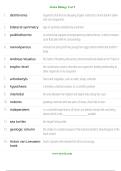
1. detritivores organisms that feed on decaying organic matter but cannot break it down
into soil components
2. bilateral symmetry type of symmetry exhibited by mammals
3. poikilothermic an animal that regulate its temperature by external forces, so that its temper-
ature fluctuates with its surroundings
4. ovoviviparous animals that bring forth live young from eggs hatched within the mother's
body
5. Andreas Vesalius the Father of Anatomy, who wrote a monumental book known as the "Fabrica"
6. trophic level the classification used to describe one organism's feeding relationship to
other organisms in its ecosystem
7. artiodactyls Even-toed ungulates, such as cattle, sheep, and deer
8. hypothesis a tentative, untested solution to a scientific problem
9. intertidal the area between the highest and lowest tides along the coast
10. rodents gnawing mammals with two pairs of sharp, chisel-like incisors
11. independent in a controlled experiment, all factors are identical except the one being
tested, which is the ___________________ variable
12. sea turtles the largest living turtles
13. geologic column the simple-to-complex sequence that evolution predicts should appear in the
fossil record
14. Anton van Leeuwen- Dutch naturalist who devoted his life to microscopy
hoek
www.stuvia.com
1/6
, Abeka Biology Test 9 Abeka Biology Test 9
Study online at https://quizlet.com/_cs51zb
15. carapace upper shell of a turtle
16. mammary glands that produce milk in mammals that feed their young
17. chromatophores pigment cells in the skin of an amphibian
18. concertina move- the type of snake locomotion in which a snake moves the front part of its body
ment forward, coils it slightly to anchor it, and then pulls the back part forward
19. materialism the philosophy that promotes the idea that the universe consists of nothing
but matter and energy and has no spiritual or supernatural aspects
20. 4 number of chambers in the heart
21. cutaneous respira- form of respiration in which an amphibian exchanges oxygen and carbon
tion dioxide through its skin
22. northern coniferous the biome characterized by harsh winters, fairly long summers, and little or
forest no permafrost
23. crocodilians large, thick-skinned, long-tailed aquatic reptiles
24. viperids venomous snakes with long fangs that fold against the roof of the mouth
when not in use
25. lizards includes iguanas, geckos, Komodo dragons, and chameleons
26. elapids venomous snakes with immovable fangs in the front of the upper jaw
27. boids group of snakes that includes boas and anacondas
28. hemotoxin snake venom that primarily affects the blood
29. migration annually moving to a different region
30. down feathers
www.stuvia.com
2/6
Study online at https://quizlet.com/_cs51zb
1. detritivores organisms that feed on decaying organic matter but cannot break it down
into soil components
2. bilateral symmetry type of symmetry exhibited by mammals
3. poikilothermic an animal that regulate its temperature by external forces, so that its temper-
ature fluctuates with its surroundings
4. ovoviviparous animals that bring forth live young from eggs hatched within the mother's
body
5. Andreas Vesalius the Father of Anatomy, who wrote a monumental book known as the "Fabrica"
6. trophic level the classification used to describe one organism's feeding relationship to
other organisms in its ecosystem
7. artiodactyls Even-toed ungulates, such as cattle, sheep, and deer
8. hypothesis a tentative, untested solution to a scientific problem
9. intertidal the area between the highest and lowest tides along the coast
10. rodents gnawing mammals with two pairs of sharp, chisel-like incisors
11. independent in a controlled experiment, all factors are identical except the one being
tested, which is the ___________________ variable
12. sea turtles the largest living turtles
13. geologic column the simple-to-complex sequence that evolution predicts should appear in the
fossil record
14. Anton van Leeuwen- Dutch naturalist who devoted his life to microscopy
hoek
www.stuvia.com
1/6
, Abeka Biology Test 9 Abeka Biology Test 9
Study online at https://quizlet.com/_cs51zb
15. carapace upper shell of a turtle
16. mammary glands that produce milk in mammals that feed their young
17. chromatophores pigment cells in the skin of an amphibian
18. concertina move- the type of snake locomotion in which a snake moves the front part of its body
ment forward, coils it slightly to anchor it, and then pulls the back part forward
19. materialism the philosophy that promotes the idea that the universe consists of nothing
but matter and energy and has no spiritual or supernatural aspects
20. 4 number of chambers in the heart
21. cutaneous respira- form of respiration in which an amphibian exchanges oxygen and carbon
tion dioxide through its skin
22. northern coniferous the biome characterized by harsh winters, fairly long summers, and little or
forest no permafrost
23. crocodilians large, thick-skinned, long-tailed aquatic reptiles
24. viperids venomous snakes with long fangs that fold against the roof of the mouth
when not in use
25. lizards includes iguanas, geckos, Komodo dragons, and chameleons
26. elapids venomous snakes with immovable fangs in the front of the upper jaw
27. boids group of snakes that includes boas and anacondas
28. hemotoxin snake venom that primarily affects the blood
29. migration annually moving to a different region
30. down feathers
www.stuvia.com
2/6


