
COMS 312 Exam 1 UPDATED ACTUAL Questions and CORRECT
Answers
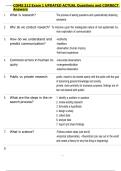
1. What is research? The process of asking questions and systematically obtaining
answers
2. Why do we conduct research? To improve upon the inadequate nature of non-systematic hu-
man exploration of communication
3. How do we understand and -Authority
predict communication? -tradition
-observation (human inquiry)
-first-hand experience
4. Common errors in human in- -inaccurate observations
quiry -overgeneralization
-selective observation
5. Public vs private research public: meant to be shared openly with the public with the goal
of advancing general knowledge and society
private: done primarily for business purposes, findings are of-
ten not shared with public
6. What are the steps in the re- 1. identify a problem or question
search process? 2. review existing research
3. formulate a hypothesis
4. design a study
5. collect data
6. analyse data
7. report and share findings
7. What is science? -Follows certain steps (can test it)
-empirical (observable), --theoretical (can see out in the world
and create a theory for why that thing is happening)
8.
, COMS 312 Exam 1 UPDATED ACTUAL Questions and CORRECT
Answers
What is rigorous scientific re- -Systematic
search? -sound (reliable)
-date driven
-reductive process
-partial
-capable of being replicated
9. The ethical challenge in re- -research is not amoral
search -quality of research is based on the rigor of procedures and the
ethics of the researcher
-the consequences of the research must be thought prior to
conducting it
10. Two organizations responsi- Oflce of Human Research Protection (OHRP), and Institutional
ble for research code of con- Review Board (IRB)
ducts
11. Responsibilities of code of -minimizing harm/maximizing benefits
conduct organizations -Beneficence
-informed consent (they must have a choice)
-respect for the persons
-special protection for vulnerable populations
-fairness/justice
-avoiding deception
-confederates
-confidentiality and anonymity
12. Authority of Institutional Re- -approve/reject research
view Board (IBR) -require notifications to proposed research
-Conduct continuing reviews (at least yearly)
-observe/verify changes
-suspend or terminate approval
Answers
1. What is research? The process of asking questions and systematically obtaining
answers
2. Why do we conduct research? To improve upon the inadequate nature of non-systematic hu-
man exploration of communication
3. How do we understand and -Authority
predict communication? -tradition
-observation (human inquiry)
-first-hand experience
4. Common errors in human in- -inaccurate observations
quiry -overgeneralization
-selective observation
5. Public vs private research public: meant to be shared openly with the public with the goal
of advancing general knowledge and society
private: done primarily for business purposes, findings are of-
ten not shared with public
6. What are the steps in the re- 1. identify a problem or question
search process? 2. review existing research
3. formulate a hypothesis
4. design a study
5. collect data
6. analyse data
7. report and share findings
7. What is science? -Follows certain steps (can test it)
-empirical (observable), --theoretical (can see out in the world
and create a theory for why that thing is happening)
8.
, COMS 312 Exam 1 UPDATED ACTUAL Questions and CORRECT
Answers
What is rigorous scientific re- -Systematic
search? -sound (reliable)
-date driven
-reductive process
-partial
-capable of being replicated
9. The ethical challenge in re- -research is not amoral
search -quality of research is based on the rigor of procedures and the
ethics of the researcher
-the consequences of the research must be thought prior to
conducting it
10. Two organizations responsi- Oflce of Human Research Protection (OHRP), and Institutional
ble for research code of con- Review Board (IRB)
ducts
11. Responsibilities of code of -minimizing harm/maximizing benefits
conduct organizations -Beneficence
-informed consent (they must have a choice)
-respect for the persons
-special protection for vulnerable populations
-fairness/justice
-avoiding deception
-confederates
-confidentiality and anonymity
12. Authority of Institutional Re- -approve/reject research
view Board (IBR) -require notifications to proposed research
-Conduct continuing reviews (at least yearly)
-observe/verify changes
-suspend or terminate approval


