
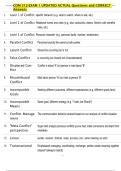
COM 312-EXAM 1 UPDATED ACTUAL Questions and CORRECT
Answers
1. Level 1 of Conflict specific behavior (e.g. what to watch, where to eat, etc.)
2. Level 2 of Conflict Relational norms and roles (e.g. who cooks/who cleans, friend's with benefits
rules, etc.)
3. Level 3 of Conflict Personal character (e.g. personal faults, motives, tendencies)
4. Parallel Conflict Perceived exactly the same by both parties
5. Latent Conflict Should be occurring but is not
6. False Conflict Is occurring but should not (misunderstand)
7. Displaced Con- Conflict is about 'A' but person is mad about 'B'
flict
8. Misattributed Mad about person 'A' but mad at person 'B'
Conflict
9. Incompatible Seeking different outcomes, different expectancies (e.g. different sports fans)
Goals
10. Incompatible Same goal, different strategy (e.g. "I hate Joe Girardi")
Means
11. Conflict Manage- The communication behavior enaced based on our analysis of conflict situation
ment
12. "Meta-Conflict" Super skill; analyze previous conflicts you've had; make corrections and learn form
perspective mistakes
13. Linear sender, receiver, channel, noise; accuracy (rec. same meaning as sent)
14. Transnactional Emphasized managing, coordinating, exchange; parties create meaning together
(doesn't always match)
1/8
, COM 312-EXAM 1 UPDATED ACTUAL Questions and CORRECT
Answers
15. Destructive Thinking of something as unchanging (i.e. "He was annoying in high school, he's
Communication going to be annoying in college")
Processes
16. Ignoring/forget- "I don't understand why she's being so mean, that happened like forever ago"
ting our histories
17. Process View of Realizing that our lives consists of events which influence subsequent events
Communication
18. Prelude to con- Variables emerge that make conflict possible
flict
19. Four Key Vari- 1. Who is in the conflict? 2. What type of relationship do they share? 3. Who else is
ables involved (bystanders)? 4. The context/environment that conflict occurs in
20. Triggering Event The thing that happens that both parties point to as the focal point; parties can
disagree on the triggering event
21. Initiation Phase When the conflict becomes overt/expressed; conflict episode cannot proceed
without initiation
22. Differentiation Strategies and tactics used; conflict becoems obvious to parties and maybe oth-
phase ers; sides of the story presented; escalation and de-escalation; perspectives and
desired outcomes explained
23. Resolution Phase Parties accept an outcome to the conflict; management and resolution affect future
conflicts between parties (cycle)
24. Destructive Con- Parties do not manage conflict ina awy that is mutually satisfactory and harms their
flict relationship (i.e. los sight of original goals, hostility is normal, becomes regular
part of communication)
2/8
Answers
1. Level 1 of Conflict specific behavior (e.g. what to watch, where to eat, etc.)
2. Level 2 of Conflict Relational norms and roles (e.g. who cooks/who cleans, friend's with benefits
rules, etc.)
3. Level 3 of Conflict Personal character (e.g. personal faults, motives, tendencies)
4. Parallel Conflict Perceived exactly the same by both parties
5. Latent Conflict Should be occurring but is not
6. False Conflict Is occurring but should not (misunderstand)
7. Displaced Con- Conflict is about 'A' but person is mad about 'B'
flict
8. Misattributed Mad about person 'A' but mad at person 'B'
Conflict
9. Incompatible Seeking different outcomes, different expectancies (e.g. different sports fans)
Goals
10. Incompatible Same goal, different strategy (e.g. "I hate Joe Girardi")
Means
11. Conflict Manage- The communication behavior enaced based on our analysis of conflict situation
ment
12. "Meta-Conflict" Super skill; analyze previous conflicts you've had; make corrections and learn form
perspective mistakes
13. Linear sender, receiver, channel, noise; accuracy (rec. same meaning as sent)
14. Transnactional Emphasized managing, coordinating, exchange; parties create meaning together
(doesn't always match)
1/8
, COM 312-EXAM 1 UPDATED ACTUAL Questions and CORRECT
Answers
15. Destructive Thinking of something as unchanging (i.e. "He was annoying in high school, he's
Communication going to be annoying in college")
Processes
16. Ignoring/forget- "I don't understand why she's being so mean, that happened like forever ago"
ting our histories
17. Process View of Realizing that our lives consists of events which influence subsequent events
Communication
18. Prelude to con- Variables emerge that make conflict possible
flict
19. Four Key Vari- 1. Who is in the conflict? 2. What type of relationship do they share? 3. Who else is
ables involved (bystanders)? 4. The context/environment that conflict occurs in
20. Triggering Event The thing that happens that both parties point to as the focal point; parties can
disagree on the triggering event
21. Initiation Phase When the conflict becomes overt/expressed; conflict episode cannot proceed
without initiation
22. Differentiation Strategies and tactics used; conflict becoems obvious to parties and maybe oth-
phase ers; sides of the story presented; escalation and de-escalation; perspectives and
desired outcomes explained
23. Resolution Phase Parties accept an outcome to the conflict; management and resolution affect future
conflicts between parties (cycle)
24. Destructive Con- Parties do not manage conflict ina awy that is mutually satisfactory and harms their
flict relationship (i.e. los sight of original goals, hostility is normal, becomes regular
part of communication)
2/8


