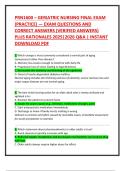
PRN1600 – GERIATRIC NURSING FINAL EXAM
(PRACTICE) — EXAM QUESTIONS AND
CORRECT ANSWERS (VERIFIED ANSWERS)
PLUS RATIONALES 2025|2026 Q&A | INSTANT
DOWNLOAD PDF
1. Which change is most commonly considered a normal part of aging
(senescence) rather than disease?
A. Memory loss severe enough to interfere with daily life
B. Progressive loss of vision leading to legal blindness
C. Decreased skin elasticity and thinning of the epidermis
D. Onset of insulin-dependent diabetes mellitus
Normal aging includes skin thinning and loss of elasticity; severe memory loss and
major organ diseases are not normal aging.
2. The best initial nursing action for an older adult who is newly confused and
agitated is to:
A. Restrain the patient to prevent harm
B. Assess for acute causes (e.g., infection, medication changes, pain)
C. Start antipsychotic medication immediately
D. Discharge to home if family insists nothing is wrong
Delirium is common and often caused by reversible issues; immediate assessment
for acute precipitants is essential.
3. Which statement about pharmacokinetics in older adults is true?
A. Renal clearance typically increases with age
B. Reduced hepatic metabolism and decreased renal function can increase drug
half-lives
C. Older adults always require higher doses for effect
,D. Body fat typically decreases, lowering lipophilic drug distribution
Aging usually decreases hepatic and renal clearance and increases body fat, which
alters distribution and elimination.
4. A common atypical presentation of infection in older adults is:
A. High fever and productive cough
B. New-onset confusion or functional decline
C. Sudden localized pain only
D. Rash with pruritus
Older adults often present with non-specific signs like confusion or functional
decline instead of classic symptoms.
5. Which intervention most effectively reduces risk of pressure ulcers in immobile
older adults?
A. Applying adhesive dressings to all bony prominences
B. Using pillows only when patient requests them
C. Repositioning at least every 2 hours and using pressure-redistributing
surfaces
D. Massaging reddened areas vigorously
Regular repositioning and appropriate support surfaces reduce pressure and
shear; massaging reddened areas can cause tissue damage.
6. The best way to evaluate an older adult’s ability to perform Instrumental
Activities of Daily Living (IADLs) is to:
A. Observe bathing and dressing only
B. Ask family members for a checklist with no observation
C. Use a standardized IADL assessment and observe performance when possible
D. Assume independence unless patient asks for help
Standardized assessments plus observation provide objective data on functional
abilities.
, 7. Which factor most increases the risk of falls in older adults?
A. High dietary calcium
B. Excellent vision
C. Regular aerobic exercise
D. Polypharmacy (multiple medications), especially sedatives and
antihypertensives
Multiple medications, especially those that affect cognition or blood pressure, are
strong risk factors for falls.
8. The single best intervention to prevent aspiration in a patient with dysphagia is:
A. Force fluids quickly
B. Position supine after meals
C. Provide proper swallowing techniques and position upright during/after
meals
D. Give thin liquids only
Upright positioning and proper swallowing techniques reduce aspiration risk; thin
liquids often increase aspiration risk in dysphagia.
9. In an older adult with chronic pain, the most appropriate initial analgesic
strategy is:
A. High-dose opioids as first-line therapy
B. Multimodal approach: nonpharmacologic measures ± acetaminophen, and
cautious NSAID/opioid use as needed
C. Avoid all medications; only use physical therapy after 6 months
D. Prescribe benzodiazepines for pain-related anxiety
A multimodal, lowest-effective-dose approach balances pain control with safety in
older adults.
10. Which vaccine is routinely recommended for adults aged 65 and older?
A. MMR (measles-mumps-rubella) booster
B. Pneumococcal vaccine and annual influenza vaccine
C. Live varicella vaccine yearly
(PRACTICE) — EXAM QUESTIONS AND
CORRECT ANSWERS (VERIFIED ANSWERS)
PLUS RATIONALES 2025|2026 Q&A | INSTANT
DOWNLOAD PDF
1. Which change is most commonly considered a normal part of aging
(senescence) rather than disease?
A. Memory loss severe enough to interfere with daily life
B. Progressive loss of vision leading to legal blindness
C. Decreased skin elasticity and thinning of the epidermis
D. Onset of insulin-dependent diabetes mellitus
Normal aging includes skin thinning and loss of elasticity; severe memory loss and
major organ diseases are not normal aging.
2. The best initial nursing action for an older adult who is newly confused and
agitated is to:
A. Restrain the patient to prevent harm
B. Assess for acute causes (e.g., infection, medication changes, pain)
C. Start antipsychotic medication immediately
D. Discharge to home if family insists nothing is wrong
Delirium is common and often caused by reversible issues; immediate assessment
for acute precipitants is essential.
3. Which statement about pharmacokinetics in older adults is true?
A. Renal clearance typically increases with age
B. Reduced hepatic metabolism and decreased renal function can increase drug
half-lives
C. Older adults always require higher doses for effect
,D. Body fat typically decreases, lowering lipophilic drug distribution
Aging usually decreases hepatic and renal clearance and increases body fat, which
alters distribution and elimination.
4. A common atypical presentation of infection in older adults is:
A. High fever and productive cough
B. New-onset confusion or functional decline
C. Sudden localized pain only
D. Rash with pruritus
Older adults often present with non-specific signs like confusion or functional
decline instead of classic symptoms.
5. Which intervention most effectively reduces risk of pressure ulcers in immobile
older adults?
A. Applying adhesive dressings to all bony prominences
B. Using pillows only when patient requests them
C. Repositioning at least every 2 hours and using pressure-redistributing
surfaces
D. Massaging reddened areas vigorously
Regular repositioning and appropriate support surfaces reduce pressure and
shear; massaging reddened areas can cause tissue damage.
6. The best way to evaluate an older adult’s ability to perform Instrumental
Activities of Daily Living (IADLs) is to:
A. Observe bathing and dressing only
B. Ask family members for a checklist with no observation
C. Use a standardized IADL assessment and observe performance when possible
D. Assume independence unless patient asks for help
Standardized assessments plus observation provide objective data on functional
abilities.
, 7. Which factor most increases the risk of falls in older adults?
A. High dietary calcium
B. Excellent vision
C. Regular aerobic exercise
D. Polypharmacy (multiple medications), especially sedatives and
antihypertensives
Multiple medications, especially those that affect cognition or blood pressure, are
strong risk factors for falls.
8. The single best intervention to prevent aspiration in a patient with dysphagia is:
A. Force fluids quickly
B. Position supine after meals
C. Provide proper swallowing techniques and position upright during/after
meals
D. Give thin liquids only
Upright positioning and proper swallowing techniques reduce aspiration risk; thin
liquids often increase aspiration risk in dysphagia.
9. In an older adult with chronic pain, the most appropriate initial analgesic
strategy is:
A. High-dose opioids as first-line therapy
B. Multimodal approach: nonpharmacologic measures ± acetaminophen, and
cautious NSAID/opioid use as needed
C. Avoid all medications; only use physical therapy after 6 months
D. Prescribe benzodiazepines for pain-related anxiety
A multimodal, lowest-effective-dose approach balances pain control with safety in
older adults.
10. Which vaccine is routinely recommended for adults aged 65 and older?
A. MMR (measles-mumps-rubella) booster
B. Pneumococcal vaccine and annual influenza vaccine
C. Live varicella vaccine yearly