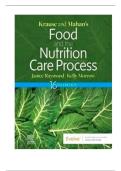
,Krause and Mahan's Food and Nutrition care progress16th Edition
Chapter 01: Intake: Gastrointestinal Digestion, Absorption, and Excretion of Nutrients
Raymond: Krause and Mahan’s Food and the Nutrition Care Process, 16th Edition
MULTIPLE CHOICE
1. Pepsinogen is converted to pepsin when it comes in contact with
a. enterokinase.
b. trypsinogen.
c. hydrochloric acid.
d. peptidases.
ANS: C
Pepsinogen is secreted in the stomach and converted to its active form by the acid environment
of the stomach. Enterokinase is secreted by the brush border of the small intestine in response to
the presence of chyme. Trypsinogen is secreted by the pancreas and activated by enterokinase.
Various peptidases are secreted by the either brush border or the pancreas.
2. Which of the following is formed by bacterial synthesis in the colon?
a. Vitamin K
b. Vitamin D
c. Vitamin B6
d. Niacin
ANS: A
Colonic bacteria produce vitamin K, vitamin B12, thiamin, and riboflavin. Vitamin D may be
metabolized by exposure of precursor vitamin D in the skin to ultraviolet light. The human body
can synthesize niacin from the amino acid tryptophan. Vitamin B6 must be obtained from dietary
sources such as meats, whole grains, vegetables, and nuts.
3. After surgical removal of a large portion of the small intestine, what functional
complication is most likely to develop?
a. Changes in dietary habits
b. Impaired digestion
c. Loss of absorptive tissue
d. Elimination of dietary residue
ANS: C
The small intestine is the primary site of nutrient absorption because of its large absorption
surface area. Secretions from the liver, gallbladder, and pancreas can still contribute to digestion
of intestinal contents. However, decreased absorption of nutrients and food components may
result in more intestinal remains and residue. A patient may change dietary habits as a result of
gastrointestinal discomfort experienced after intestinal resection, but this is not a functional
complication.
4. The sight or smell of food produces vagal stimulation of the parietal cells of the gastric
mucosa, resulting in the increased production of what?
2
,Krause and Mahan's Food and Nutrition care progress16th Edition
a. Motilin
b. Gastrin
c. Cholecystokinin
d. Secretin
ANS: B
Parasympathetic innervation that causes secretion of gastrin and release of hydrochloric acid
helps prepare the stomach for the potential of receiving food. After food chyme is passed into the
small intestine from the stomach, secretin and cholecystokinin are secreted to stimulate
pancreatic secretion of water and bicarbonate. They also signal gallbladder contractions and
colonic motility, all resulting in reductions in stomach emptying and duodenal motility.
Motilin is secreted from the duodenal mucosa during fasting to stimulate gastric emptying and
intestinal motility.
5. If a patient experiences malabsorption of fat resulting from an impaired ability to produce
adequate bile salts for micelle formation, how may fat absorption be improved?
a. By increasing short-chain fatty acids in the diet
b. By increasing medium-chain fatty acids in the diet
c. By increasing long-chain fatty acids in the diet
d. By restricting dietary intake of cholesterol
ANS: B
Medium-chain fatty acids of 8 to 12 carbons can be absorbed directly by mucosal cells without
the presence of bile. The long-chain fatty acids require micelle formation for absorption. Short-
chain fatty acids result from bacterial fermentation of malabsorbed carbohydrates and fibers. As
bile is produced from cholesterol, dietary restriction of cholesterol is negligible in regard to
improvements in fat absorption.
6. What is the function of secretin?
a. Stimulation of gastric secretions and increased motility
b. Stimulation of gallbladder contraction and the release of bile
c. Stimulation of the pancreas to secrete water and bicarbonate
d. Stimulation of the parietal cells to secrete gastrin
ANS: C
Secretin is the hormone that works in opposition to gastrin. Whereas gastrin stimulates stomach
digestion activities, secretin decreases gastric output and promotes pancreatic secretions to
neutralize the acidity of chyme. Cholecystokinin is also secreted when chyme enters the
duodenum, and it is responsible for stimulating the gallbladder.
7. Which of the following is a list of enzymes released from the pancreas?
a. Insulin, trypsin, and secretin
b. Lactase, isomaltase, and dextrinase
c. Protease, pepsin, and gastrin
d. Trypsin, chymotrypsin, and carboxypeptidase
3
, Krause and Mahan's Food and Nutrition care progress16th Edition
ANS: D
Trypsin, chymotrypsin, and carboxypeptidase are three protein digestive enzymes secreted by the
pancreas. Insulin is an endogenous hormone secreted by the pancreas. Secretin is a hormone
secreted by the small intestine. Lactase and isomaltase (also known as dextrinase) are brush-
border enzymes. Pepsin, which is a protease, and gastrin are hormones secreted by the stomach.
8. In what form is dietary fat absorbed from the lumen of the intestine?
a. Chylomicron
b. Micelle
c. Triglyceride
d. Lipoprotein
ANS: B
Fats must be emulsified into micelles so that they may cross the unstirred water layer that
borders the brush-border membranes. These micelles leave monoglycerides and fatty acids at the
brush border, where they are reabsorbed and reassembled as triglycerides. The triglycerides are
packaged with cholesterol, fat-soluble vitamins, and phospholipids into chylomicrons, which
pass into the lymphatic circulation. When these reach the liver, the chylomicron components are
repackaged into low-density lipoproteins.
9. Which of the following is true of probiotics?
a. Probiotics are live microorganisms found in food.
b. Probiotics are nondigestible carbohydrates.
c. Probiotics act primarily on bacteria in the proximal small intestine.
d. Probiotics cannot be given as supplements because they readily die.
ANS: A
Probiotics are live microorganisms, which when administered in adequate amounts confer a
health benefit on the host. They are found in fermented foods like yogurt and sauerkraut or as a
nutritional supplement. Bacterial action is most intense in the distal small intestine and large
intestine.
10. By which transport mechanism are most vitamins absorbed from the small intestine into
the blood?
a. Passive diffusion
b. Active diffusion
c. Facilitative diffusion
d. Passive osmosis
ANS: A
Passive diffusion is limited by the number of channels available for nutrients to randomly pass
through. Facilitated diffusion requires the presence of carrier proteins, which may be limited by
the health and nutritional status of the person. Active transport requires energy, which also may
be limited by the person’s health and nutritional status. Osmosis occurs in regard to
concentration gradient and only involves the movement of water, not vitamins.
4
Chapter 01: Intake: Gastrointestinal Digestion, Absorption, and Excretion of Nutrients
Raymond: Krause and Mahan’s Food and the Nutrition Care Process, 16th Edition
MULTIPLE CHOICE
1. Pepsinogen is converted to pepsin when it comes in contact with
a. enterokinase.
b. trypsinogen.
c. hydrochloric acid.
d. peptidases.
ANS: C
Pepsinogen is secreted in the stomach and converted to its active form by the acid environment
of the stomach. Enterokinase is secreted by the brush border of the small intestine in response to
the presence of chyme. Trypsinogen is secreted by the pancreas and activated by enterokinase.
Various peptidases are secreted by the either brush border or the pancreas.
2. Which of the following is formed by bacterial synthesis in the colon?
a. Vitamin K
b. Vitamin D
c. Vitamin B6
d. Niacin
ANS: A
Colonic bacteria produce vitamin K, vitamin B12, thiamin, and riboflavin. Vitamin D may be
metabolized by exposure of precursor vitamin D in the skin to ultraviolet light. The human body
can synthesize niacin from the amino acid tryptophan. Vitamin B6 must be obtained from dietary
sources such as meats, whole grains, vegetables, and nuts.
3. After surgical removal of a large portion of the small intestine, what functional
complication is most likely to develop?
a. Changes in dietary habits
b. Impaired digestion
c. Loss of absorptive tissue
d. Elimination of dietary residue
ANS: C
The small intestine is the primary site of nutrient absorption because of its large absorption
surface area. Secretions from the liver, gallbladder, and pancreas can still contribute to digestion
of intestinal contents. However, decreased absorption of nutrients and food components may
result in more intestinal remains and residue. A patient may change dietary habits as a result of
gastrointestinal discomfort experienced after intestinal resection, but this is not a functional
complication.
4. The sight or smell of food produces vagal stimulation of the parietal cells of the gastric
mucosa, resulting in the increased production of what?
2
,Krause and Mahan's Food and Nutrition care progress16th Edition
a. Motilin
b. Gastrin
c. Cholecystokinin
d. Secretin
ANS: B
Parasympathetic innervation that causes secretion of gastrin and release of hydrochloric acid
helps prepare the stomach for the potential of receiving food. After food chyme is passed into the
small intestine from the stomach, secretin and cholecystokinin are secreted to stimulate
pancreatic secretion of water and bicarbonate. They also signal gallbladder contractions and
colonic motility, all resulting in reductions in stomach emptying and duodenal motility.
Motilin is secreted from the duodenal mucosa during fasting to stimulate gastric emptying and
intestinal motility.
5. If a patient experiences malabsorption of fat resulting from an impaired ability to produce
adequate bile salts for micelle formation, how may fat absorption be improved?
a. By increasing short-chain fatty acids in the diet
b. By increasing medium-chain fatty acids in the diet
c. By increasing long-chain fatty acids in the diet
d. By restricting dietary intake of cholesterol
ANS: B
Medium-chain fatty acids of 8 to 12 carbons can be absorbed directly by mucosal cells without
the presence of bile. The long-chain fatty acids require micelle formation for absorption. Short-
chain fatty acids result from bacterial fermentation of malabsorbed carbohydrates and fibers. As
bile is produced from cholesterol, dietary restriction of cholesterol is negligible in regard to
improvements in fat absorption.
6. What is the function of secretin?
a. Stimulation of gastric secretions and increased motility
b. Stimulation of gallbladder contraction and the release of bile
c. Stimulation of the pancreas to secrete water and bicarbonate
d. Stimulation of the parietal cells to secrete gastrin
ANS: C
Secretin is the hormone that works in opposition to gastrin. Whereas gastrin stimulates stomach
digestion activities, secretin decreases gastric output and promotes pancreatic secretions to
neutralize the acidity of chyme. Cholecystokinin is also secreted when chyme enters the
duodenum, and it is responsible for stimulating the gallbladder.
7. Which of the following is a list of enzymes released from the pancreas?
a. Insulin, trypsin, and secretin
b. Lactase, isomaltase, and dextrinase
c. Protease, pepsin, and gastrin
d. Trypsin, chymotrypsin, and carboxypeptidase
3
, Krause and Mahan's Food and Nutrition care progress16th Edition
ANS: D
Trypsin, chymotrypsin, and carboxypeptidase are three protein digestive enzymes secreted by the
pancreas. Insulin is an endogenous hormone secreted by the pancreas. Secretin is a hormone
secreted by the small intestine. Lactase and isomaltase (also known as dextrinase) are brush-
border enzymes. Pepsin, which is a protease, and gastrin are hormones secreted by the stomach.
8. In what form is dietary fat absorbed from the lumen of the intestine?
a. Chylomicron
b. Micelle
c. Triglyceride
d. Lipoprotein
ANS: B
Fats must be emulsified into micelles so that they may cross the unstirred water layer that
borders the brush-border membranes. These micelles leave monoglycerides and fatty acids at the
brush border, where they are reabsorbed and reassembled as triglycerides. The triglycerides are
packaged with cholesterol, fat-soluble vitamins, and phospholipids into chylomicrons, which
pass into the lymphatic circulation. When these reach the liver, the chylomicron components are
repackaged into low-density lipoproteins.
9. Which of the following is true of probiotics?
a. Probiotics are live microorganisms found in food.
b. Probiotics are nondigestible carbohydrates.
c. Probiotics act primarily on bacteria in the proximal small intestine.
d. Probiotics cannot be given as supplements because they readily die.
ANS: A
Probiotics are live microorganisms, which when administered in adequate amounts confer a
health benefit on the host. They are found in fermented foods like yogurt and sauerkraut or as a
nutritional supplement. Bacterial action is most intense in the distal small intestine and large
intestine.
10. By which transport mechanism are most vitamins absorbed from the small intestine into
the blood?
a. Passive diffusion
b. Active diffusion
c. Facilitative diffusion
d. Passive osmosis
ANS: A
Passive diffusion is limited by the number of channels available for nutrients to randomly pass
through. Facilitated diffusion requires the presence of carrier proteins, which may be limited by
the health and nutritional status of the person. Active transport requires energy, which also may
be limited by the person’s health and nutritional status. Osmosis occurs in regard to
concentration gradient and only involves the movement of water, not vitamins.
4