
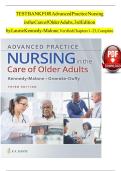
TEST BANK FOR Advanced Practice Nursing
v v v v v
v in the Care of Older Adults, 3rd Edition
v v v v v v v v
by Laurie Kennedy-Malone, Verified Chapters 1 - 23, Complete
v v v v v v v v
,Answers at the end of the Chapter
v v v v v v v
Chapter1: Changes withAging v v v v
Multiple Choice v
Identify the choice that best completes the statement or answers the question.
v v v v v v v v v v v
1. The major impact of the physiological changes that occur with aging is:
v v v v v v v v v v v
A. Reducedphysiological reserve v v
B. Reduced homeostatic mechanismsv v
C. Impaired immunological response v v
D. All of the above
v v v
2. The strongest evidence regarding normal physiological aging is available through:
v v v v v v v v v
,A. Randomized controlledclinical trials v v v
B. Cross-sectional studies v
C. Longitudinal studies v
D. Case control studies
v v
3. All of the following statements are true about laboratory
vv v v v v v v v v v v
values in older adultsexcept: v v v
A. Referenceranges arepreferable v v v
B. Abnormal findings are often due to physiological aging
v v v v v v v
C. Normal ranges may not be applicable for older adults
v v v v v v v v
D. Reference values are not necessarily acceptable values
v v v v v v
vv v 4. Biochemical individuality is best described as:
v v v v v v
A. Each individual’s variation is often much greater than that of a larger group
v v v v v v v v v v v v
B. The unique biochemical profile of a selected population
v v v v v v v
C. The truly “normal” individual—falling within average range
v v v v v v
D. Each individual’s variation is often much smaller than that of a larger group
v v v v v v v v v v v v
vv v 5. Polypharmacy is best described as taking:
v v v v v v
A. More than nine medications per day
v v v v v
B. Morethan five medications per day
v v v v v
, C. Even a single medication if there is not a clear indication for its use
v v v v v v v v v v v v v
D. When a drug is given to treat the side effect of another drug
v v v v v v v v v v v v
vv v 6. Pharmacokinetic changes with aging is reflective of:
v v v v v v v
A. What the drug does to the body
v v v v v v
B. What the body does to the drug
v v v v v v
C. The effect at the site of action and the time and intensity of the drug
v v v v v v v v v v v v v v
D. The side effects commonly associated with the drug
v v v v v v v
vv v 7. All the following statements are false about drug absorption except:
v v v v v v v v v v
A. Antacids increase the bioavailability of digitalis
v v v v v
B. Gastric acidity decreases with age
v v v v
C. Anticholinergics increase colonic motility v v v
D. Underlying chronic disease has little impact on drug absorption
v v v v v v v v
vv v 8. All of the following statements are true about drug distribution in the
v v v v v v v v v v v v
elderly except: v
A. Drugs distributed in water have lower concentration
v v v v v v
B. Drugs distributed in fat have less intense, more prolonged effect
v v v v v v v v v
C. Drugs highly protein bound have greater potential to causean adverse drug reaction
v v v v v v v v v v v v
v v v v v
v in the Care of Older Adults, 3rd Edition
v v v v v v v v
by Laurie Kennedy-Malone, Verified Chapters 1 - 23, Complete
v v v v v v v v
,Answers at the end of the Chapter
v v v v v v v
Chapter1: Changes withAging v v v v
Multiple Choice v
Identify the choice that best completes the statement or answers the question.
v v v v v v v v v v v
1. The major impact of the physiological changes that occur with aging is:
v v v v v v v v v v v
A. Reducedphysiological reserve v v
B. Reduced homeostatic mechanismsv v
C. Impaired immunological response v v
D. All of the above
v v v
2. The strongest evidence regarding normal physiological aging is available through:
v v v v v v v v v
,A. Randomized controlledclinical trials v v v
B. Cross-sectional studies v
C. Longitudinal studies v
D. Case control studies
v v
3. All of the following statements are true about laboratory
vv v v v v v v v v v v
values in older adultsexcept: v v v
A. Referenceranges arepreferable v v v
B. Abnormal findings are often due to physiological aging
v v v v v v v
C. Normal ranges may not be applicable for older adults
v v v v v v v v
D. Reference values are not necessarily acceptable values
v v v v v v
vv v 4. Biochemical individuality is best described as:
v v v v v v
A. Each individual’s variation is often much greater than that of a larger group
v v v v v v v v v v v v
B. The unique biochemical profile of a selected population
v v v v v v v
C. The truly “normal” individual—falling within average range
v v v v v v
D. Each individual’s variation is often much smaller than that of a larger group
v v v v v v v v v v v v
vv v 5. Polypharmacy is best described as taking:
v v v v v v
A. More than nine medications per day
v v v v v
B. Morethan five medications per day
v v v v v
, C. Even a single medication if there is not a clear indication for its use
v v v v v v v v v v v v v
D. When a drug is given to treat the side effect of another drug
v v v v v v v v v v v v
vv v 6. Pharmacokinetic changes with aging is reflective of:
v v v v v v v
A. What the drug does to the body
v v v v v v
B. What the body does to the drug
v v v v v v
C. The effect at the site of action and the time and intensity of the drug
v v v v v v v v v v v v v v
D. The side effects commonly associated with the drug
v v v v v v v
vv v 7. All the following statements are false about drug absorption except:
v v v v v v v v v v
A. Antacids increase the bioavailability of digitalis
v v v v v
B. Gastric acidity decreases with age
v v v v
C. Anticholinergics increase colonic motility v v v
D. Underlying chronic disease has little impact on drug absorption
v v v v v v v v
vv v 8. All of the following statements are true about drug distribution in the
v v v v v v v v v v v v
elderly except: v
A. Drugs distributed in water have lower concentration
v v v v v v
B. Drugs distributed in fat have less intense, more prolonged effect
v v v v v v v v v
C. Drugs highly protein bound have greater potential to causean adverse drug reaction
v v v v v v v v v v v v


