WSET SAKE LEVEL 3
Study online at https://quizlet.com/_62qr7n
(1) Sake is only used polished rice, beer used unpolished
grains (usally barley)
(2) Beer need the process called "malting",to break starch
How sake is different from beer ? down into fermentable sugar, sake used koji mold to break
starch down into sugars.
(3) Beer is used single line fermentation technology, sake
making is used parelle
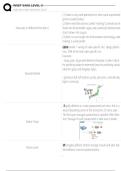
The number 1 variety of sake-specific rice. Hyogo prefec-
q0&
ture, 30% of the total sake-specific rice.
Features:
· large grain, large well-defined shinpaku ( make it ideal
for polishing down to extremely low rice polishing ratios)
ideal for ginjo and daiginjo styles.
Yamada Nishiki
· generous full soft texture, purity, precision, aromatically,
light in intensity
.ÏLegally defined as a sake pasteurized just once. this is a
way of providing some of the characters of nama-zake.
The first (pre-storage) pasteurized is avoided. After filtra-
tion ’storage in bulk ’pasteurized in bulk also in bottle.
Nama Chozo
Ønot legally defined. before storage in bulk and later bot-
Nama-zume
tled without a second pasteurization.
, WSET SAKE LEVEL 3
Study online at https://quizlet.com/_62qr7n
After filtration ’pasteurized in bulk ’storage in bulk ’bottled
(without a second pasteurized)
is nama-zume that released as an autumn seasonal prod-
·x
Hiya-oroshi
uct once the heat of the summer has passed.
before storage in bottle, because the sake is already bot-
tled, the second post-storage pasteurized is unnecessary.
Bin hi-ire ( once pasteurized ) = bottle pasteurisation
this avoids the distinct aromas of nama-zake, which can
develop in bottle.
yabuta is the major brand of the machine. A modern
industry standard for filtration. Fast, efficient, no contami-
nation risk, good at minimising oxidation. Strong pressure
can release coarse components from the lees into the
Yabuta-Shibori (Assakuki ) sake.
for futsu-shu, junmai, honjozo, also for ginjo and daiginjo.
Gentle pressure, box press, ideal for premium sakes ( gin-
jo\daiginjo\junmai daiginjo ). Time and labor consuming.
( takes about 2 days )
Funa-Shibori
Drip filtration, bags are hung and sake drips into 18 L
Fukuro-Shibori bottles. No external pressure. Very time, space and labor
consuming. Less sake expressed.
Gohyakuman Goku
Study online at https://quizlet.com/_62qr7n
(1) Sake is only used polished rice, beer used unpolished
grains (usally barley)
(2) Beer need the process called "malting",to break starch
How sake is different from beer ? down into fermentable sugar, sake used koji mold to break
starch down into sugars.
(3) Beer is used single line fermentation technology, sake
making is used parelle
The number 1 variety of sake-specific rice. Hyogo prefec-
q0&
ture, 30% of the total sake-specific rice.
Features:
· large grain, large well-defined shinpaku ( make it ideal
for polishing down to extremely low rice polishing ratios)
ideal for ginjo and daiginjo styles.
Yamada Nishiki
· generous full soft texture, purity, precision, aromatically,
light in intensity
.ÏLegally defined as a sake pasteurized just once. this is a
way of providing some of the characters of nama-zake.
The first (pre-storage) pasteurized is avoided. After filtra-
tion ’storage in bulk ’pasteurized in bulk also in bottle.
Nama Chozo
Ønot legally defined. before storage in bulk and later bot-
Nama-zume
tled without a second pasteurization.
, WSET SAKE LEVEL 3
Study online at https://quizlet.com/_62qr7n
After filtration ’pasteurized in bulk ’storage in bulk ’bottled
(without a second pasteurized)
is nama-zume that released as an autumn seasonal prod-
·x
Hiya-oroshi
uct once the heat of the summer has passed.
before storage in bottle, because the sake is already bot-
tled, the second post-storage pasteurized is unnecessary.
Bin hi-ire ( once pasteurized ) = bottle pasteurisation
this avoids the distinct aromas of nama-zake, which can
develop in bottle.
yabuta is the major brand of the machine. A modern
industry standard for filtration. Fast, efficient, no contami-
nation risk, good at minimising oxidation. Strong pressure
can release coarse components from the lees into the
Yabuta-Shibori (Assakuki ) sake.
for futsu-shu, junmai, honjozo, also for ginjo and daiginjo.
Gentle pressure, box press, ideal for premium sakes ( gin-
jo\daiginjo\junmai daiginjo ). Time and labor consuming.
( takes about 2 days )
Funa-Shibori
Drip filtration, bags are hung and sake drips into 18 L
Fukuro-Shibori bottles. No external pressure. Very time, space and labor
consuming. Less sake expressed.
Gohyakuman Goku